Types of Industrial Space: Flex, Warehouse & More
Selecting the right type of industrial space is one of the most crucial decisions a business can make. The perfect facility enhances operations, controls costs, and supports growth—while the wrong choice creates costly inefficiencies and limitations that compound over time.
This guide breaks down the five main industrial property types, helps you match them to your specific business needs, and provides cost comparisons to inform your decision.
Key Takeaways
- Flex space offers versatility with 30-50% office ratio—ideal for R&D, showrooms, and client-facing operations ($10-20/SF)
- Warehouse/distribution maximizes storage with 28-36′ clear heights and extensive loading ($6-14/SF)
- Manufacturing space provides reinforced floors, heavy power, and production workflow design ($7-16/SF)
- Cold storage is purpose-built for temperature-sensitive operations but costs significantly more ($14-30/SF)
- Clear height is nearly impossible to change—prioritize this spec when choosing between space types
Industrial Space Type Comparison
Before diving into details, here’s a quick comparison of the five main industrial property types:
| Space Type | Clear Height | Office Ratio | Typical Size | Lease Rate (NNN) |
|---|---|---|---|---|
| Flex Space | 16-24 ft | 30-50% | 2,000-20,000 SF | $10-20/SF |
| Warehouse/Distribution | 28-36+ ft | 5-15% | 20,000-1M+ SF | $6-14/SF |
| Manufacturing | 24-30+ ft | 10-20% | 10,000-200,000 SF | $7-16/SF |
| Cold Storage | 24-36 ft | 5-10% | 10,000-500,000 SF | $14-30/SF |
| Data Center/Tech | 12-20 ft | Varies | 5,000-100,000 SF | $18-40+/SF |
Note: Rates are national averages. Local markets vary significantly—see our market reports for regional data.
Understanding Industrial Property Types
Flex Space
Flex space combines office and warehouse functions in a single building, offering versatility for businesses that need both. For a deeper look at smaller industrial options, see our small bay industrial guide.
Key characteristics:
- Higher office-to-warehouse ratio (typically 30-50% office)
- Lower clear heights (16-24 feet)
- More windows and natural light
- Better quality exterior finishes
- Typically smaller units (2,000-20,000 SF)
- Often in business parks with similar buildings
Ideal for: Research and development operations, light assembly with office components, showroom plus storage needs, service businesses with equipment storage, startups that need versatile space.
Advantages: Flexibility to reconfigure as needs change, more presentable for client visits, better working environment for staff, often located in accessible higher-profile areas, typically better parking ratios.
Limitations: Higher cost per square foot than pure warehouse, less efficient for large-scale storage, limited loading capabilities (fewer docks), restrictions on manufacturing or heavy industrial uses.
Warehouse/Distribution Space
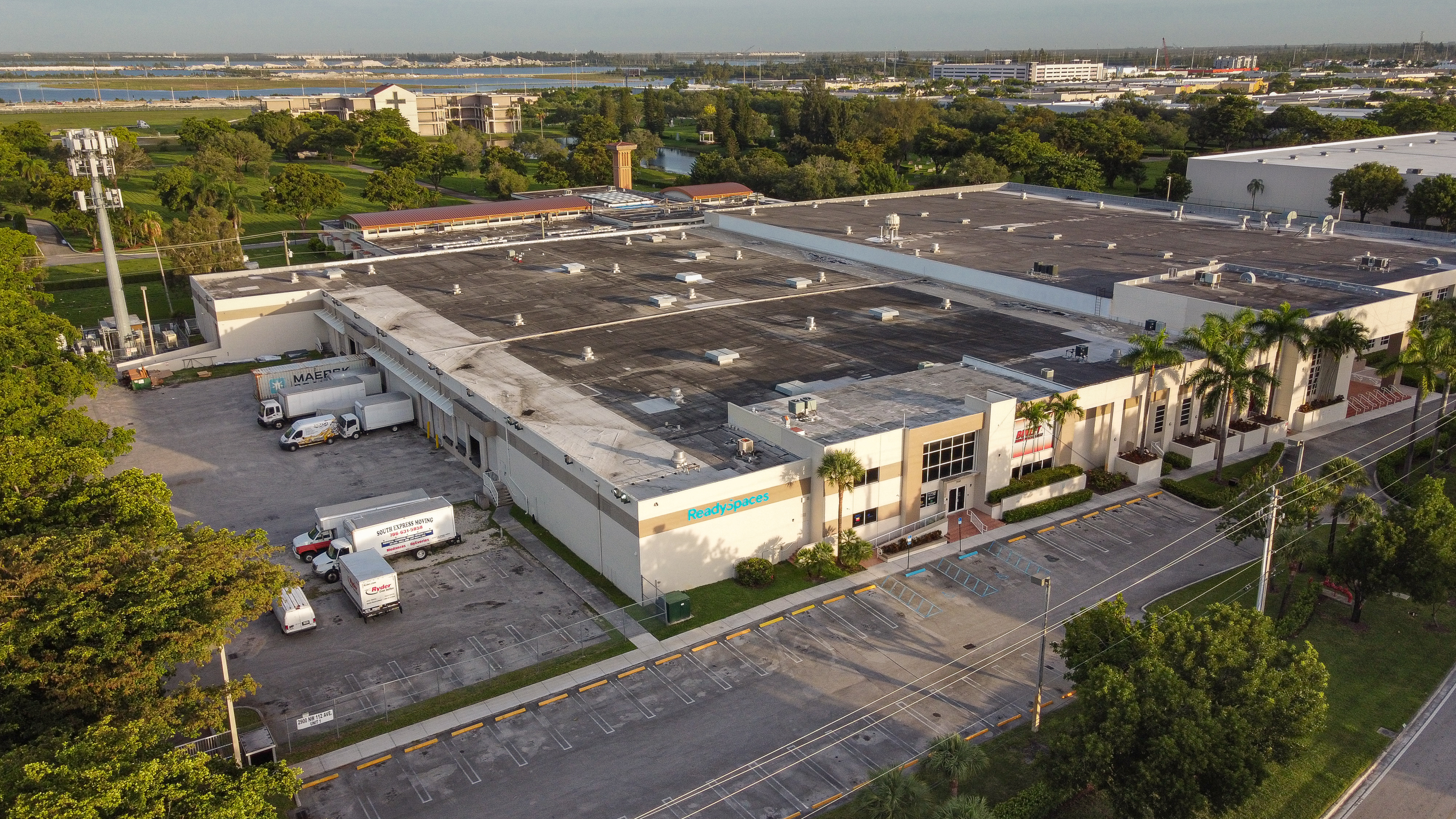
Warehouse and distribution facilities prioritize storage efficiency and logistics throughput over aesthetics or office functions.
Key characteristics:
- High clear heights (28-36+ feet)
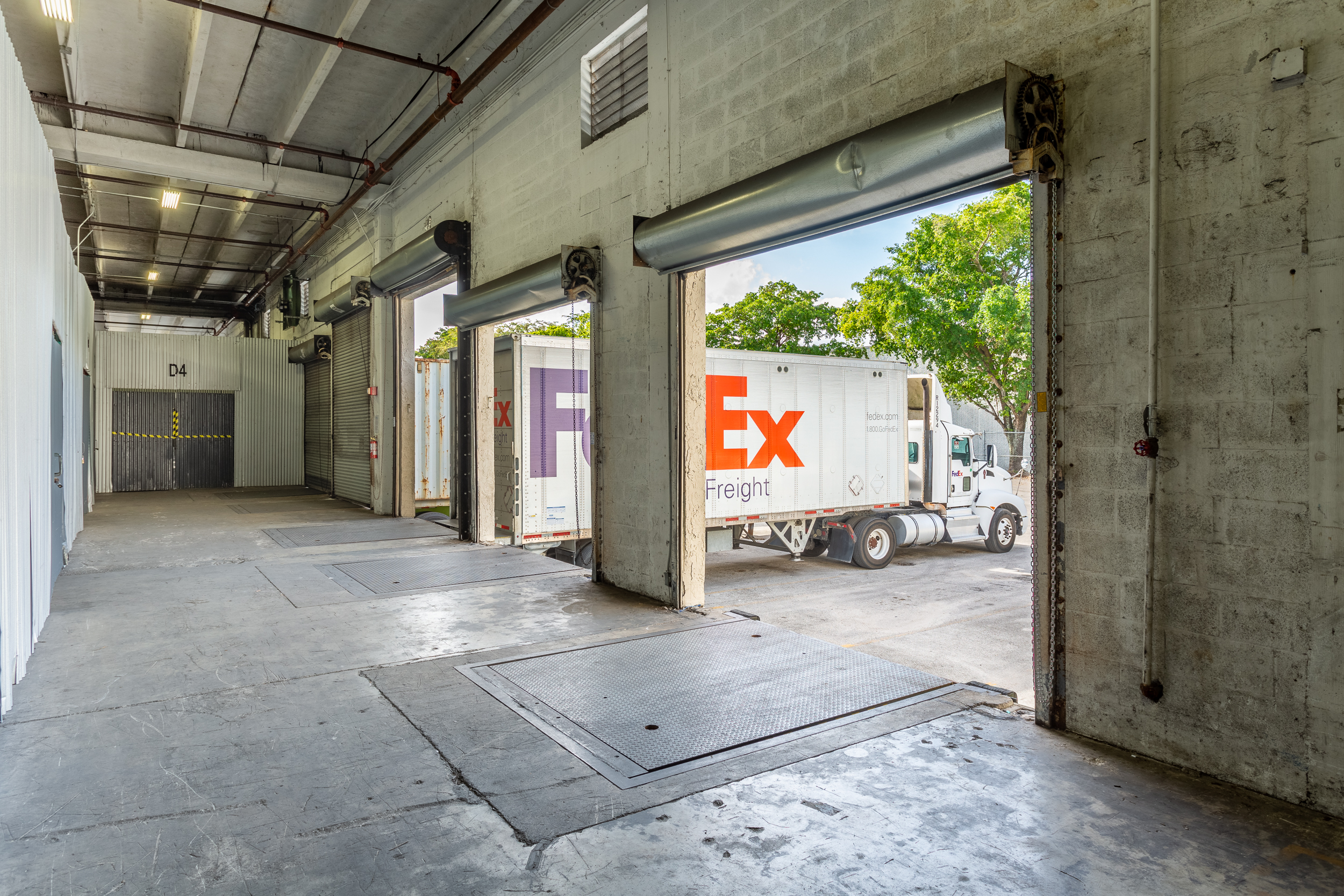
- Extensive loading docks and truck courts
- Minimal office space (5-15%)
- Large, open floorplans
- Typically larger units (20,000-1,000,000+ SF)
- Focus on logistics efficiency
Ideal for: Product storage and distribution, e-commerce fulfillment, third-party logistics (3PL) providers, wholesale operations, import/export businesses.
Advantages: Maximum cubic storage efficiency, optimized for loading/unloading operations, lower cost per square foot, designed for high-volume movement of goods, better clear heights for vertical storage.
Limitations: Less appropriate for customer-facing operations, not designed for significant office functions, often located in industrial areas away from population centers, limited amenities for employees.
Pro Tip
Each additional foot of clear height adds 7-10% storage capacity. A 32′ clear building holds significantly more inventory than a 24′ building with the same footprint—often justifying higher rent per square foot. For more on evaluating these specs, see our guide to loading docks, ceiling heights, and power requirements.
Manufacturing Space
Manufacturing facilities are purpose-built for production operations, with infrastructure that supports heavy equipment, specialized processes, and complex workflows. For guidance on how space needs change as you scale, see our manufacturing space requirements by growth stage.
Key characteristics:
- Reinforced floors for heavy equipment (250+ PSF capacity)
- Enhanced power supply (often 480V, 3-phase, 800+ amps)
- Higher clear heights in production areas (24-30+ feet)
- Specialized ventilation and utility systems
- Mix of production, warehouse, and office areas
- Loading capabilities for both raw materials and finished goods
Ideal for: Product manufacturing operations, food processing facilities, equipment or vehicle assembly, specialized production processes, fabrication and workshops.
Advantages: Designed for production workflows, better power and utility infrastructure, appropriate zoning for manufacturing activities, allows for customized layouts for specific processes, better floor load capacity for heavy equipment.
Limitations: More specialized and potentially harder to find, less flexibility for changing business models, can be more expensive to outfit initially, may have location restrictions due to zoning.
Cold Storage/Refrigerated Space
Cold storage facilities maintain controlled temperatures for perishable or temperature-sensitive products. These are among the most specialized industrial property types.
Key characteristics:
- Insulated walls, floors, and ceilings
- Refrigeration systems for temperature control
- Specialized loading docks with seals
- Temperature zones for different products
- Higher power requirements
- Vapor barriers and specialized floors
Ideal for: Food distribution, pharmaceutical storage, chemical storage with temperature requirements, perishable product handling, specialized inventory requiring climate control.
Advantages: Purpose-built for temperature-sensitive operations, energy efficiency features for refrigeration, specialized handling capabilities, compliance with regulatory requirements.
Limitations: Significantly higher cost (both lease and operation), very specialized use with limited flexibility, expensive to convert to/from other uses, higher energy consumption.
Data Center/Tech Space
Data centers and tech spaces support high-density computing, telecommunications, and technology operations with robust power and cooling infrastructure.
Key characteristics:
- Robust power and backup systems (2000+ amps, redundant feeds)
- Advanced cooling infrastructure
- Enhanced security features
- Raised floors for cabling
- Redundant utility connections
- Higher ceiling heights for equipment
Ideal for: Server and computing infrastructure, data storage and processing, telecommunications equipment, technology testing and development.
Advantages: Designed for high-density power usage (100-200+ watts/SF), better security and environmental controls, redundant systems for reliability, specialized cooling for heat-generating equipment.
Limitations: Highest cost per square foot of industrial spaces, extremely specialized use and infrastructure, significant power requirements and costs, limited conversion potential to other uses.
Matching Space Type to Business Needs
Assess Your Current and Future Operations
Before selecting a space type, evaluate these aspects of your business:
Operational workflow: How do materials and products flow through your business? What is the ratio of storage to processing/production? How much office space do you need relative to industrial space?
Growth projections: How might your space needs change in 3-5 years? Will your production or storage requirements increase? Could your business model shift in ways that change space needs?
Equipment and infrastructure: What specialized equipment will you use? What are your power, water, gas, and other utility requirements? Do you need specialized loading capabilities?
Workforce considerations: How many employees will work on-site? What amenities are important for employee satisfaction? Do you need customer/client access to the facility?
Space Requirement Calculations
Use these formulas to estimate your space needs:
- Warehouse/storage: Pallet positions × square footage per pallet position (for standard racking in 30′ clear buildings, calculate ~13-15 SF per pallet)
- Manufacturing: Equipment footprint + operating space + material staging + shipping/receiving
- Office component: Employees × 150-250 SF per employee (varies by function)
- Common/support areas: 10-15% of total space for restrooms, break rooms, etc.
- Growth factor: Add 15-25% to accommodate 3-year growth projections
Decision Matrix: Selecting the Right Space Type
Step 1: Priority Ranking
Rank these factors in order of importance for your business: cost efficiency, operational efficiency, location/accessibility, growth flexibility, image/customer impression, employee environment, and specialized infrastructure.
Step 2: Match Priorities to Space Types
| Priority Factor | Best Space Type |
|---|---|
| Cost efficiency | Standard warehouse |
| Operational efficiency | Purpose-built for your operation type |
| Location/accessibility | Flex space in business parks |
| Growth flexibility | Larger warehouse with phased build-out |
| Image/customer impression | Flex space or front office/rear warehouse |
| Employee environment | Flex space with higher office percentage |
| Specialized infrastructure | Purpose-built manufacturing or cold storage |
Step 3: Consider Hybrid Solutions
Many businesses benefit from hybrid approaches: front office/rear warehouse configurations, flex space with high-bay storage sections, manufacturing with attached distribution space, or co-located but separate office and industrial facilities.
Location Considerations by Space Type
Flex space: Best in business parks, mixed-use areas, and suburban office/industrial zones. Prioritize employee commuting, client visits, and amenity proximity. Requires business park, light industrial, or commercial zoning.
Warehouse/distribution: Best near transportation corridors, industrial parks, and port/rail-adjacent areas. Prioritize highway access, truck routes, and labor pools. Requires industrial, warehouse, or distribution zoning.
Manufacturing: Best in industrial parks, manufacturing zones, and areas with fewer residential neighbors. Prioritize supplier/customer proximity, utility infrastructure, and workforce access. Requires manufacturing, heavy commercial, or industrial zoning.
Cold storage: Best in food distribution hubs, near agricultural areas or ports, and industrial zones. Prioritize supply chain connection points and energy infrastructure. Requires industrial zoning with specific allowances for refrigeration equipment.
Lease vs. Buy Considerations
Leasing makes more sense for: Businesses with changing space needs, operations requiring specialized facilities, areas with high property values, companies preserving capital for operations, and situations requiring flexibility.
Buying makes more sense for: Stable established businesses, specialized build-outs that would be costly to relocate, situations where property control is strategic, markets with favorable purchase economics, and long-term location commitment.
For more on structuring your lease, see our guide to warehouse lease types explained.
Total Occupancy Cost Factors
Important
Base rent is just the starting point. Always calculate total occupancy cost when comparing properties—the cheapest base rent often isn’t the cheapest total cost.
Factor these additional expenses into your comparison:
- NNN charges (taxes, insurance, maintenance): $2-6/SF annually
- Utilities: Varies dramatically by use (data centers and cold storage highest)
- Interior maintenance: $0.50-2.00/SF annually
- Tenant improvements: Amortized cost of build-out
- Moving and setup costs: One-time but significant
Case Studies: Matching Business to Space Type
E-Commerce Startup
Business needs: Rapid order fulfillment, inventory storage for diverse products, marketing and customer service office functions, expectation of 200% growth in 3 years.
Best solution: Flex warehouse with 70% warehouse (24’+ clear) and 30% office space, with emphasis on loading capabilities and expansion options.
Light Manufacturing Company
Business needs: Production floor for assembly, raw material and finished goods storage, quality control testing areas, customer demonstration space.
Best solution: Manufacturing space with dedicated production zones, 20% office component, and enhanced power capacity with multiple loading positions.
Professional Service with Equipment
Business needs: Office space for administrative functions, secure storage for valuable equipment, occasional client meetings, small workspace for equipment preparation.
Best solution: Flex space in business park with climate control, enhanced security, and professional appearance with good parking.
Conversion Potential Between Space Types
Flex to warehouse: Moderate feasibility. Common changes include office reduction and loading dock additions. Challenge: limited clear height cannot be easily increased.
Warehouse to flex: High feasibility. Common changes include office build-out, façade improvements, and parking additions. Challenge: creating appropriate office environment in industrial shell.
General industrial to manufacturing: Moderate to high feasibility. Common changes include power upgrades, floor reinforcement, and specialized ventilation. Challenges: zoning restrictions and utility capacity limitations.
Standard to cold storage: Low to moderate feasibility. Common changes include insulation, refrigeration systems, and specialized doors. Challenges: expensive conversion, energy requirements, and floor modifications.
Negotiation Tips by Space Type
Flex space: Negotiate TI allowances for office customization, focus on parking ratio adequacy, address shared space maintenance standards, clarify signage and exterior modification rights.
Warehouse/distribution: Emphasize loading position ratio needs, negotiate yard and trailer storage rights, focus on clear height guarantees, address after-hours operation rights.
Manufacturing: Secure necessary power and utility commitments, negotiate specialized venting and discharge rights, clarify noise and hours of operation allowances, address floor load capacity guarantees.
Cold storage: Focus on utility responsibility and capacity, clarify refrigeration equipment ownership/maintenance, address condensation management responsibility, negotiate specialized loading area maintenance.
For more negotiation guidance, see our beginner’s guide to leasing your first warehouse.
Frequently Asked Questions
What is flex space in industrial real estate?
Flex space combines office and warehouse functions in a single building, typically with 30-50% office ratio and 16-24 foot clear heights. It’s ideal for businesses that need professional office environments alongside storage, light assembly, or showroom space. Flex buildings are usually found in business parks and cost $10-20 per square foot—more than pure warehouse but less than traditional office.
What’s the difference between warehouse and distribution space?
Warehouse and distribution space are often used interchangeably, but distribution facilities typically have higher dock ratios (more loading positions per square foot) and are optimized for throughput rather than long-term storage. Distribution centers focus on moving goods quickly with cross-docking capabilities, while pure warehouses may prioritize cubic storage capacity with higher clear heights and deeper racking.
How much does manufacturing space cost compared to warehouse?
Manufacturing space typically costs $7-16 per square foot (NNN) compared to $6-14 for warehouse/distribution. The premium reflects enhanced power infrastructure (480V, 800+ amps), reinforced floors (250+ PSF capacity), and specialized ventilation systems. However, total occupancy costs for manufacturing are often higher due to utility usage and specialized build-out requirements.
Can I convert warehouse space to manufacturing?
Yes, converting warehouse to manufacturing space has moderate to high feasibility. Common modifications include power upgrades, floor reinforcement for heavy equipment, and specialized ventilation installation. Key challenges include verifying zoning allows manufacturing uses, confirming utility capacity at the property, and budgeting 3-9 months for power upgrades if needed. Get these verified before signing a lease.
What clear height do I need for my industrial operation?
Clear height requirements depend on your operation type. Flex space and light manufacturing typically need 16-24 feet. General warehousing and distribution work well with 28-32 feet, while modern e-commerce fulfillment often requires 36-40 feet for maximum vertical storage. Manufacturing needs vary by equipment—production floors may need less height than storage areas. Remember that clear height is nearly impossible to change, so prioritize this spec when choosing a property.
Conclusion: Making Your Final Decision
Finding the right industrial space type requires balancing current operational needs, future growth plans, financial considerations, and location requirements. The best approach is methodical:
- Define your operational requirements in detail before beginning your search
- Prioritize your must-have features versus nice-to-have elements
- Consider total occupancy cost rather than just the base lease rate
- Evaluate future flexibility for both growth and business model evolution
- Visit multiple property types to understand the practical differences
- Consult with operations staff who will work in the space daily
- Work with industrial specialists who understand your business type
The right industrial space does more than house your business—it enables operational efficiency, supports growth, controls costs, and can provide competitive advantages. Matching your specific needs to the appropriate space type will pay dividends throughout your occupancy.
For more foundational knowledge, explore our complete Industrial 101 resource center.
Find the Right Industrial Space for Your Business
Search flex, warehouse, and manufacturing properties with detailed specs and transparent pricing.
Browse Available Properties