Indianapolis Industrial & Warehouse Market Report | Q1 2026
Key Takeaways
- Indianapolis is one of the strongest industrial recovery stories in the country. Overall vacancy fell to 6.9% in Q1 2026, down about 160 basis points over the past year and back to its Q2 2023 level, as demand absorbed a wave of modern bulk deliveries.
- The market led the nation in absorption gains, with roughly 4.9 million SF absorbed in Q1 2026. Modern bulk space is leasing at record speed, while legacy and flex inventory stays exceptionally tight.
- Average asking rents reached $6.35/SF NNN, up 5.5% year-over-year, among the best value of any major logistics hub. The speculative pipeline is slowing about 37% year-over-year, which should push vacancy lower still.
- Leverage varies sharply by submarket: the East/Mt. Comfort corridor (13.4% vacancy) favors tenants, while the Northwest (2.2%) is landlord territory. Browse Indianapolis warehouse listings on WareCRE.
6.9%
Overall Vacancy
$6.35
Avg. Asking Rent (NNN/SF)
+4.9M
SF Net Absorption (Q1)
↓37%
Spec Pipeline (YoY)
Indianapolis is the Crossroads of America. More interstate highways converge here than in any other U.S. metro, and the FedEx hub at Indianapolis International Airport is the company’s second-largest globally. That connectivity, paired with low costs and central geography, has made Indianapolis one of the country’s premier logistics markets. Entering Q1 2026, the market is firmly in recovery: vacancy is falling, absorption is leading the nation, and a wave of speculative bulk product is being absorbed at record speed.
For businesses looking for warehouse space in Indianapolis, the market still offers genuine value (rents are among the lowest of any major logistics hub), but the window of peak tenant leverage is narrowing as vacancy compresses. Leverage now depends heavily on submarket. Here’s the full Q1 2026 picture.
Market Snapshot: Q1 2026
| Metric | Q1 2026 | Context |
|---|---|---|
| Overall vacancy | 6.9% | ↓160 bps over 12 months; back to Q2 2023 level |
| Avg. asking rent | $6.35/SF NNN | +5.5% YoY; among the best value nationally |
| Q1 net absorption | ~4.9M SF | Led the nation in absorption gains |
| Spec pipeline | ↓~37% YoY | Slowing supply should push vacancy lower |
| Tightest submarket | NW ~2.2% | Northwest/I-65 corridor; landlord-favorable |
| Loosest submarket | East ~13.4% | Mt. Comfort/I-70; best tenant leverage |
Rent Trends: Rising, Still a Value
Indianapolis asking rents reached $6.35/SF NNN in Q1 2026, up 5.5% year-over-year, healthy growth that still leaves the market among the most affordable major logistics hubs in the country. Rent growth here is driven less by raw occupancy and more by the mix of lease sizes and demand for flex space. As vacancy compresses and the speculative pipeline slows, that upward pressure is likely to continue.
The value proposition is the headline: tenants can secure modern bulk distribution space in a top-tier logistics location for well under $7/SF. The best pricing is in the East/Mt. Comfort corridor, where recent spec deliveries have pushed vacancy into double digits; the tightest, priciest space is in the Northwest and infill submarkets.
For Tenants
Indianapolis is still a value market, but the leverage window is closing as vacancy falls. The best opportunities are in the East/Mt. Comfort corridor (13.4% vacancy), where spec deliveries give big-box tenants real negotiating room. The Northwest corridor and infill/flex submarkets are tight. Move quickly and expect to pay closer to asking. Search Indianapolis warehouse listings on WareCRE.
Construction Pipeline: Supply Slows as Demand Surges
The speculative development pipeline is slowing by nearly 37% year-over-year, a sharp pullback after the building boom that briefly pushed vacancy higher. With demand now leading the nation and supply decelerating, the remaining modern bulk and flex inventory is expected to be absorbed quickly, pushing overall vacancy steadily downward through 2026.
This is the textbook recovery setup: a market that overbuilt, then absorbed the excess through genuine demand strength rather than just a supply freeze. Indianapolis’ structural advantages (unmatched interstate connectivity, the FedEx air hub, central US geography, and low operating costs) keep occupiers coming, and the slowing pipeline means the market is tightening from both directions.
For Operators
Momentum is firmly on your side. Vacancy down 160 bps year-over-year, nation-leading absorption, rising rents, and a 37% pullback in the spec pipeline all support holding rate and reducing concessions, especially on modern bulk in the Northwest and Plainfield corridors. The East/Mt. Comfort corridor still has spec to absorb, so expect lease-up there to lag the metro.
Submarket Breakdown
Southwest / Plainfield & Airport
The premier big-box bulk core, anchored by the FedEx hub at Indianapolis International Airport and the AmeriPlex developments. The deepest modern inventory in the metro and the heart of national distribution activity. Healthy demand, balanced availability. Rents: ~$5.50–$7.00/SF NNN.
Northwest / Lebanon & Whitestown (I-65)
The fast-growing I-65 corridor northwest of the city, the metro’s tightest submarket at about 2.2% vacancy, with strong modern bulk demand and proximity to the LEAP innovation district. Landlord-favorable. Rents: ~$5.75–$7.25/SF NNN.
East / Mt. Comfort (I-70)
The newest big-box spec corridor along I-70 in Hancock County, the metro’s loosest submarket at about 13.4% vacancy as recent deliveries lease up. The best big-box value and strongest tenant leverage in Indianapolis. Rents: ~$4.75–$6.25/SF NNN.
Northeast / I-69 (Fishers, Noblesville)
An infill and flex submarket serving the affluent northeastern suburbs, with tighter conditions and a mix of light-industrial, flex, and service space. Rents: ~$7.00–$10.00/SF NNN.
| Submarket | Vacancy | Rent Range (NNN/SF) | Q1 2026 Profile |
|---|---|---|---|
| SW / Plainfield & Airport | Balanced | $5.50–$7.00 | Big-box core, FedEx hub, deepest inventory |
| NW / Lebanon & Whitestown | ~2.2% | $5.75–$7.25 | Tightest, I-65 growth corridor |
| East / Mt. Comfort (I-70) | ~13.4% | $4.75–$6.25 | Newest spec, best value & leverage |
| NE / I-69 (Fishers) | Tighter | $7.00–$10.00 | Infill, flex, light-industrial |
Co-Warehousing & Flexible Warehouse Space in Indianapolis
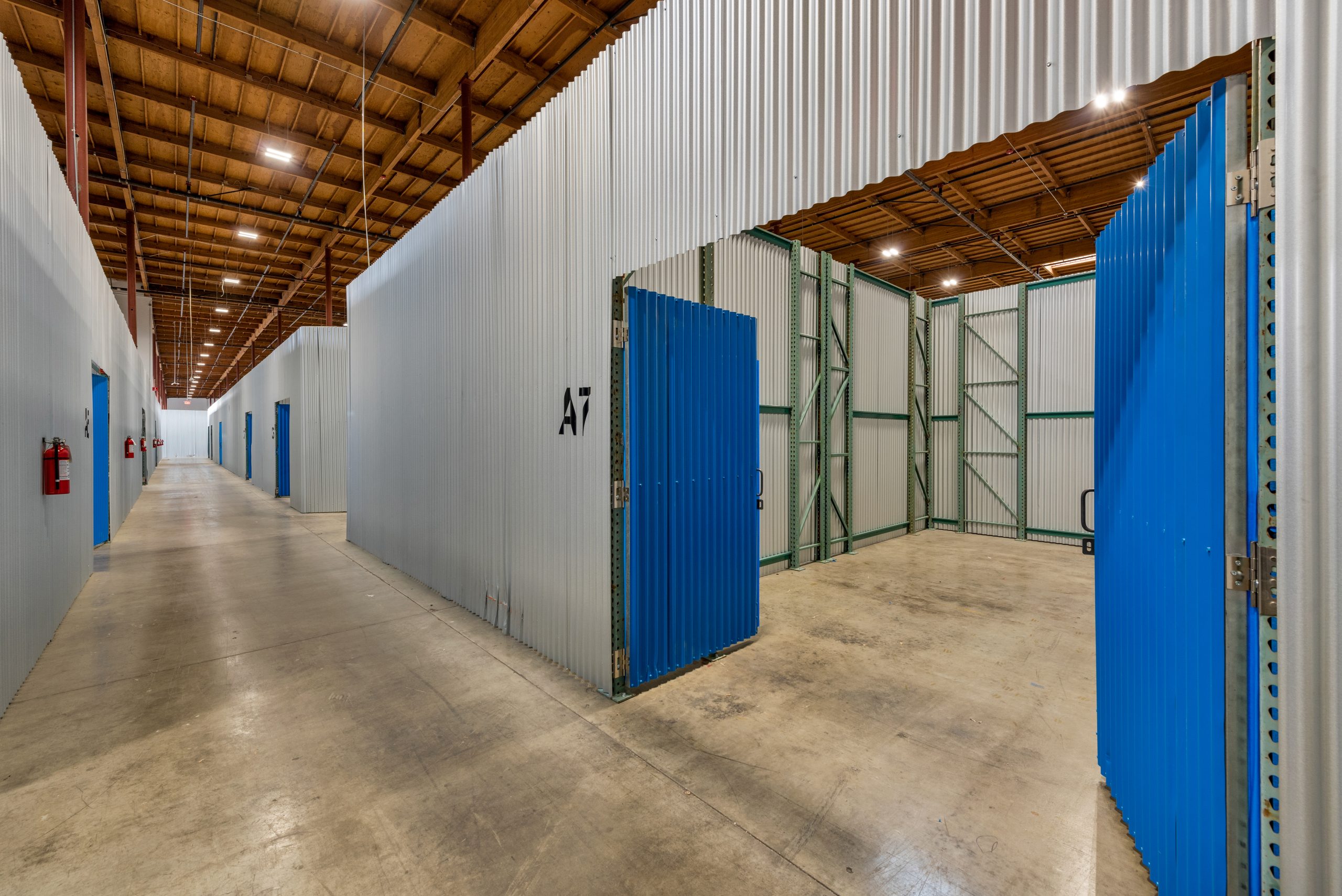
Indianapolis’ flexible warehouse market benefits from the metro’s logistics dominance and a growing small business economy. While big-box distribution drives the headline numbers, small-bay and flex demand, especially in infill and northeastern submarkets, stays tight, serving the businesses that need operational space near the city without a bulk commitment.
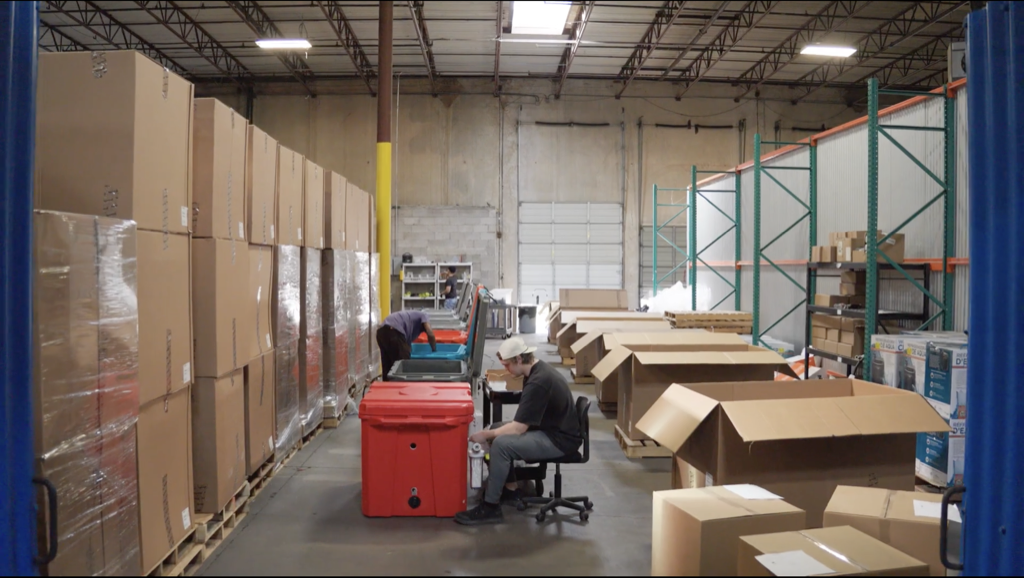
Who’s leasing flexible space in Indianapolis: e-commerce and parcel operators leveraging the FedEx hub, 3PLs using the metro’s interstate connectivity, contractors and building trades, manufacturers and suppliers, and regional distributors serving the central US within a one-day drive of most of the country.
Browse available co-warehousing and small-bay warehouse listings on WareCRE’s Indianapolis marketplace.
Looking for warehouse space in Indianapolis?
Key Trends to Watch
1. A Nation-Leading Recovery
Indianapolis led U.S. metros in absorption gains in Q1 2026, working through its spec overhang faster than almost anywhere else. Vacancy is down 160 bps year-over-year and falling, a validation of the market’s structural demand strength rather than a mere supply pause. For broader context: Industrial Real Estate Trends & Outlook 2026.
2. Submarket Divergence
The 11-point gap between the Northwest (2.2%) and East/Mt. Comfort (13.4%) is the story for tenants and owners alike. Where you transact determines your leverage entirely. The metro average tells you little about your specific deal. Read more: Small-Bay vs. Big-Box: What the Vacancy Gap Means in 2026.
3. The Crossroads Advantage
Indianapolis’ interstate convergence and FedEx air hub make it a natural beneficiary of supply-chain reconfiguration and the push for one-day reach to the US population. As tariffs and nearshoring reshape distribution networks, central logistics hubs like Indianapolis gain share. See: How Tariffs Are Reshaping Warehouse Demand in 2026.
Outlook: What to Watch in Q2–Q3 2026
Indianapolis enters mid-2026 with strong momentum and a tightening trajectory.
Expect vacancy to keep falling as nation-leading absorption meets a 37% slower spec pipeline. The East/Mt. Comfort corridor will lag as it absorbs recent deliveries, but the metro overall is tightening.
Rents should continue rising at mid-single digits, with the Northwest and infill submarkets leading. The market stays a value relative to coastal and Sun Belt peers even as rates climb.
The biggest opportunity is for tenants who lock in East-corridor big-box value before absorption closes the gap, and for operators positioned in the tightening Northwest and Plainfield cores.
Find warehouse space in Indianapolis
Browse co-warehousing, small-bay, and distribution listings across the Indianapolis metro.
Data sources: CBRE Indianapolis Industrial Figures Q1 2026, Colliers Indianapolis Industrial Q1 2026, Cushman & Wakefield Indianapolis MarketBeat Q1 2026, JLL U.S. Industrial Market Dynamics Q1 2026, REJournals (2026), WareCRE marketplace data (May 2026).
Related Resources
Frequently Asked Questions
What is the current industrial vacancy rate in Indianapolis?
Indianapolis industrial vacancy fell to 6.9% in Q1 2026, down about 160 basis points over the past year. It varies widely by submarket, from ~2.2% in the Northwest/I-65 corridor to ~13.4% in the East/Mt. Comfort corridor absorbing new spec deliveries.
How much does warehouse space cost in Indianapolis?
Average asking rents are $6.35/SF NNN as of Q1 2026, up 5.5% year-over-year, among the most affordable of any major logistics hub. Big-box space ranges from about $4.75/SF in the East corridor to $7+/SF in the Northwest, with infill/flex higher.
Is the Indianapolis industrial market strong in 2026?
Very. Indianapolis led the nation in absorption gains in Q1 2026 (~4.9 million SF), vacancy is falling, rents are rising 5.5% year-over-year, and the speculative pipeline is slowing about 37%, a market tightening from both the demand and supply sides.
Which Indianapolis submarket is best for warehouse space?
The East/Mt. Comfort (I-70) corridor offers the best big-box value and tenant leverage thanks to new supply. Southwest/Plainfield is the big-box core near the FedEx hub. The Northwest/I-65 corridor is tightest, and Northeast/I-69 serves infill and flex demand.