How to Rent Out Warehouse Space: Pricing, Listing and Leasing a 1,500 SF Bay
Last updated: November 20, 2026
Key Takeaways
- To rent out warehouse space in small bays, price each unit from local asking rents, list it with its size, specs, photos and price, screen applicants for permitted use and credit, and sign a written lease.
- Cushman & Wakefield put the Q3 2026 U.S. average industrial asking rent at $10.40/SF/yr NNN. For a 1,500 SF bay that is about $1,300 a month in base rent, before taxes, insurance and maintenance.
- Smaller space usually asks more per square foot. In Salt Lake City, C&W reports $1.14/SF/mo NNN for 10,000 to 50,000 SF facilities against $0.85 for big-box buildings over 100,000 SF.
- Small-bay space is still tight. C&W’s latest shallow-bay vacancy reading, 4.8% in Q2 2026, edged up but was the lowest of any size segment it tracks.
- Confirm that zoning and the building allow the tenant’s use before you sign. A use the building cannot support costs more to fix than a vacant month.
To rent out warehouse space in a small bay, set an asking rent from local market data, publish a listing with the unit’s size, specs, photos and price where small businesses search, screen each applicant for permitted use, credit and insurance, then sign a written lease that sets the rent, term, deposit and who pays operating costs.
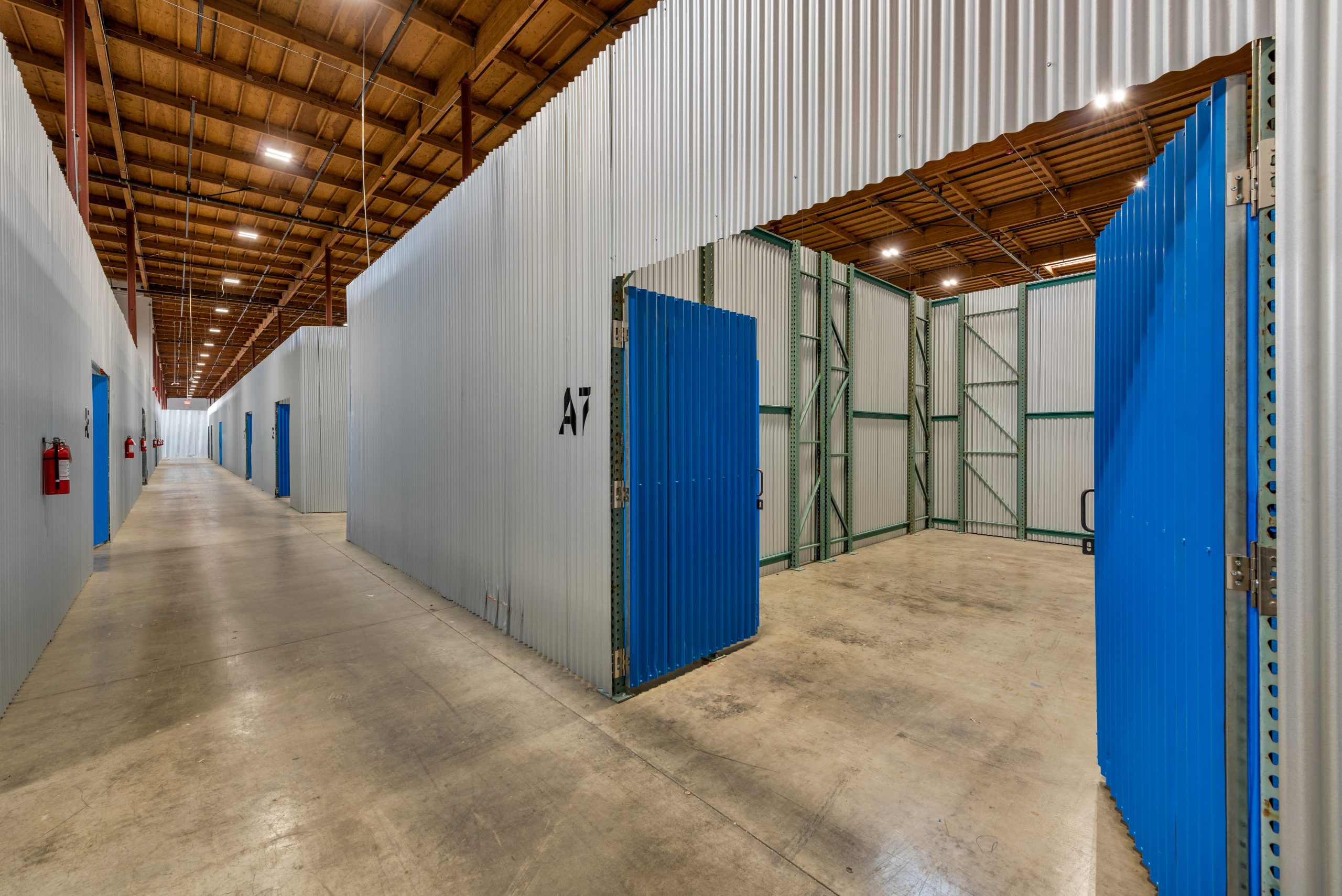
This guide walks through each step using a 1,500 SF bay as the example, a size that suits contractors, e-commerce sellers, makers and service businesses moving out of a garage or storage unit.
How Much Should You Charge to Rent Out Warehouse Space in a 1,500 SF Bay?
Start from published asking rents for your market, then adjust for the unit. Cushman & Wakefield’s Q3 2026 national table put the U.S. average at $10.40/SF/yr NNN, with markets ranging from $4.30 in Memphis to $27.31 in New York City’s outer boroughs. Our industrial rent by market table lists all 83 markets.
Small tenants budget by the month, so convert the annual rate into a monthly figure. Multiply the rate per square foot per year by the unit size and divide by 12.
| Asking rent (NNN) | Where the rate comes from | Monthly base rent, 1,500 SF |
|---|---|---|
| $10.40/SF/yr | U.S. average, all industrial (C&W, Q3 2026) | $1,300 |
| $12.96/SF/yr | Portland business parks of 10,000 to 49,999 SF, $1.08/SF/mo (Kidder Mathews, Q3 2026) | $1,620 |
| $13.68/SF/yr | Salt Lake City facilities of 10,000 to 50,000 SF, $1.14/SF/mo (C&W, Q3 2026) | $1,710 |
| $20.64/SF/yr | San Diego incubator multi-tenant/flex, $1.72/SF/mo (C&W, Q3 2026) | $2,580 |
Where brokers publish rents by size, smaller space asks more per square foot. Kidder Mathews’ Q3 2026 Portland report shows business parks of 10,000 to 49,999 SF at $1.08/SF/mo NNN against $0.84 for parks of 150,000 SF and up. Each small unit carries its own door, utilities and management, and very little new small-bay space gets built. C&W’s latest shallow-bay vacancy reading, 4.8% in Q2 2026, was the lowest of any size segment it tracks. Our small bay industrial guide covers the supply side in more detail.
Adjust from the market rate for what the unit offers: a grade-level door, higher clear height, three-phase power, a restroom or small office, secure yard space and an easy truck route all support a higher rate.
Show the total monthly cost
If you quote NNN, add an estimate of the monthly taxes, insurance and common-area maintenance charge next to the base rent. Small tenants compare total monthly cost, and a surprise in the NNN estimate can derail a deal late. Our warehouse lease types guide explains NNN, gross and modified gross structures.
What Should a Small-Bay Listing Include?
A listing should let a tenant rule the unit in or out without calling. Include these details for every bay:
| Detail | What to state |
|---|---|
| Size | Rentable square feet and the bay’s dimensions |
| Clear height | Usable height under the lowest obstruction |
| Loading | Grade-level (drive-in) or dock-high door, with door size |
| Power | Amps, voltage and single- or three-phase |
| Build-out | Office area, restroom, HVAC or heat, lighting |
| Site | Parking, yard or outdoor storage, truck access, security |
| Zoning and uses | Zoning district and uses the building allows or excludes |
| Price and terms | Asking rent, lease structure, estimated NNN, minimum term, availability date |
| Photos | Interior, door, exterior, parking and access |
If you have several bays, list each one separately with its own size and price so a tenant searching for 1,500 SF finds the right unit. Our guide to listing photos that convert covers how to present each unit.
Have a bay to fill? List it with its own size and price.
List Your Space FreeHow Do You Find Tenants for a Small Warehouse Bay?
Small-bay tenants often start online, searching by city and size, so the listing does much of the work. Combine several channels:
- Listing sites. Put the unit on two or three sites that show small spaces well. Our comparison of LoopNet alternatives for small industrial space covers what each one costs.
- Your own search presence. If the property has a staffed leasing or management office, a Google Business Profile for that office can surface it in local results for searches such as “small warehouse for rent near me.”
- On-site signage. A sign with the unit size and a phone number reaches businesses that already operate nearby.
- Current tenants. Growing tenants may want a second bay, and they know other businesses in the trade.
- A local broker. Useful when units sit vacant or you lack time to show them. Agree the commission before the broker starts.
Use a separate phone number or form source for each channel, so you can see which one produces signed leases.
How Should You Screen a Warehouse Tenant?
Screen for fit first and finances second. A tenant whose use the building cannot support is a bigger risk than a thin credit file.
- Permitted use. Ask exactly what the business will do in the space. Check it against zoning, the building’s fire and occupancy limits and any restrictions on hazardous materials.
- Operations. Confirm hours, truck and van traffic, noise, power needs and equipment weight.
- Business and credit. Collect the legal entity name, time in business and financial information, or a personal guaranty if the business is new.
- References. A prior landlord is often the most useful reference for a small business.
- Insurance. Require the coverage your lease sets out before handing over keys.
What Lease Terms Work for Small Warehouse Bays?
Use a written lease that fits the size of the deal. For a small bay, the terms that matter most are:
- Rent and escalations. Base rent, annual increases and the lease structure (NNN, gross or modified gross).
- Term and renewal. Start date, length and any renewal option.
- Security. Deposit amount and any personal guaranty.
- Use. The permitted use, stated specifically, and what is excluded.
- Operating costs. Who pays utilities, taxes, insurance and maintenance, and how shared costs are billed.
- Alterations. What the tenant may change, who pays for improvements and how the space is returned.
Our guides to warehouse leasing terms and tenant improvement allowances explain these terms in more depth. Have a real estate attorney review your lease form.
Ready to rent out your warehouse space?
List each bay free on WareCRE with its size, specs and price, and get inquiries directly. Or browse current listings to see how other owners price and present small units.
List Your Space on WareCRERelated Resources
Frequently Asked Questions
How do I rent out my warehouse space?
Set an asking rent from local market data, then list the space with its size, clear height, loading, power, photos and price on the sites small businesses search. Screen applicants for permitted use, credit and insurance, and sign a written lease that sets rent, term, deposit, permitted use and who pays operating costs.
How much can I charge for a 1,500 SF warehouse bay?
It depends on the market and the unit. At Cushman & Wakefield’s Q3 2026 U.S. average of $10.40/SF/yr NNN, a 1,500 SF bay brings about $1,300 a month in base rent. Small units often ask more per square foot than large buildings, and NNN charges for taxes, insurance and maintenance come on top.
How do I find tenants for warehouse space?
List the space on two or three sites that show small units with their size and price, add on-site signage, set up a Google Business Profile if the property has a staffed leasing office and ask current tenants for referrals. A local broker can help with units that sit vacant. Track each channel separately to see which one produces signed leases.
Should I lease a small warehouse bay as NNN or gross?
Either works. NNN passes taxes, insurance and maintenance to the tenant on top of base rent, which protects you from rising costs. Gross or modified gross folds some or all of those costs into one figure, which small tenants find easier to budget. If you quote NNN, show an estimate of the monthly charges.
What should I check before renting warehouse space to a business?
Check that zoning and the building allow the tenant’s exact use, including fire and occupancy limits and any hazardous materials. Then confirm operations such as hours, truck traffic and power needs, review the business’s financials or take a personal guaranty, call a prior landlord and collect proof of the insurance your lease requires.
Sources: Cushman & Wakefield, U.S. Industrial MarketBeat Q3 2026, national asking rent table (figures preliminary); Cushman & Wakefield, Salt Lake City and San Diego Industrial MarketBeats, Q3 2026; Kidder Mathews, Portland Industrial Market Report, Q3 2026; Cushman & Wakefield, U.S. Industrial MarketBeat Q2 2026 (shallow-bay vacancy). Monthly rent figures are WareCRE calculations from those rates. Each report reflects the most recent data available at the time of publication. This guide is general information, not legal or tax advice.