New York City Industrial & Warehouse Market Report | Q2 2026
Key Takeaways
- New York City industrial vacancy rose 40 basis points to 7.0% in Q2 2026, the fourth straight quarterly increase. The figures cover the 139.9 million SF Outer Boroughs market (the Bronx, Brooklyn, Queens and Staten Island).
- The average asking rent eased $0.24 to $27.50/SF/yr net. Cushman & Wakefield says pricing has trended down from its Q4 2024 peak. Warehouse/distribution space asks $28.12/SF/yr.
- Net absorption was −620,030 SF in Q2 and −634,096 SF year to date. Queens gave back 485,887 SF in the quarter; the Bronx was the only borough where vacancy fell.
- 737,027 SF is under construction across three sites, most of it in Brooklyn. Outside the city, Long Island vacancy fell to 4.9% and Northern New Jersey held at 8.3% (separate C&W reports).
Browse warehouse space for rent in New York City
7.0%
Overall Vacancy (Q2 2026)
$27.50
Avg. Asking Rent ($/SF/yr net)
−620K
SF Net Absorption (Q2 2026)
737K
SF Under Construction
New York City’s industrial market softened again in Q2 2026. Vacancy rose to 7.0%, tenants gave back 620,030 SF on net, and asking rents slipped for another quarter. Queens drove most of the move-outs, while the Bronx was the only borough where vacancy fell.
This report covers New York City as Cushman & Wakefield defines it in its Q2 2026 NY Outer Boroughs Industrial MarketBeat: the Bronx, Brooklyn, Queens and Staten Island, 139.9 million SF in total. Manhattan is not part of that report. Figures are from that report unless noted, and prior-quarter comparisons use the changes it states. Rents are weighted net asking rents in $/SF/yr. Northern New Jersey and Long Island appear further down as separate, labelled sections based on C&W’s own reports for those markets. Their figures are not combined with the city’s.
Market Snapshot: Q2 2026
| Metric | Q2 2026 | Q1 2026 (restated) | YoY or note |
|---|---|---|---|
| Overall vacancy | 7.0% | 6.6% | +40 bps QoQ; fourth straight quarterly rise |
| Overall asking rent ($/SF/yr net) | $27.50 | $27.74 | −$0.24 QoQ; trending down from the Q4 2024 peak |
| Warehouse/distribution asking rent ($/SF/yr net) | $28.12 | $28.28 | −$0.16 QoQ |
| Net absorption | −620,030 SF | −14,066 SF | −634,096 SF year to date |
| Leasing activity | 1.23M SF year to date | n/a | −33.5% vs. the first half of 2025 |
| Deliveries (new construction) | 366,264 SF year to date | n/a | 331,700 SF of it on Staten Island |
| Under construction | 737,027 SF | n/a | Three sites; about 0.5% of inventory |
| Inventory | 139.9M SF | n/a | 1,866 buildings in four boroughs |
Source: Cushman & Wakefield, NY Outer Boroughs Industrial MarketBeat Q2 2026. Q1 2026 values are WareCRE calculations from the changes C&W reports in Q2 (vacancy +40 bps, overall rent −$0.24, W/D rent −$0.16) and from year-to-date less Q2 absorption. n/a = not published in the Q2 report.
Rent Trends: Asking Rents Slip to $27.50/SF, Down From the Q4 2024 Peak
The overall average asking rent fell $0.24 in Q2 to $27.50/SF/yr net. C&W says pricing has continued to trend down from its Q4 2024 peak. Warehouse/distribution space asks $28.12/SF/yr, down $0.16 on the quarter.
Borough averages spread widely. The Bronx asks $32.69/SF/yr after a 1.1% quarterly gain. Queens asks $29.41, Brooklyn $25.46 and Staten Island $20.66, all in $/SF/yr net. Brooklyn’s warehouse/distribution space averages $27.42/SF/yr, above the borough’s overall figure.
For Tenants
Leverage is improving, but unevenly. Queens vacancy rose 80 bps to 6.7% as large blocks came available, and Staten Island sits at 18.5%. Brooklyn is the tightest borough at 5.2%. With deal volume down 33.5% on the first half of 2025, owners of vacant space have reason to negotiate on rent and concessions. Search New York City warehouse listings on WareCRE.
Construction Pipeline: 737,027 SF Underway, Mostly in Brooklyn
C&W counts 737,027 SF under construction across three sites, with 637,027 SF in Brooklyn and 100,000 SF in the Bronx. Nothing is under way in Queens or on Staten Island. The pipeline equals about 0.5% of the four boroughs’ inventory (WareCRE calculation).
Year-to-date completions total 366,264 SF. Of that, 331,700 SF delivered on Staten Island, which also has the highest vacancy of the four boroughs at 18.5%.
For Operators
New supply is small, but demand has not kept up. Year-to-date net absorption is −634,096 SF, and vacancy has risen four quarters running. Owners of vacant space in Queens and on Staten Island are competing for fewer deals. The Bronx is the exception, with vacancy down 30 bps to 8.6% and rents up 1.1% in Q2.
Submarket Breakdown
C&W reports the city’s industrial market by borough. Queens and Brooklyn hold most of the inventory; the Bronx and Staten Island are smaller and moved in opposite directions this quarter.
Queens
Queens is the largest borough market at 57.3 million SF. Vacancy rose 80 bps to 6.7%, and Queens gave back 485,887 SF in Q2 (−661,312 SF year to date), the largest decline of any borough. The overall asking rent is $29.41/SF/yr net, and warehouse/distribution space asks $29.53. Nothing is under construction. FedEx renewed 76,610 SF in Maspeth, one of the quarter’s key leases.
Brooklyn
Brooklyn has 54.6 million SF and is the tightest borough at 5.2% vacancy. Net absorption was −273,443 SF year to date. The overall asking rent is $25.46/SF/yr net, with warehouse/distribution space at $27.42. Brooklyn holds 637,027 SF of the city’s 737,027 SF pipeline. Cinelease renewed 65,000 SF in North Brooklyn.
The Bronx
The Bronx has 20.2 million SF. Its vacancy fell 30 bps to 8.6%, the only quarterly decline among the boroughs, and net absorption is +235,578 SF year to date. The Bronx has the highest asking rent in the city at $32.69/SF/yr net, up 1.1% in Q2. 100,000 SF is under construction.
Staten Island
Staten Island is the smallest market at 7.8 million SF and has the highest vacancy, 18.5%, after 331,700 SF of new construction delivered this year. It is also the lowest-cost borough at $20.66/SF/yr net. Net absorption is +65,081 SF year to date.
| Borough | Inventory | Vacancy | Overall Rent ($/SF/yr net) | YTD Net Absorption | Under Construction |
|---|---|---|---|---|---|
| Queens | 57.3M SF | 6.7% | $29.41 | −661,312 SF | 0 SF |
| Brooklyn | 54.6M SF | 5.2% | $25.46 | −273,443 SF | 637,027 SF |
| The Bronx | 20.2M SF | 8.6% | $32.69 | +235,578 SF | 100,000 SF |
| Staten Island | 7.8M SF | 18.5% | $20.66 | +65,081 SF | 0 SF |
| Outer Boroughs total | 139.9M SF | 7.0% | $27.50 | −634,096 SF | 737,027 SF |
Source: Cushman & Wakefield, NY Outer Boroughs Industrial MarketBeat Q2 2026.
Beyond the City: Northern New Jersey and Long Island
Many New York City occupiers also look across the Hudson or east on Long Island. C&W covers both in separate reports, summarized here. These markets use their own inventories and are not blended into the city figures above.
Northern New Jersey (C&W New Jersey Industrial MarketBeat Q2 2026)
Northern New Jersey has 316.3 million SF of industrial space. Vacancy held at 8.3%, unchanged from Q1. Net absorption was +260,822 SF in Q2 and +2,344,001 SF year to date, and 2,424,581 SF is under construction. Warehouse/distribution space asks $18.08/SF/yr net. The Meadowlands, the largest Northern NJ submarket at 82.2 million SF, gave back 827,987 SF in Q2. It is still +1,473,893 SF year to date, at 8.1% vacancy and $18.46/SF/yr. Statewide, C&W reported a second consecutive quarter of occupancy gains. Central New Jersey, a separate 385.9 million SF market, runs 9.1% vacancy and asks $15.72/SF/yr for warehouse space. It holds 6,970,352 SF of the state’s pipeline, and its Exit 8A submarket is at 10.3% vacancy and $15.01.
Long Island (C&W Long Island Industrial MarketBeat Q2 2026)
Long Island has 136.6 million SF. Vacancy fell 30 bps to 4.9%, and the average asking rent rose $0.16 to $19.31/SF/yr net, which C&W calls a new market high. Net absorption was +383,241 SF in Q2 and +314,372 SF year to date. All 1,735,618 SF under construction is in Suffolk County, including Ares Management’s speculative 528,818 SF logistics center in Bellport. Nassau County runs 4.6% vacancy at $21.66/SF/yr; Suffolk County 5.0% at $18.35.
| Market (separate C&W report) | Inventory | Vacancy | Rent ($/SF/yr net) | Q2 Net Absorption | Under Construction |
|---|---|---|---|---|---|
| Northern New Jersey | 316.3M SF | 8.3% | $18.08 (W/D) | +260,822 SF | 2,424,581 SF |
| Central New Jersey | 385.9M SF | 9.1% | $15.72 (W/D) | −10,668 SF | 6,970,352 SF |
| Long Island | 136.6M SF | 4.9% | $19.31 (overall) | +383,241 SF | 1,735,618 SF |
Sources: Cushman & Wakefield, New Jersey Industrial MarketBeat Q2 2026 and Long Island Industrial MarketBeat Q2 2026. Rents are weighted net asking, $/SF/yr.
Co-Warehousing & Flexible Warehouse Space in New York City
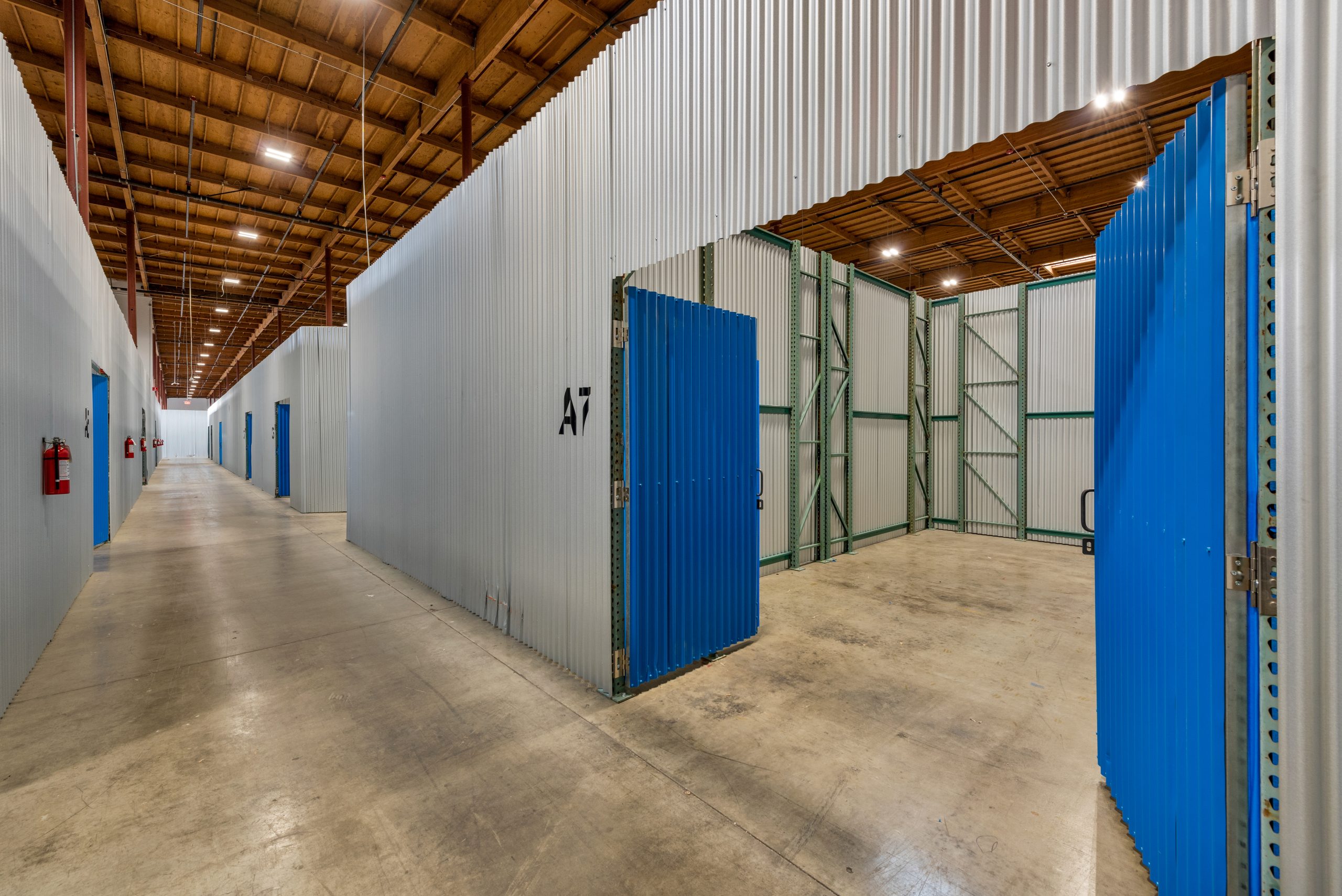
Flexible warehouse space in New York is scarce and expensive. The boroughs have little developable industrial land, so small-bay and flex space near consumers stays in steady demand. For small businesses that need a foothold near the urban core, flexible space is often the only practical option.
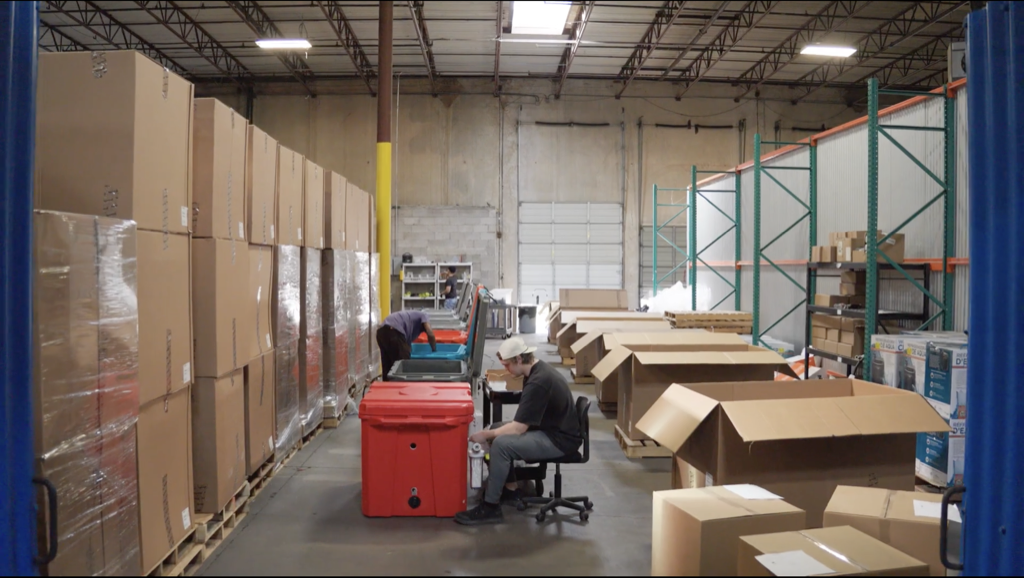
Most flexible-space users in New York City are last-mile and e-commerce operators serving city consumers. Contractors and building trades, food, beverage and specialty distributors, and importers using the Port of New York and New Jersey also lease it. So do growing businesses that want room to scale without a long-term commitment.
Browse available co-warehousing and small-bay warehouse listings on WareCRE’s New York City marketplace.
Looking for warehouse space in New York City?
Key Trends to Watch
1. Vacancy Has Risen Four Quarters in a Row
Outer Boroughs vacancy has risen for four straight quarters to 7.0%, which C&W describes as the highest level in recent history. Deal volume of 1.2 million SF in the first half was 33.5% below the first half of 2025. Until leasing recovers, there will be few move-ins to offset move-outs. For context on how small and large spaces are diverging nationally, see Small-Bay vs. Big-Box: What the Vacancy Gap Means for Tenants and Operators.
2. The Bronx Is Tightening While Queens Loosens
The two boroughs moved in opposite directions. Bronx vacancy fell 30 bps to 8.6%, net absorption is +235,578 SF year to date, and rents rose 1.1% to $32.69/SF/yr. Queens vacancy rose 80 bps to 6.7% and absorption is −661,312 SF year to date. A borough-level view matters more than the city average for site selection.
3. Long Island and Northern New Jersey Are Absorbing Space
Long Island tightened to 4.9% with an asking rent of $19.31/SF/yr, which C&W calls a new market high, and Northern New Jersey absorbed 2,344,001 SF in the first half. For occupiers that can serve the city from outside it, those markets carry more of the region’s growth this year. For how trade policy is affecting port-linked warehouse demand, see How Tariffs Are Reshaping Warehouse Demand in 2026.
Outlook: What to Watch in Q4 2026
C&W’s Q3 2026 MarketBeats are due in mid-October, with the year-end release to follow. Three measures will show whether the softening continues.
Watch whether vacancy stops rising. Four straight increases have taken the Outer Boroughs to 7.0%. A flat or lower Q3 reading would suggest the Queens move-outs were a one-off.
Watch whether rents keep drifting down. Asking rents have eased from their Q4 2024 peak to $27.50/SF/yr. Gains beyond the Bronx would slow the decline; further softening in Queens and Staten Island would extend it.
Watch whether suburban demand holds. Long Island and Northern New Jersey both absorbed space in Q2. Further gains there would confirm that regional demand is shifting to the city’s edges.
Find warehouse space in New York City
Browse co-warehousing, small-bay, and distribution listings across New York City.
Data sources: Cushman & Wakefield NY Outer Boroughs Industrial MarketBeat Q2 2026 (headline and borough figures; rents weighted net asking, $/SF/yr); Cushman & Wakefield New Jersey Industrial MarketBeat Q2 2026 (Northern and Central New Jersey); Cushman & Wakefield Long Island Industrial MarketBeat Q2 2026. Each report reflects the most recent vacancy, rental, and construction data available at the time of publication. We refresh our reports as new market data is released, and we’re continually expanding coverage to additional metros.
Related Resources
Frequently Asked Questions
What is the current industrial vacancy rate in New York City?
Industrial vacancy in New York City’s Outer Boroughs (the Bronx, Brooklyn, Queens and Staten Island) was 7.0% in Q2 2026, according to Cushman & Wakefield, up 40 basis points from Q1 and the fourth straight quarterly increase. Brooklyn was the tightest borough at 5.2%; Staten Island had the highest vacancy at 18.5%.
How much does warehouse space cost in New York City?
The overall average asking rent was $27.50/SF/yr net in Q2 2026, down $0.24 from Q1. Warehouse/distribution space averaged $28.12/SF/yr. By borough, overall asking rents were $32.69 in the Bronx, $29.41 in Queens, $25.46 in Brooklyn and $20.66 on Staten Island, all in $/SF/yr net.
Which New York City borough is best for warehouse space?
It depends on the requirement. Brooklyn is the tightest borough at 5.2% vacancy and holds most of the pipeline. Queens is the largest market at 57.3 million SF and has the most space coming available, with vacancy up to 6.7%. The Bronx asks the highest rent at $32.69/SF/yr but was the only borough where vacancy fell. Staten Island is the lowest-cost option at $20.66/SF/yr, with 18.5% vacancy.
How much industrial space is under construction in New York City?
737,027 SF was under construction in the Outer Boroughs at the end of Q2 2026, across three sites in Brooklyn (637,027 SF) and the Bronx (100,000 SF). Year-to-date completions totaled 366,264 SF. In separate C&W reports, Central New Jersey had 6,970,352 SF under construction and Long Island 1,735,618 SF.