Portland Industrial Vacancy Hits 6.1% — 2026 Warehouse Market Report
Portland Industrial Vacancy Hits 6.1% — Comprehensive 2026 Warehouse Market Report
The Portland metropolitan warehouse market is in transition. After hovering near historically tight vacancy levels through 2024, direct warehouse vacancy climbed to 6.1% in Q4 2025—a 110-basis-point jump year-over-year. Overall availability has reached 10.1%, marking a 15-year high. Yet despite this apparent softening, average asking rents continue their climb: $0.90 per square foot NNN in Q4 2025, up 7.1% annually. New product commands premiums well above $1.00/SF NNN. This report breaks down the Portland industrial landscape—from North/Northeast distribution corridors to emerging Hillsboro data center clusters—and reveals why the market’s narrative is far more complex than vacancy rates alone suggest.
Key Takeaways
- Vacancy is rising but supply remains constrained: Direct warehouse vacancy reached 6.1% in Q4 2025 (up 110 bps YoY), while overall availability hit 10.1%—the highest in 15 years. Yet Portland’s urban growth boundary continues to limit new supply.
- Rents keep climbing despite softening fundamentals: Average asking rent is $0.90/SF NNN (+7.1% YoY), with new deliveries commanding premiums above $1.00/SF NNN. This reflects strong embedded cost inflation and the value of newly built, efficient space.
- Leasing declined 12% annually, but absorption turned positive in 2025: Q4 2025 saw 1.63M SF leased (down from prior year), with negative Q4 absorption of -593K SF. Full-year 2025 absorption was +486K SF, suggesting market stabilization.
- Regional migration favors suburban and Washington submarkets: Post-COVID flight from northern city-core submarkets to Tigard, Clackamas, and Vancouver, WA continues. New product is concentrating where fewer zoning barriers exist.
- Data center demand emerging near Hillsboro: A 100K+ SF lease near Intel’s R&D campus signals growing data center appetite in the metro, diversifying beyond traditional logistics and manufacturing.
6.1%
Direct Warehouse Vacancy (Q4 2025)
$0.90
Avg Asking Rent (NNN/SF/Year)
233.2M
Total Inventory (SF)
+7.1%
Avg Rent Growth (YoY)
Portland Industrial Market Overview
The Portland metropolitan warehouse and industrial market encompasses approximately 233.2 million square feet of inventory across a sprawling five-county region. Over the past 15 months, this market has undergone a significant recalibration following one of the Pacific Northwest’s tightest industrial cycles.
The Vacancy Story. Through most of 2024 and early 2025, Portland’s industrial market sat at what many brokers called “historic tightness.” Then, in Q4 2025, vacancy jumped to 6.1% (Source: Kidder Mathews). This represents a 110-basis-point year-over-year increase—not dramatic by national standards, but significant for Portland, which had grown accustomed to sub-5% rates. When overall availability is factored in (counting space being offered for lease but not yet vacated), the figure swells to 10.1%, the highest mark in 15 years. This shift was inevitable: the market had simply been expanding faster than typical supply additions for too long.
What’s Driving the Change? Several forces converge to explain Portland’s transition from supply scarcity to modest oversupply in pockets. First, Q4 2025 deliveries totaled 927,000 square feet—concentrated in North/Northeast Portland and suburban submarkets. A significant portion of this new space remains unleased (approximately 260K SF of the 793K SF delivered to North/Northeast). Second, leasing velocity has slowed: 1.63M SF leased in Q4 2025, representing a 12% annual decline. Third, the labor market has cooled slightly. The Portland-Vancouver-Hillsboro MSA unemployment rate stands at 4.9%, still healthy, but manufacturing employment has contracted 5.6% year-over-year, losing 6,900 jobs and settling at 116,500. Trade, Transportation, and Utilities sectors employ 219,000, offering some offset, but the net effect is lower demand for industrial space.
The Rent Paradox. Despite rising vacancy, asking rents have not retreated. Average asking rent reached $0.90/SF NNN in Q4 2025, up 7.1% year-over-year (Source: Colliers). This apparent contradiction reflects several realities: (1) New, efficient product delivered at Class A rents ($1.00+/SF NNN) pulls the overall average upward; (2) pre-existing space in tight-location, well-tenanted buildings still commands premiums; (3) development costs, labor, and materials remain elevated; and (4) owners of newer product are not yet ready to cut rents aggressively. Thus, the market is bifurcating—premium inventory (Class A, modern logistics buildings) remains robust, while lower-tier space faces pressure.
Submarket Comparison & Characteristics
Portland’s industrial landscape is highly differentiated. Each submarket carries distinct characteristics, driven by proximity to ports, highways, labor pools, and regulatory environments. The following table captures key metrics and tenant profiles:
| Submarket | Vacancy | Characteristics | Key Tenants / Focus |
|---|---|---|---|
| Northwest Portland / Guild’s Lake | ~4-5% | Historic distribution hub near downtown; tight urban zoning; premium access to I-405 and downtown Portland core. Serves retail, e-commerce, and urban delivery operations. | Last-mile logistics, import/export, specialty distribution |
| North/Northeast Portland (I-5 Corridor) | 8.8% | Major distribution spine; 793K SF new deliveries in 2025 with ~260K SF unleased. Vacancy up 100 bps. Post-COVID shift: some tenants moving to suburbs and WA. Direct I-5 access toward Washington and California. | Regional and national distribution, food, manufacturing, light assembly |
| East Columbia / Airport Way | ~6-7% | Proximity to Portland International Airport (PDX); air cargo and logistics corridor. Good access to I-84 (eastbound toward Boise) and I-82 (toward Columbia Gorge). Growing focus on air-integrated operations. | Air cargo, time-sensitive logistics, import/export, PDX-adjacent users |
| Hillsboro | ~5-6% | Emerging data center market near Intel R&D campus; strong absorption despite low vacancy. Recent 100K+ SF data center lease signals market diversification. Tech-forward infrastructure investments. Access to I-5 and I-26. | Data centers, tech manufacturing, R&D support, light industrial |
| Clackamas | ~5-6% | Food manufacturing and processing hub; temperature-controlled and climate-controlled warehouse concentration. Southern suburb with moderate freeway access (I-205, OR-99E). Regional employment center. | Food production, cold storage, CPG manufacturing, regional distribution |
| Tigard | ~3-4% | Very tight with limited availability and higher rental costs. Southern metro submarket with strong demand but constrained supply. Post-COVID flight from city core has concentrated demand here. Close to I-5 and I-405. | Premium logistics, national distribution, e-commerce fulfillment, regional HQ |
| Vancouver, WA (Clark County) | ~4-5% | Post-COVID growth destination with most new industrial construction in the past 5 years. Fewer development restrictions than Portland proper. No statewide sales tax attracts retailers. Direct I-5 access. Strong tenant migration from Oregon. | Retail distribution, new logistics facilities, cross-border operations, tech manufacturing |
Rental Rate Trends & Pricing Dynamics
Rental pricing in Portland’s warehouse market reveals a market in transition—not from strength to weakness, but from artificial scarcity to a more normalized supply-demand equilibrium. Understanding this nuance is critical for both tenants and landlords.
Headline Metric: Average Asking Rent. The Q4 2025 average asking rent of $0.90/SF NNN represents a 7.1% year-over-year increase (Source: Kidder Mathews). This growth is fastest in submarkets with new deliveries (North/Northeast averaging slightly higher) and slowest in markets with elevated vacancy (segments of North Portland facing pressure). However, this headline number masks significant variation by product class.
Class Bifurcation. New, efficiently-designed logistics buildings—especially those meeting modern e-commerce and 3PL specifications (14’+ clear heights, modern HVAC, reliable utility capacity, truck court design)—command premiums well above $1.00/SF NNN. Several Class A buildings delivered in Q4 2025 and early 2026 have leased at $1.05–$1.15/SF NNN. Conversely, older industrial stock (built pre-2000, 10–12′ clear heights, dated loading infrastructure) faces downward pressure, with rates softening toward $0.75–$0.85/SF NNN in secondary markets. This rent spread reflects quality, location, and tenant preference for efficiency.
Why Rents Haven’t Fallen Faster. Despite rising vacancy, landlords have shown pricing discipline. Construction costs remain elevated (labor, materials, permitting delays), making replacement cost a floor for new projects. Additionally, owners of well-maintained, well-located buildings with strong tenant bases have little incentive to cut rents aggressively; they can wait for tenants seeking premium space. The market is operating with a form of “flight to quality”—the best buildings stay full at higher rents, while mediocre inventory competes harder on price.
Pro Tip
With vacancy rising and availability at 15-year highs, tenants in Portland now have genuine leverage for the first time since 2022. If your lease is expiring or you’re expanding, 2026 is an opportune moment to negotiate longer lease terms, rent concessions, or free rent periods—especially for older space or second-tier buildings. Landlords know they have inventory to fill. Conversely, if you’re seeking top-tier, newly-built space, expect less negotiation room; those buildings are still leasing in the low-double-digits despite broader softness.
Leasing Activity & Market Absorption
Leasing velocity and net absorption are the truest barometers of industrial market health. Both metrics have shifted meaningfully in Portland over the past 12–18 months.
Q4 2025 Leasing Activity. Portland recorded 1.63 million square feet of leasing in Q4 2025. While this represents robust absolute volume, it reflects a 12% year-over-year decline from Q4 2024. This slowdown has several explanations: (1) manufacturing headwinds are suppressing demand; (2) some tenants are deferring expansion decisions given economic uncertainty; (3) the market’s oversupply of second-tier space has reduced search urgency for movers; and (4) some regional consolidation continues, as users migrate from fragmented city-core locations to suburban, single-large-space alternatives. The decline is not dramatic—Portland is not a market in freefall—but it signals demand normalization after the hyper-growth years of 2021–2023.
Absorption: The Story Within. Q4 2025 net absorption came in at -593,000 square feet—negative. This sounds alarming but requires context. Negative absorption often reflects a timing lag: new supply delivered outpaces near-term lease-up, creating a brief gap before tenants occupy newly completed buildings. However, full-year 2025 net absorption was positive at +486,000 square feet, suggesting that by year-end, the market had begun digesting new supply and absorbing space at a rate faster than new completions (Source: Colliers, JLL). Thus, the market appears to have bottomed in Q4 and is stabilizing heading into 2026.
Sales Activity Surge. Interestingly, while leasing declined, industrial sales volume spiked: 2.55 million square feet transacted in Q4 2025, up 27.2% year-over-year. This reflects investor interest in discounted or stabilized industrial assets, as well as some owners electing to sell in a rising-cap-rate environment rather than hold and manage higher vacancy portfolios. Sales activity is a contrarian indicator—typically strong when leasing weakens—and suggests capital is repositioning toward yield-focused strategies.
Looking for warehouse space in Portland with today’s market dynamics working in your favor?
Browse Portland ListingsConstruction Pipeline & New Supply
Portland’s industrial pipeline is moderating but still substantial, with concentrated deliveries in specific corridors.
Q4 2025 Deliveries & Lease-Up Challenges. New completions in Q4 2025 totaled 927,000 square feet, with the heaviest concentration in North/Northeast Portland (approximately 793K SF), much of which remains unleased (roughly 260K SF or 33%). This represents a larger lease-up gap than in prior cycles, reflecting the broader availability creep. However, spec construction velocity has modestly slowed, suggesting developers are becoming more disciplined about breaking ground on new projects. Pre-leasing rates for new projects have tightened; deals are not the instant lease-ups they were in 2023–2024.
The Urban Growth Boundary Constraint. Portland’s defining regulatory feature—the Urban Growth Boundary (UGB)—continues to limit new industrial supply. Unlike many competing metros that can sprawl endlessly, Portland’s UGB has created a hard ceiling on developable acreage within the city and close-in suburbs. This is a long-term supply constraint that will prevent Portland from ever becoming a low-cost, commoditized industrial market like Phoenix or Las Vegas. However, it also means landlords of existing, well-located stock have a permanent competitive moat. The UGB has the paradoxical effect of limiting short-term supply elasticity while preserving long-term pricing power.
Outlook: Steady but Restrained. Into 2026, broker consensus (per JLL, Cushman & Wakefield) suggests deliveries will normalize at 600–800K SF annually—below the pandemic-era trendline but above long-term historical averages. Spec development has slowed, but build-to-suit activity remains healthy for tenants with strong credit. The upshot: steady supply growth, but nothing resembling the 2022–2025 surge.
Transportation & Logistics Infrastructure
Portland’s position as a Pacific Northwest logistics hub rests on a robust, multi-modal transportation infrastructure.
Port of Portland (Columbia & Willamette Rivers). The Port of Portland operates the only deepwater port on the Columbia River navigable to the Pacific. Container-capable terminals handle import/export of containerized cargo, automobiles, breakbulk, and bulk commodities. The port connects to deep-sea shipping routes to Asia and Europe. For companies with oceangoing logistics requirements—automotive distribution, containerized imports/exports, bulk commodity operations—the port is a major draw. Many Class A industrial buildings in Guild’s Lake and Northwest Portland are explicitly sited for port-adjacent operations.
Portland International Airport (PDX) Air Cargo. PDX is a growing air cargo hub for the Pacific Northwest. FedEx, UPS, Amazon Air, and other carriers operate significant cargo operations from PDX, creating demand for air-integrated logistics facilities. Tenants in the East Columbia / Airport Way submarket benefit from proximity to cargo operations and can offer time-sensitive, air-expedited fulfillment to regional and national networks.
Highway Network. Portland’s highway infrastructure is well-developed for a mid-size metro: I-5 (north-south spine, 174 miles to Seattle, 630+ miles to San Francisco); I-84 (eastbound toward Boise and the Inland Northwest); I-405 (inner-city bypass, critical for congestion relief); I-205 (east side connector to the southern metro and Clackamas). This network positions Portland as a natural distribution hub for West Coast supply chains and a staging point for deep inland (Mountain West) operations.
Rail Service. Union Pacific and BNSF both operate rail yards and switching facilities in the Portland metro. Class A industrial buildings often include rail sidings or rail-adjacent locations, critical for bulk logistics, automotive distribution, and commodity-heavy users. Rail becomes increasingly valuable as trucking costs rise and operational constraints tighten.
Proximity to Major Markets. Portland sits roughly equidistant to Seattle (174 miles north) and San Francisco (636 miles south), making it a natural supply chain consolidation point for West Coast retailers, e-commerce operators, and manufacturers. Drive time to major markets ranges from 2.5 hours (Seattle), 6 hours (San Francisco), to 6–8 hours (Los Angeles). This positioning is especially valuable for just-in-time and cross-docking operations.
Why Portland for Your Warehouse Operations
Beyond vacancy rates and rental prices, Portland offers distinct strategic advantages for industrial and warehouse operations.
Supply Constraints = Long-Term Pricing Power. The Urban Growth Boundary is a regulatory constraint that frustrates developers but protects existing operators. If you secure a long-term lease on modern, well-located space, you benefit from a permanent scarcity moat. New competitors cannot easily build additional supply, limiting price competition over the lifetime of your operation. This is especially valuable for users seeking multi-decade stability.
Diverse Employment Base & Skilled Labor. The Portland metro is not a single-industry economy. While manufacturing has softened in 2025, the region hosts a mix of sectors: technology and software (major presence in Hillsboro near Intel), healthcare, retail, business services, and creative industries. This diversity creates a stable, educated labor pool with supply chain, logistics, and technical expertise. Unemployment at 4.9% is manageable, and the region continues to attract talent seeking Pacific Northwest quality-of-life (outdoor recreation, progressive urban culture, relatively low cost-of-living compared to Bay Area or Seattle).
Multimodal Logistics Connectivity. Few U.S. metros offer the integrated transportation infrastructure Portland provides: deep-water port, international airport with air cargo, interstate highway network, and rail. This allows a single warehouse operation to support ocean import/export, air expedited shipments, truck distribution, and rail bulk movements—all from one location or a tightly-clustered footprint. The operational flexibility is substantial.
Timing & Market Opportunity. For the first time since 2022, Portland’s warehouse market is offering tenant leverage. Landlords have inventory to move, concessions are more common, and negotiation windows are open. If you’ve been deferring a warehouse expansion or relocation, early 2026 is tactically favorable. The availability spike is unlikely to persist indefinitely—history suggests Portland’s supply/demand balance will re-tighten by 2027–2028 as absorption normalizes and spec development slows further.
Pro Tip
Landlords in tight markets often offer their best economics (free rent, improvement allowances, renewal options) when facing elevated vacancy. Portland is in that window right now. If you’re evaluating a warehouse move or expansion, securing a long-term lease or renewal before the market re-tightens (likely late 2026 or 2027) locks in favorable terms that might be unavailable in a supply-constrained market. Conversely, don’t overextend on space; the market is still shedding 12% from prior leasing activity, so realistic sizing is important.
Available Warehouse Spaces in Portland
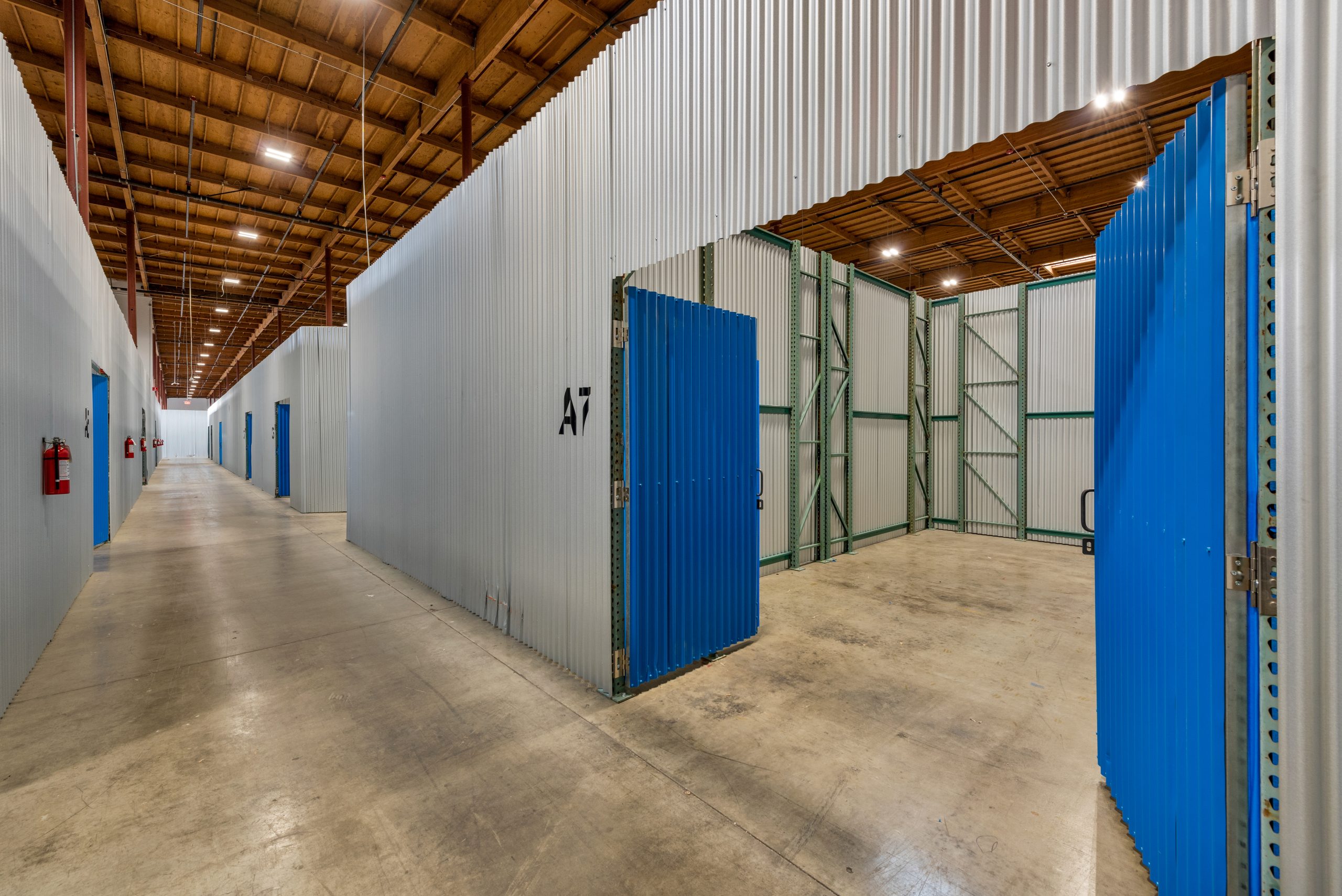
- Browse ReadySpaces Portland Center — 2455 NW Nicolai St, 72,500 SF, 12′ clear height, 5 loading docks, 1 drive-in, minutes from downtown + I-5
- View All Portland Industrial Listings on WareCRE — Browse active warehouse and industrial opportunities across all Portland submarkets
Frequently Asked Questions
What is the current warehouse vacancy rate in Portland?
Direct warehouse vacancy in Portland reached 6.1% in Q4 2025 (Source: Kidder Mathews), up 110 basis points year-over-year. Overall availability—including space being offered but not yet vacated—stood at 10.1%, the highest in 15 years. This reflects a moderating supply-demand balance after several years of tight availability, though certain submarkets (especially Tigard and Guild’s Lake) remain quite constrained.
How much does warehouse space cost in Portland?
Average asking rent in Portland’s industrial market is $0.90 per square foot (NNN) annually, reflecting a 7.1% increase year-over-year (Source: Colliers). However, this varies significantly by product class and location. New, Class A logistics buildings (14’+ clear height, modern amenities) command $1.00–$1.15+/SF NNN. Older Class B space in secondary locations may rent for $0.75–$0.85/SF NNN. Submarkets like Tigard and Guild’s Lake command premiums due to low vacancy; Hillsboro, Clackamas, and parts of North/Northeast Portland offer lower average rents.
What are the best industrial submarkets in Portland?
The best submarket depends on your use case. Guild’s Lake / Northwest Portland excels for urban-core distribution and last-mile logistics, with direct port and I-405 access but tight availability (~4–5% vacancy). North/Northeast Portland is the regional distribution spine with abundant new supply and moderate rents, though recent deliveries have elevated vacancy to 8.8%. Tigard is ideal for premium logistics with very low vacancy (~3–4%) and higher rents. Hillsboro is emerging as a data center and tech manufacturing destination. Clackamas specializes in food manufacturing and cold storage. Vancouver, WA offers newer construction and fewer development restrictions, with strong post-COVID growth. Choose based on your customer base proximity, supply chain requirements, and labor availability.
Is Portland a good location for distribution and logistics operations?
Yes, for several reasons. Portland offers multimodal logistics connectivity (Port of Portland deepwater shipping, PDX air cargo, I-5/I-84 highway access, Union Pacific and BNSF rail). The metro is positioned between Seattle (2.5 hours) and the Bay Area (6 hours), making it a natural supply chain consolidation point. The Urban Growth Boundary constrains new competition, preserving long-term pricing power. However, the region is experiencing manufacturing decline (down 5.6% YoY), so demand is tilted toward regional distribution, e-commerce fulfillment, and import/export operations rather than heavy manufacturing. For logistics-intensive operations, Portland is excellent; for production-heavy users, the labor market has softened.
What size warehouse spaces are available in Portland?
Portland’s market accommodates a wide range. Single-tenant, build-to-suit buildings typically range from 50,000 SF to 300,000+ SF, especially in North/Northeast and suburban corridors where larger sites are available. Multi-tenant industrial parks offer spaces from 3,000 SF to 100,000+ SF. Class A distribution facilities often start at 50,000 SF and scale to 200,000+ SF. Class B/C older industrial buildings may offer space as small as 5,000 SF. The largest available contiguous blocks (100K+ SF) are most readily found in North/Northeast Portland and Hillsboro. For smaller requirements (under 25,000 SF), Guild’s Lake and urban-core submarkets have fragmented availability. WareCRE’s Portland portfolio spans this full spectrum—browse current listings to find your size range.
Find Your Portland Warehouse Space Today
The Portland industrial market is shifting. With availability at 15-year highs and tenant leverage on the rise, now is an ideal time to negotiate favorable lease terms. Whether you’re seeking a single Class A asset or scanning for expansion opportunities, WareCRE’s Portland portfolio spans all submarkets and size ranges.
Browse Portland Listings on WareCRE