Miami Industrial & Warehouse Market Report | Q1 2026
Key Takeaways
- Miami industrial vacancy reached 7.0-7.2% in Q1 2026, the highest in five years, but the rise is supply-driven, not a demand collapse. Leasing activity held steady.
- Average asking rents softened to $16.42/SF NNN (-0.4% YoY) overall, while Class A distribution space held firm at $18-$20+/SF. Small-bay rents remain resilient.
- The construction pipeline (4.1M SF) is down 15% from last year. The peak is behind us. Expect vacancy to plateau and begin tightening in late 2026.
- Small-bay and co-warehousing space continues to outperform. 11 properties from 4 operators are listed on WareCRE’s Miami marketplace, with structural undersupply keeping this segment tight.
7.2%
Overall Vacancy
$16.42
Avg. Asking Rent (NNN/SF)
4.1M
SF Under Construction
-15%
Pipeline YoY Change
Miami’s industrial market has entered a new chapter. After years of sub-5% vacancy and double-digit rent growth, South Florida’s warehouse sector is recalibrating. Vacancy has climbed to roughly 7.2% as the largest construction pipeline in the metro’s history delivers into a market where leasing velocity has normalized. But the headline number obscures a structural split: big-box distribution space is absorbing slowly, while small-bay and flex warehouse demand remains tight across Broward, Miami-Dade, and Palm Beach counties.
For operators and tenants navigating this market, the data tells a more nuanced story than “vacancy is up.” Here’s what the numbers actually show, and what they mean for pricing, leasing, and investment decisions in 2026.
Market Snapshot: Q1 2026
| Metric | Q1 2026 | Change (YoY) |
|---|---|---|
| Overall vacancy | 7.0-7.2% | +200-250 bps |
| 5-year average vacancy | 4.7% | – |
| Avg. asking rent (overall) | $16.42/SF NNN | -0.4% |
| Class A distribution rent | $18-$20+/SF NNN | Flat to +1% |
| Under construction | 4.1M SF | -15% from Q1 2025 |
| Net absorption (trailing 4Q) | Positive but decelerating | – |
Miami-Dade industrial vacancy reached 8.0% in Q1, the highest in five years and 320 basis points above the five-year quarterly average of 4.7%. Across the broader tri-county South Florida market (Miami-Dade, Broward, Palm Beach), vacancy sits in the 6.1-7.2% range depending on the source and geographic definition.
The key context: this isn’t a demand collapse. Leasing activity held in line with recent quarters. Vacancy rose because new supply delivered faster than the market could absorb it, a pipeline problem, not a demand problem.
Rent Trends: Softening, Not Crashing
Average asking rents across the Miami metro came in at $16.42/SF NNN in Q1 2026, down 0.4% year over year. That’s the first negative annual print since 2020, but it’s a rounding error compared to the 30%+ rent growth the market posted between 2021 and 2024.
The bifurcation is sharper than the average suggests:
Class A distribution (100,000+ SF): Rents for newer, institutional-grade distribution space held firm at $18-$20+/SF NNN. Flight-to-quality leasing continues to favor buildings with 36’+ clear heights, ESFR sprinkler systems, and proximity to major highway interchanges. Landlords of Class A product are holding rate and offering marginal concessions, a few months of free rent rather than cutting face rates.
Class B/C multi-tenant and flex: Older, smaller-bay product is seeing more mixed results. Well-located buildings in infill submarkets (Hialeah, Medley, Doral, Airport West) are holding rents at $12-$15/SF NNN with minimal downtime. Commodity space in secondary locations is experiencing longer lease-up timelines and more tenant leverage on terms.
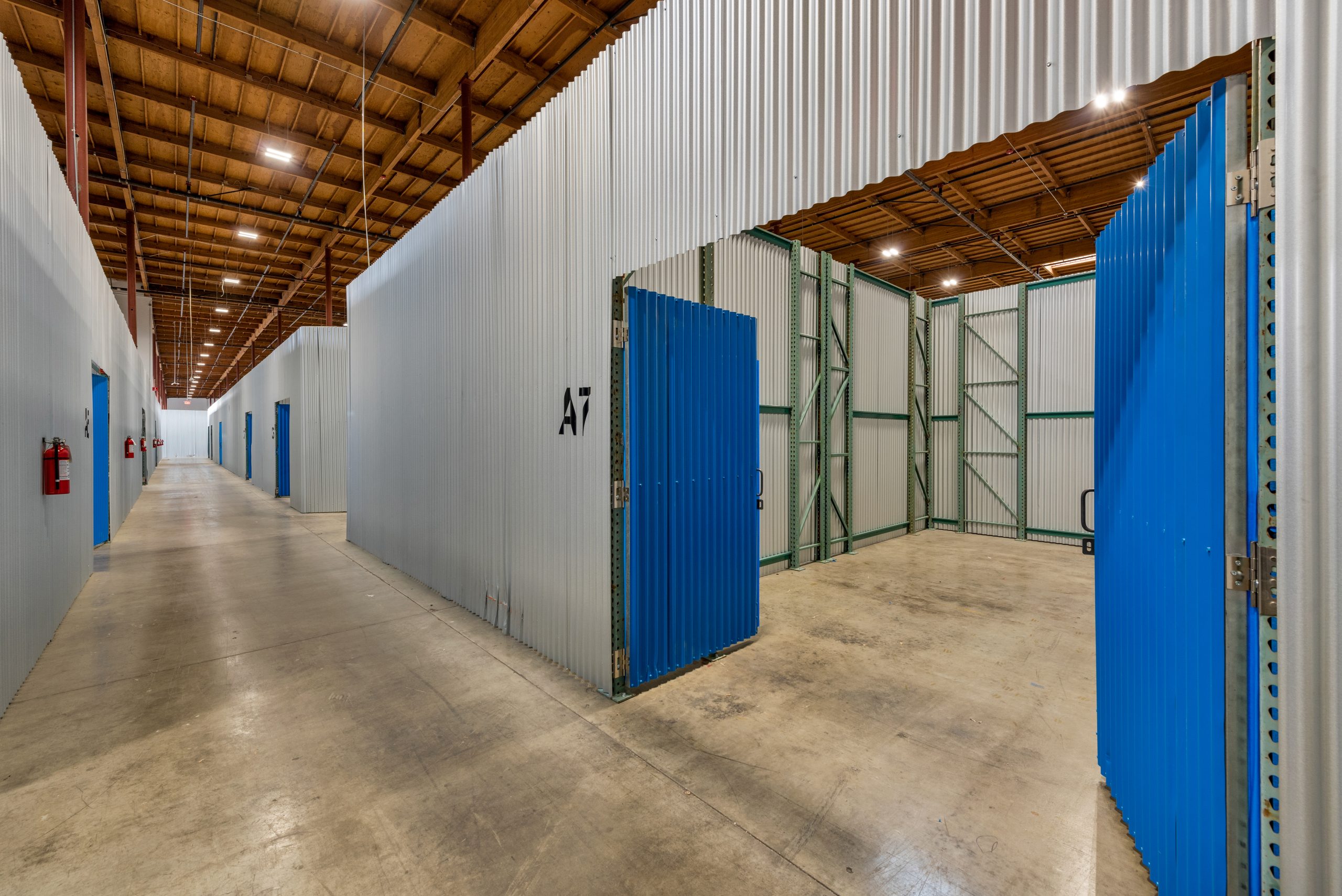
Small-bay and co-warehousing: The under-10,000 SF segment continues to outperform. Limited new supply in this category (developers don’t build speculative small-bay) means vacancy stays structurally tighter than the overall market. Operators with flex units in the 500-5,000 SF range report steady demand, particularly from e-commerce businesses, contractors, and light manufacturers priced out of traditional commercial space.
Construction Pipeline: The Peak Is Behind Us
Miami’s industrial construction pipeline totals approximately 4.1 million SF as of Q1 2026, down more than 15% from the 4.7 million SF underway a year ago. That’s the signal that matters: the wave of speculative construction that drove vacancy up is cresting.
Deliveries over the next 12 months will still add supply pressure, particularly in the Homestead/South Dade and Hialeah Gardens corridors where several large speculative projects broke ground in 2024. But new starts have pulled back sharply as developers face tighter lending conditions and more cautious underwriting.
Build-to-suit activity is the bright spot. BTS projects under construction climbed 14% year over year, the highest level since early 2024, as larger occupiers with specific operational requirements bypass the spec market entirely. This trend positions BTS as a primary absorption driver through the back half of 2026.
For Tenants
The window of leverage is open but narrowing. If you’re shopping for 20,000+ SF of big-box distribution space, you have more options and more negotiating power than at any point since 2020. If you need under 10,000 SF in Doral, Airport West, Hialeah, or Fort Lauderdale, you’re still competing for limited inventory. Browse Miami warehouse listings on WareCRE to see what’s available now.
For Operators
If you own well-located small-bay product, you’re in a fundamentally different market than owners of new spec big-box. The data supports holding rate on quality small-bay product. If your vacancy is rising, it’s building-specific, not market-driven.
Submarket Breakdown
Doral / Airport West (Miami-Dade)
The institutional core of Miami industrial. Home to the densest concentration of logistics, distribution, and light manufacturing in South Florida. Vacancy here runs below the metro average. Class A space near MIA and the Palmetto/826 interchange commands premium rents ($17-$20/SF NNN). New supply has been limited by land constraints, which protects existing operators.
Hialeah / Medley (Miami-Dade)
Miami’s workhorse industrial corridor. Heavy concentration of multi-tenant small-bay buildings serving contractors, auto parts distributors, food production, and small manufacturers. Rents are more moderate ($11-$14/SF NNN) but vacancy in well-maintained small-bay product stays tight. This is where co-warehousing and flex operators see the strongest tenant demand relative to supply.
Homestead / South Dade (Miami-Dade)
The epicenter of new speculative construction. Several large distribution buildings (200,000+ SF) delivered or are underway, driving vacancy above 10% in this submarket. Rents are discounted ($10-$13/SF NNN) to attract tenants southward. Suited for cost-sensitive distribution operations with less time-critical delivery requirements.
Fort Lauderdale / Broward County
A more balanced market with a mix of older multi-tenant flex buildings and newer mid-bay distribution. Vacancy is moderate (5-7%) and rents ($13-$16/SF NNN) reflect Broward’s position between Miami-Dade’s premium pricing and more suburban alternatives. Strong demand from e-commerce operators and last-mile logistics.
Palm Beach County
The tightest submarket in the tri-county area for small-bay industrial. Limited speculative development, growing population base, and increasing demand from high-net-worth consumer-driven businesses (luxury goods storage, specialty distribution). Rents are climbing ($14-$17/SF NNN) with limited availability under 10,000 SF.
| Submarket | Vacancy | Rent Range (NNN/SF) | Profile |
|---|---|---|---|
| Doral / Airport West | Below avg. | $17-$20 | Institutional logistics, Class A |
| Hialeah / Medley | Tight | $11-$14 | Small-bay, multi-tenant, flex |
| Homestead / South Dade | 10%+ | $10-$13 | New spec big-box, value play |
| Fort Lauderdale / Broward | 5-7% | $13-$16 | Balanced, e-commerce & last-mile |
| Palm Beach County | Tightest | $14-$17 | Limited supply, affluent demand |
Co-Warehousing & Flexible Warehouse Space in Miami
This is where WareCRE’s proprietary marketplace data adds a layer that institutional research doesn’t cover.
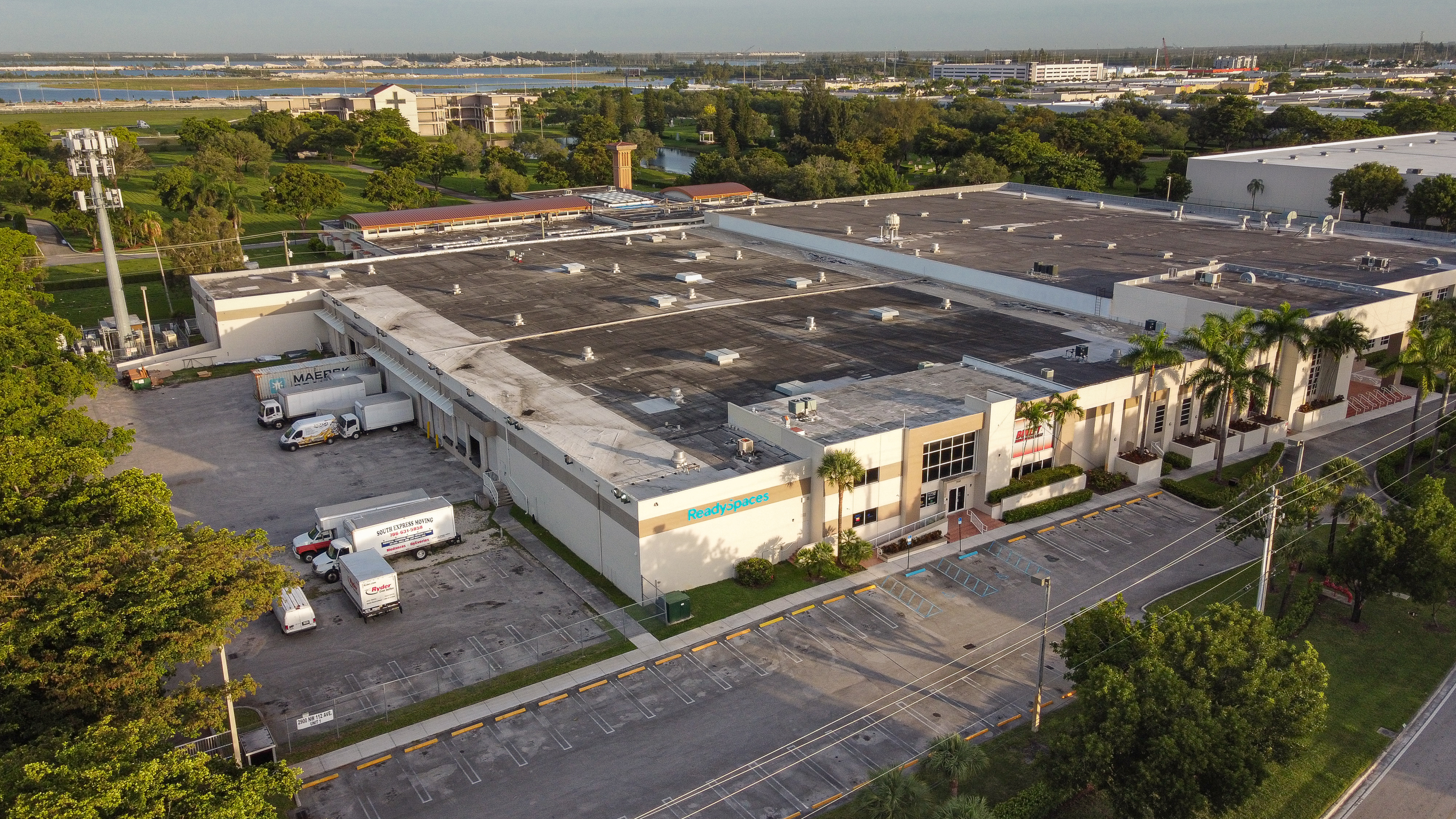
The co-warehousing landscape: Miami’s co-warehousing and flex warehouse market includes 11 properties listed on WareCRE from 4 distinct operators, ReadySpaces, Saltbox, SmallBay, and BaySpace. Coverage spans Miami-Dade (Doral, Medley) and Broward County (Fort Lauderdale, Pompano Beach, Deerfield Beach, Oakland Park, Lauderhill, Margate).
Available unit sizes: The range runs from micro-units as small as 114 SF (BaySpace Medley) to mid-bay options up to 16,000 SF (SmallBay Mercantile Center in Naples). The sweet spot for tenant demand: 500-3,000 SF units with dock-high or grade-level access.
Pricing signals: Where pricing is published, entry points start around $615/month for the smallest units. Most properties require direct inquiry, a reminder that even in the co-warehousing segment, pricing transparency varies by operator.
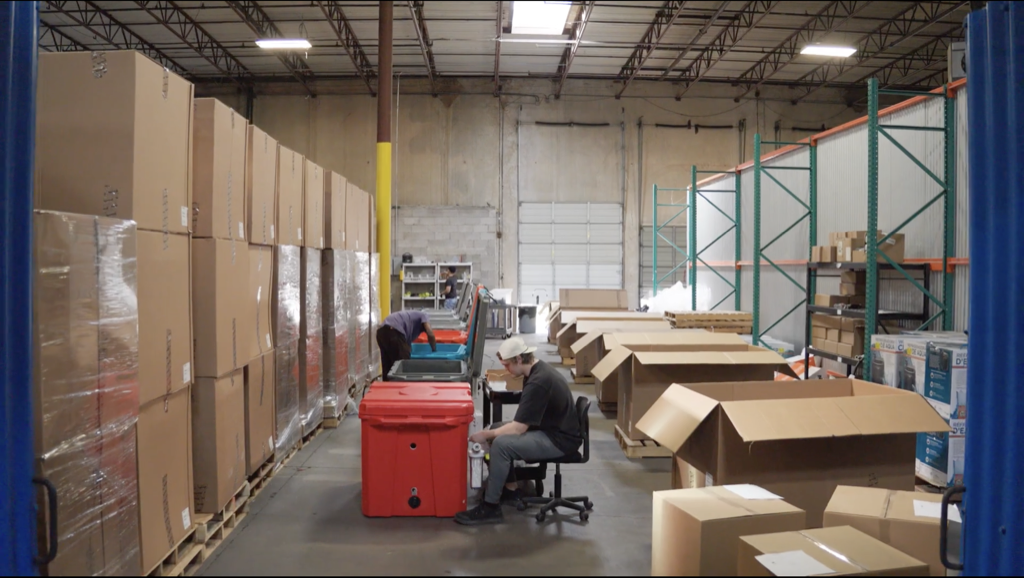
Who’s leasing: E-commerce operators needing fulfillment space near Miami’s population centers, contractors requiring tool and material storage, food producers serving South Florida’s hospitality industry, and import/export businesses leveraging proximity to PortMiami and MIA.
The structural advantage: No developer is building speculative small-bay co-warehousing. Every unit in this segment is either a conversion of existing multi-tenant industrial or a purpose-built operator facility. That supply constraint, combined with Miami’s continued population growth (roughly 1,000 net new residents per week across South Florida), keeps the demand-supply balance favorable for operators in this niche.
Looking for small-bay warehouse space in Miami?
Browse Miami ListingsKey Trends to Watch
1. Tariff-Driven Inventory Front-Loading
With effective tariff rates at levels not seen in a century, Miami importers are front-loading inventory, pulling goods in before potential rate increases. This creates near-term absorption pressure, particularly for 10,000-50,000 SF distribution space near the airport and port. If trade policy stabilizes, the pre-buy wave could leave excess inventory needing storage. If it escalates, reshoring and nearshoring trends favor Miami as a gateway for Latin American supply chains. Read more: Industrial Real Estate Trends 2026.
2. Flight to Quality Continues
Tenants are increasingly prioritizing Class A assets with higher clear heights, modern fire suppression, and energy efficiency. Older, functionally obsolete buildings face longer vacancy periods and rent pressure. Owners of aging multi-tenant product should evaluate capital improvements or repositioning.
3. Small-Bay Structural Undersupply
The national trend holds in Miami: small-bay vacancy is structurally tighter than big-box. Very little new small-bay supply has been built in the last decade, while demand from SMBs, e-commerce, and last-mile operators grows. This is the segment where rent growth has the most room to run.
4. Insurance and Climate Risk Pricing
South Florida’s insurance market continues to impact operating costs. Property insurance premiums, which flow through to tenants via NNN charges, have increased 25-40% over the past two years in some parts of Miami-Dade. Tenants evaluating all-in occupancy costs should model insurance escalation into their lease analysis. If you’re new to NNN leases, our Industrial Real Estate Education Guide breaks down how these costs work.
Outlook: What to Watch in Q2-Q3 2026
Miami’s industrial market is normalizing, not deteriorating. The fundamentals that made South Florida the fastest-growing industrial market in the Southeast (population growth, port and airport infrastructure, Latin American trade connectivity, and no state income tax) haven’t changed. What’s changed is supply caught up with demand after a historic construction cycle.
Expect vacancy to plateau in the 7-8% range through mid-2026 as remaining pipeline deliveries hit the market, then begin tightening in late 2026 as new starts decline and absorption catches up.
Rents will stay flat to slightly negative for big-box distribution through 2026. Small-bay and flex rents will hold or grow modestly as structural undersupply persists.
The best-positioned operators are those with well-located small-bay and co-warehousing product in infill corridors, Doral, Hialeah, Medley, and the Fort Lauderdale industrial core. These buildings face limited new competition and serve the fastest-growing demand segment.
The biggest risk is a prolonged trade policy disruption that reduces import volumes through PortMiami and MIA. Miami’s industrial market is disproportionately tied to international trade. Any sustained decline in cargo throughput would hit absorption harder here than in domestic distribution markets like Dallas or Atlanta.
Find warehouse space in Miami, no broker needed
Browse co-warehousing, small-bay, and flex listings with real pricing from operators across South Florida.
Search Miami ListingsData sources: JLL Q1 2026 Miami Industrial Market Dynamics, Savills Miami-Dade Q1 2026 Industrial Report, Cushman & Wakefield Miami MarketBeat, WareCRE marketplace data (April 2026).
Related Resources
Frequently Asked Questions
What is the current industrial vacancy rate in Miami?
Miami-Dade industrial vacancy reached approximately 7.0-8.0% in Q1 2026, depending on the source and geographic scope. This is the highest level in five years, driven primarily by new speculative construction delivering into the market rather than a decline in tenant demand.
How much does warehouse space cost in Miami?
Average asking rents in the Miami metro are approximately $16.42/SF NNN as of Q1 2026. Class A distribution space commands $18-$20+/SF, while small-bay and multi-tenant flex space in established corridors (Hialeah, Medley, Doral) ranges from $11-$15/SF NNN. Co-warehousing units start around $615/month for the smallest spaces.
Where are the best areas to lease warehouse space in Miami?
Doral and Airport West are the premium logistics corridors closest to MIA. Hialeah and Medley offer the densest concentration of small-bay industrial at moderate rents. Fort Lauderdale and Broward County provide a balanced option between Miami-Dade pricing and broader availability. Your best submarket depends on whether you prioritize proximity to the port/airport, rent levels, or unit size availability.
Is now a good time to lease warehouse space in Miami?
For big-box tenants (20,000+ SF), yes. You have more leverage than at any point since 2020, with rising vacancy and softening rents. For small-bay tenants (under 10,000 SF), inventory remains tight in the most desirable corridors and competition for quality space continues. In both cases, the construction pipeline is declining, which means today’s tenant-favorable conditions in larger spaces may not last into 2027.