Climate-Controlled Warehouse Space: What It Is, What It Costs and Who Needs It
Last updated: November 21, 2026
Key Takeaways
- Climate-controlled warehouse space regulates both temperature and humidity. Temperature-controlled space regulates temperature only.
- There is no official standard. Common ranges run from about 55 to 85 degrees Fahrenheit, with relative humidity held between about 30% and 55%.
- It is not the same as cold storage, which keeps products refrigerated at 32 to 40 degrees or frozen below 32.
- Expect to pay more. In WareSpace’s published ranges for two markets, climate-controlled space cost roughly 60% to 90% more per square foot than standard space at the midpoints.
- Before leasing, get the temperature and humidity range in writing and ask how the space is monitored, how often the HVAC runs and who pays for utilities.
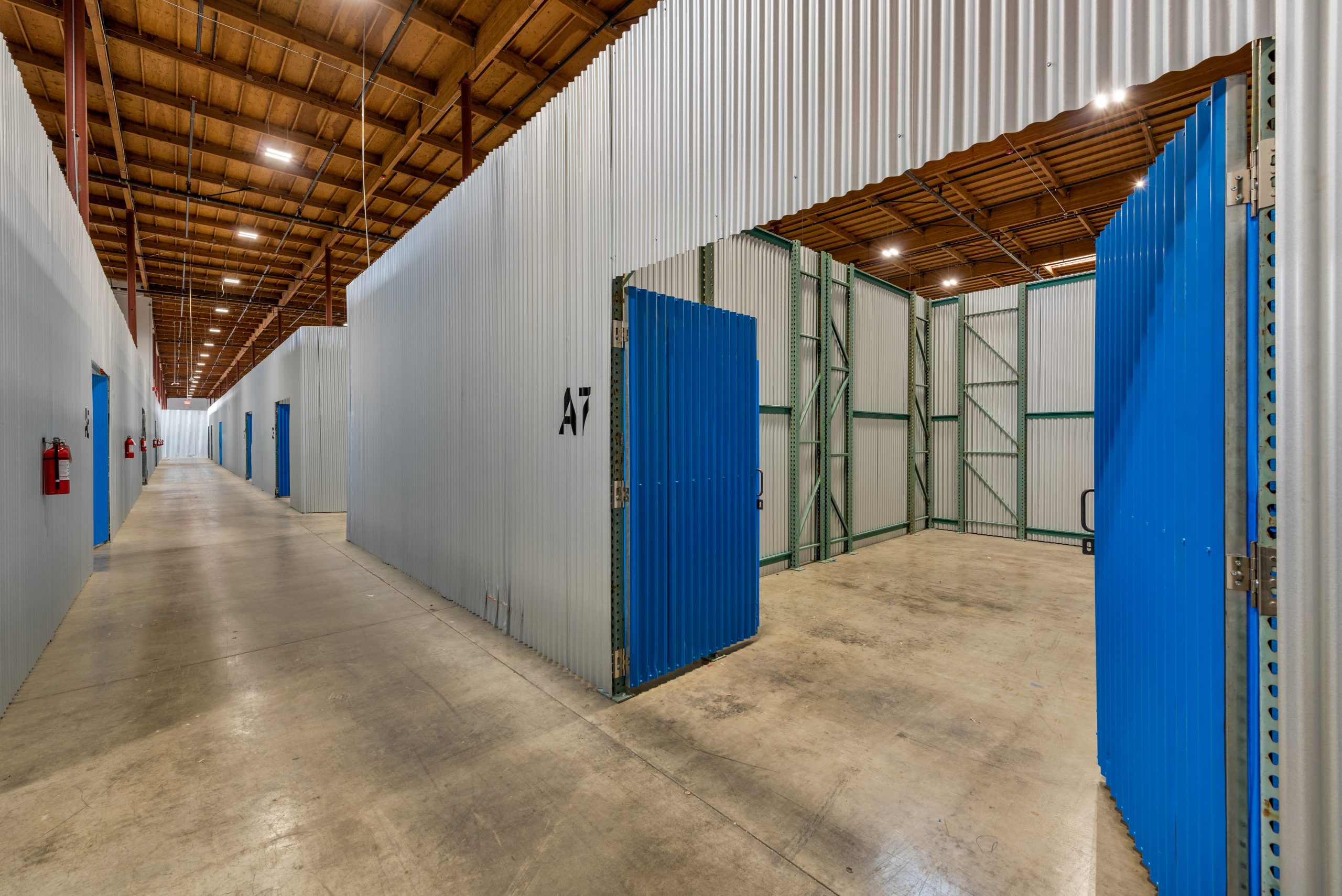
Some inventory can sit in a standard warehouse year-round. Other products warp, melt, mold, corrode or expire when the building swings from a hot summer afternoon to a cold winter night. Climate-controlled warehouse space keeps conditions steady so those products stay sellable.
This guide explains what climate control actually means, how it differs from temperature-controlled and cold storage, who needs it, what it costs and what to check before you lease.
What Is a Climate-Controlled Warehouse?
A climate-controlled warehouse manages the indoor environment, not just the temperature. Facilities regulate temperature and humidity, and often air quality, usually with an HVAC system paired with dehumidifiers. That is the key difference from temperature-controlled space, which regulates temperature only.
The term has no official definition. PODS notes there does not seem to be an official standard for climate control in the storage industry, and storage specialist Wood-Lee points out that the actual environment can differ a great deal between facilities that use the same label. That is why the numbers in your lease matter more than the label on the door.
Climate-Controlled vs. Temperature-Controlled vs. Cold Storage
On a phone, swipe the table sideways to see all four columns.
| Storage type | Good fit for | Typical temperature | Humidity |
|---|---|---|---|
| Ambient (standard) | Shelf-stable goods, tools, equipment, most packaged products | Not regulated; often about 60 to 80°F | Not regulated |
| Temperature-controlled | Heat- or cold-sensitive goods that are not moisture-sensitive | Held within a set range | Not regulated |
| Climate-controlled | Electronics, paper and books, art, wine, cosmetics, wood and leather goods | About 55 to 85°F, depending on the facility | About 30% to 55% |
| Cold storage | Fresh and frozen food, some pharmaceuticals, floral | 32 to 40°F (refrigerated); below 32°F, often near 0°F (frozen) | Managed for the product |
The ranges come from industry sources rather than a single standard. Red Stag Fulfillment describes climate-controlled storage as 55 to 85°F with humidity between 30% and 50%, ambient storage as 60 to 80°F, cold storage as 32 to 40°F and frozen storage as below 32°F, usually around 0°F. PODS describes a common climate-control target of 55 to 78°F with humidity no higher than 55%. ShipBob cites ambient storage at 59 to 77°F.
55–85°F
Common climate-controlled temperature range (Red Stag)
30–55%
Typical relative humidity range (Red Stag, PODS)
Who Needs Climate-Controlled Space?
The test is simple: would a hot week, a cold snap or a humid month damage your product or shorten its shelf life? Businesses that commonly answer yes include:
- Electronics and batteries, which are vulnerable to heat and condensation.
- Paper, books, labels and printed packaging, which curl, stick and mildew in humid air.
- Wine, art and collectibles. Speed Commerce lists publishing, art galleries, electronics and wine retail among the businesses that benefit from humidity-controlled storage.
- Cosmetics, candles, supplements and some food products, which can melt, separate or degrade in heat.
- Wood, leather and textiles, which warp, crack or grow mold when humidity swings.
If your products need refrigeration, you need cold storage rather than climate control. If they only need protection from freezing or extreme heat, temperature-controlled space may be enough.
What Climate-Controlled Warehouse Space Costs
Climate control costs more to build and to run, and that shows up in rent. Building costs are higher because of the HVAC equipment and extra insulation. StoreLocal suggests adding about 15% to the per-square-foot cost of a self-storage build for climate control, and Inside Self Storage has put the premium at about 20%.
For refrigerated buildings the gap is far larger: JLL figures cited by Logistics Management put new cold storage construction at about $130 to $180 per square foot, against $70 to $90 for a conventional dry warehouse.
Rent premiums vary by market and unit size. WareSpace, a co-warehousing operator, has published market guides with these ranges for small units, in dollars per square foot per month:
| Market | Standard | Climate-controlled | Extra for 500 SF* |
|---|---|---|---|
| Salt Lake City | $0.65–$0.85 | $1.15–$1.65 | +$325/mo |
| Twin Cities | $0.55–$0.80 | $0.90–$1.30 | +$210/mo |
These are market ranges from WareSpace’s guides, not WareSpace’s own unit prices, which start at $1,000 a month all-inclusive. *The last column is WareCRE’s calculation of the extra monthly rent for a 500 SF unit at the midpoints of the published ranges. Your lease structure also matters. Under a net lease, you may pay the utility bill for round-the-clock HVAC on top of base rent, while all-inclusive and gross arrangements fold it in.
60–90%
More rent per SF for climate-controlled space at range midpoints, two markets (WareSpace guides)
$210–$325
More per month for 500 SF at range midpoints (WareCRE calculation)
Need temperature-sensitive storage?
See Temperature-Controlled ListingsWhat to Check Before You Lease
- The range, in writing. Ask for the target temperature and humidity range and put it in the lease or license, since the term has no standard meaning.
- Humidity control, specifically. Confirm there is dehumidification, not only heating and air conditioning.
- Run schedule. Make sure the HVAC runs around the clock. WareSpace, for example, describes its climate-controlled units as running HVAC continuously, not just during business hours.
- Monitoring and alarms. Ask how conditions are measured, whether readings are logged and who gets alerted if the system fails.
- Building envelope. Check roof and wall insulation and, for larger spaces, insulated dock doors and seals that limit heat loss during loading.
- Backup plan. Ask about backup power or a response plan for outages, especially in extreme-heat or extreme-cold markets.
- Utilities and maintenance. Clarify who pays for power and who maintains and repairs the HVAC.
Ask this on the tour
“What were the highest and lowest readings in this space last summer and last winter?” A facility that logs conditions can answer quickly. One that cannot may be offering temperature control under a climate-control label.
Temperature-Controlled and Cold Storage Listings on WareCRE
WareCRE lists temperature-sensitive space alongside standard warehouse and flex listings. Current examples are temperature-controlled and cold storage space, so confirm the exact temperature and humidity range with each owner:
- Best Way Warehouse, temperature-controlled warehouse space in East Hanover, New Jersey
- SmallBay Pompano Distribution Center, warehouse and cold storage in Pompano Beach, Florida
- 2153 NW 86th Ave, a cold storage warehouse in Doral, Florida
- Cold storage and warehouse space in Etobicoke, Ontario
For smaller units, WareSpace says climate control is included in every unit, and BaySpace and RISE Commercial District say their warehouse space is climate-controlled. See our WareSpace alternatives comparison or the co-warehousing operator comparison, then confirm the conditions with each location directly.
Find climate-controlled and cold storage space
Compare warehouse, flex and cold storage listings near you.
Browse Listings by CityRelated Resources
Frequently Asked Questions
What is a climate-controlled warehouse?
A climate-controlled warehouse regulates both temperature and humidity, and often air quality, so products that are sensitive to heat, cold or moisture stay within a set range. A temperature-controlled warehouse regulates temperature only. There is no single industry standard, so the exact ranges vary by facility.
What is the difference between climate-controlled and temperature-controlled space?
Temperature-controlled space manages temperature only. Climate-controlled space manages temperature and humidity, usually with HVAC plus dehumidifiers or humidifiers. If moisture can damage your products, such as paper, wood, electronics or wine, ask specifically for humidity control.
What temperature is climate-controlled storage kept at?
There is no official standard. PODS describes a common range of 55 to 78 degrees Fahrenheit with humidity no higher than 55%, and Red Stag Fulfillment cites 55 to 85 degrees with humidity between 30% and 50%. Ask each facility for its target range in writing.
How much more does climate-controlled warehouse space cost?
It depends on the market and unit size. In ranges published by WareSpace, climate-controlled space ran about $1.15 to $1.65 per square foot per month in Salt Lake City against $0.65 to $0.85 for standard space, and $0.90 to $1.30 against $0.55 to $0.80 in the Twin Cities. At the midpoints, that is roughly 60% to 90% more.
Is cold storage the same as climate-controlled storage?
No. Cold storage keeps products refrigerated, typically between 32 and 40 degrees Fahrenheit, and frozen storage keeps them below freezing, usually around 0 degrees. Climate-controlled space is kept near room temperature with humidity managed, which suits products that need stable conditions rather than refrigeration.
What should I check before leasing climate-controlled space?
Get the temperature and humidity ranges in writing, confirm the HVAC runs around the clock rather than only during business hours, and ask how conditions are monitored and logged. Also check insulation, dock seals, backup alarms and who pays for utilities under the lease.
Sources: Red Stag Fulfillment, What Is Ambient Storage in Warehousing?; PODS, Climate-Controlled Storage; ShipBob, Temperature-Controlled Warehousing; Wood-Lee, What Does Climate-Controlled Storage Really Mean?; Speed Commerce, Temperature-Controlled Warehousing; StoreLocal, Considerations for a Climate-Controlled Storage Facility; Inside Self Storage; JLL construction cost figures, as reported by Logistics Management; WareSpace, climate control guides for Salt Lake City and Minneapolis-St. Paul warehouses (accessed November 2026). Rates and conditions vary by facility; confirm current terms with each property.