Co-Warehousing and Small-Bay Warehouse Operators Compared: A 2026 Guide
Key Takeaways
- This guide covers two related categories: Co-warehousing (shared buildings with private units, typically 100–5,000 SF) and small-bay industrial (multi-tenant properties with individually leased bays, often up to 50,000 SF). Both serve small businesses that need right-sized space without a traditional long-term lease. Many operators bridge both models.
- Largest nationwide networks: ReadySpaces (38+ locations, U.S. & Canada) and WareSpace (25 locations, U.S.) offer the broadest geographic reach
- Best for e-commerce fulfillment: Saltbox (11+ locations) combines warehouse space with in-house logistics, on-demand labor, and shipping discounts — a model no other operator matches
- Best for Midwest coverage: Rise Commercial District (7+ locations across IN, OH, MN, WI, MO) owns a region where no national co-warehousing brand competes
- Pricing ranges widely: Entry-level units start under $700/month (WareSpace), while larger suites or fulfillment-integrated spaces can run $5,000+/month depending on operator and market
- Lease terms vary more than you’d think: True month-to-month is available from ReadySpaces, Saltbox, Portal, and others — but WareSpace requires 6–12 months and Polygon starts at 3 months. Always confirm before signing.
This article is published by WareCRE, a marketplace for co-warehousing and small-bay industrial space. Operators featured include both WareCRE listing partners and independent brands. No operator paid for placement or editorial influence. All data was independently verified from public sources as of May 2026.
Why Small-Bay and Co-Warehousing Are the Fastest-Growing Segments of Industrial Real Estate
The numbers explain the growth better than any pitch.
Small-bay industrial vacancy sits at 4.2% nationally — nearly half the 7.4% vacancy rate for large-scale distribution warehouses. Small-bay rents have risen over 40% since 2020, driven by reshoring, last-mile logistics demand, and the operational flexibility small businesses need. Between 2020 and 2024, 100 million square feet of new small-bay industrial space was added to the market, and Q2 2025 alone saw nearly $5.9 billion in small-bay transactions in the $5–25M range.
The demand side is equally clear: 5.5 million new U.S. business applications were filed in 2023 alone — a record. Many of these businesses eventually need warehouse space, but the traditional model (10,000+ sq ft minimums, 3–5 year leases, personal guarantees, NNN charges on top of base rent) wasn’t built for them.
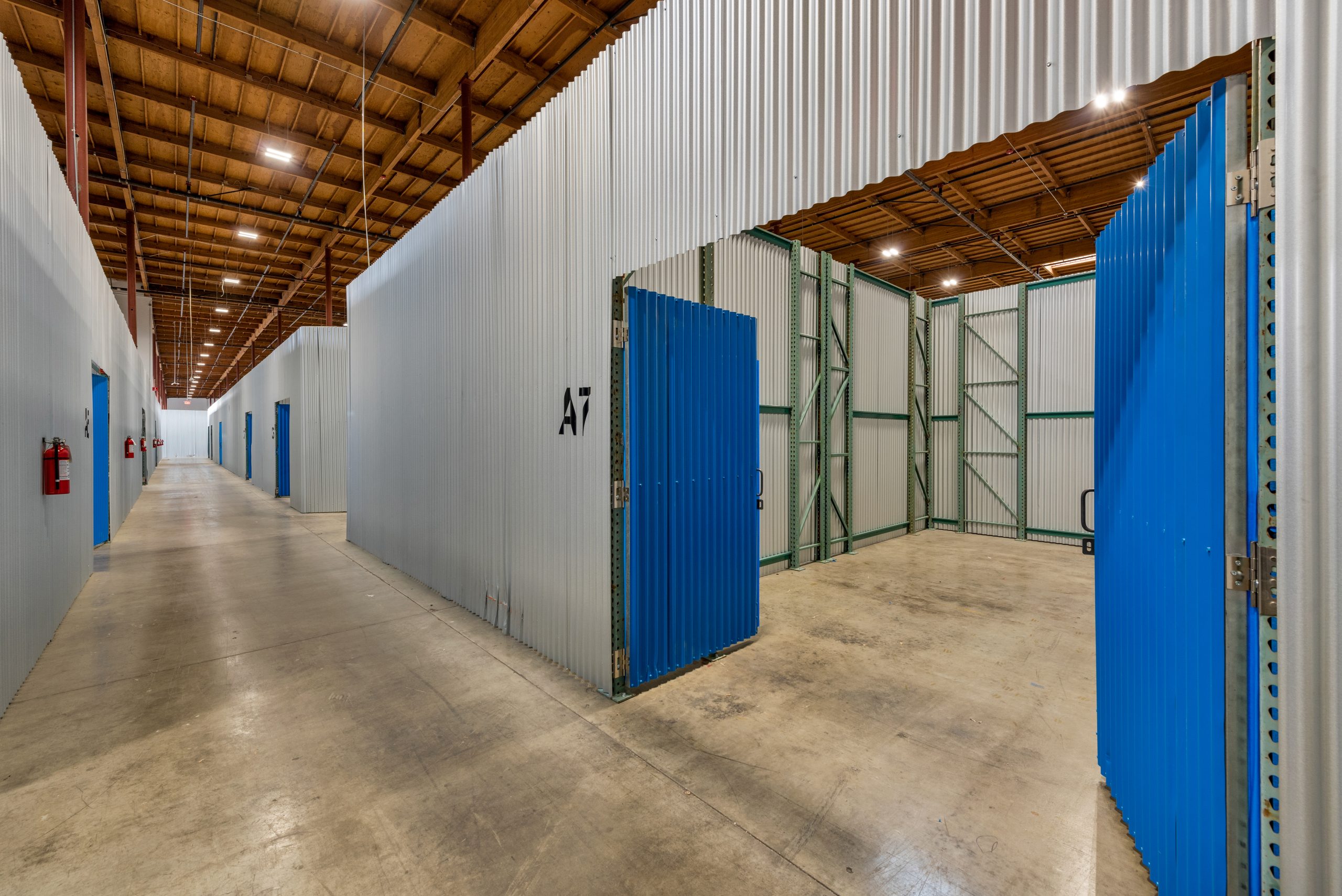
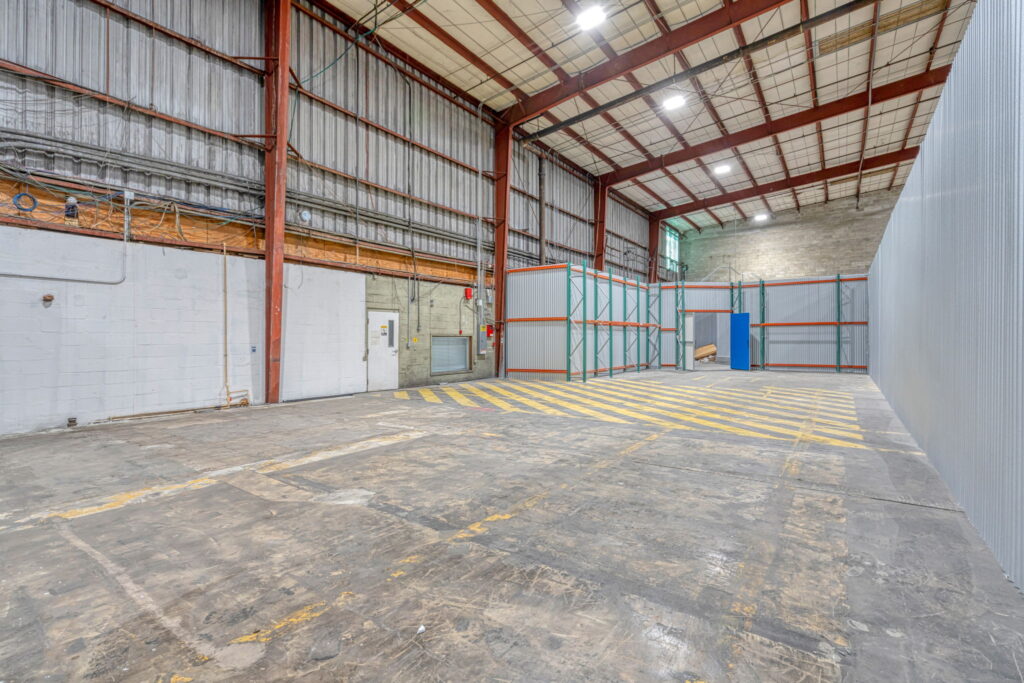
Two models have emerged to fill that gap. Co-warehousing gives businesses private units inside shared buildings — typically 100 to 5,000 sq ft — with month-to-month or short-term agreements and shared infrastructure included in the rent. Small-bay industrial operators take a broader approach, offering individually leased bays within multi-tenant properties that can scale from a few hundred square feet to 50,000+, often with more traditional lease structures. The line between the two is blurring — many operators in this guide do some of both.
There are now over 20 operators active across North America. This guide compares 13 of them.
Market data: Lee & Associates via CRE Daily; Newmark via CRE Daily; SBA/U.S. Census Bureau.
How We Evaluated
Every operator in this guide — whether pure co-warehousing, small-bay industrial, or a hybrid of both — was assessed across seven dimensions, using publicly available data, operator websites, press coverage, and WareCRE’s own listing and property data:
Geographic reach — How many locations, and in which markets? A single-market operator serves a different need than a 25-city network.
Unit size range — Some operators cap at 2,000 sq ft. Others go to 5,000+. The range determines who the space actually works for.
Lease terms — True month-to-month? 3-month minimum? 6-month standard? The flexibility varies more than most articles acknowledge.
Pricing model — All-inclusive (one payment, everything covered) vs. NNN (base rent + itemized operating costs). Both are legitimate, but they feel very different on your monthly statement.
Included amenities — Loading docks, climate control, forklifts, WiFi, daily carrier pickup, on-site staff, content studios, fulfillment services. The gap between operators is significant.
Target audience — E-commerce? Contractors and trades? Light manufacturing? Some operators specialize. Others serve all of the above.
Operational maturity — How long have they been operating? What’s publicly known about occupancy, funding, and expansion pace?
At-a-Glance: 13 Co-Warehousing and Small-Bay Operators Compared
| Operator | Locations | Unit Sizes | Lease Terms | Pricing Model | Best For |
|---|---|---|---|---|---|
| ReadySpaces | 38+ (U.S. & Canada) | 200–5,000 SF | Month-to-month | All-inclusive | Broadest use cases; largest network |
| WareSpace | 25 (U.S.) | 200–2,000 SF | 6 or 12 months | All-inclusive | Climate-controlled; national expansion |
| Saltbox | 11+ across 8 markets | 70–5,000+ SF | Month-to-month | Tiered memberships | E-commerce fulfillment; DTC brands |
| Rise Commercial District | 7+ across 5 states | 200–3,000 SF | Month-to-month | All-inclusive (gross) | Midwest businesses; mentorship model |
| Portal Warehousing | 7 (U.S.) | 100–2,500 SF | Month-to-month or annual | All-inclusive | Urban markets; scalability-focused |
| Flex ETC | 5 (U.S.) | 300–3,000 SF | Month-to-month | All-inclusive | Creative businesses; content studios |
| Polygon | 2 (GA, TX) | 200–5,000+ SF | 3-month minimum | All-inclusive | Atlanta & Dallas; expanding fast |
| BaySpace | 8+ (FL, GA, TX) | 300–50,000+ SF | Flexible | Varies by property | Wider size range; Southeast & Texas |
| WorkBay | 4 states (UT, AZ, TX, FL) | 500–3,000 SF | Month-to-month to 3 years | NNN (transparent) | Contractors and trades |
| WorkHub | 7+ (TX, expanding CO) | 168–2,000+ SF | Flex and traditional | Varies by product | Houston metro; premium build |
| Blue Co. | 3 (NC) | Varies | Flexible | All-inclusive | Carolinas; trades & service businesses |
| TradeSpace | 3–4 (Alberta, Canada) | 100–1,000+ SF | Month-to-month | All-inclusive | Canadian businesses; Alberta market |
| Elevator | 2 (NE, IA) | 80–1,300 SF | Month-to-month | All-inclusive | Omaha & Des Moines; community model |
ReadySpaces
Best for: Businesses that want the most location options and the broadest unit size range across the U.S. and Canada.
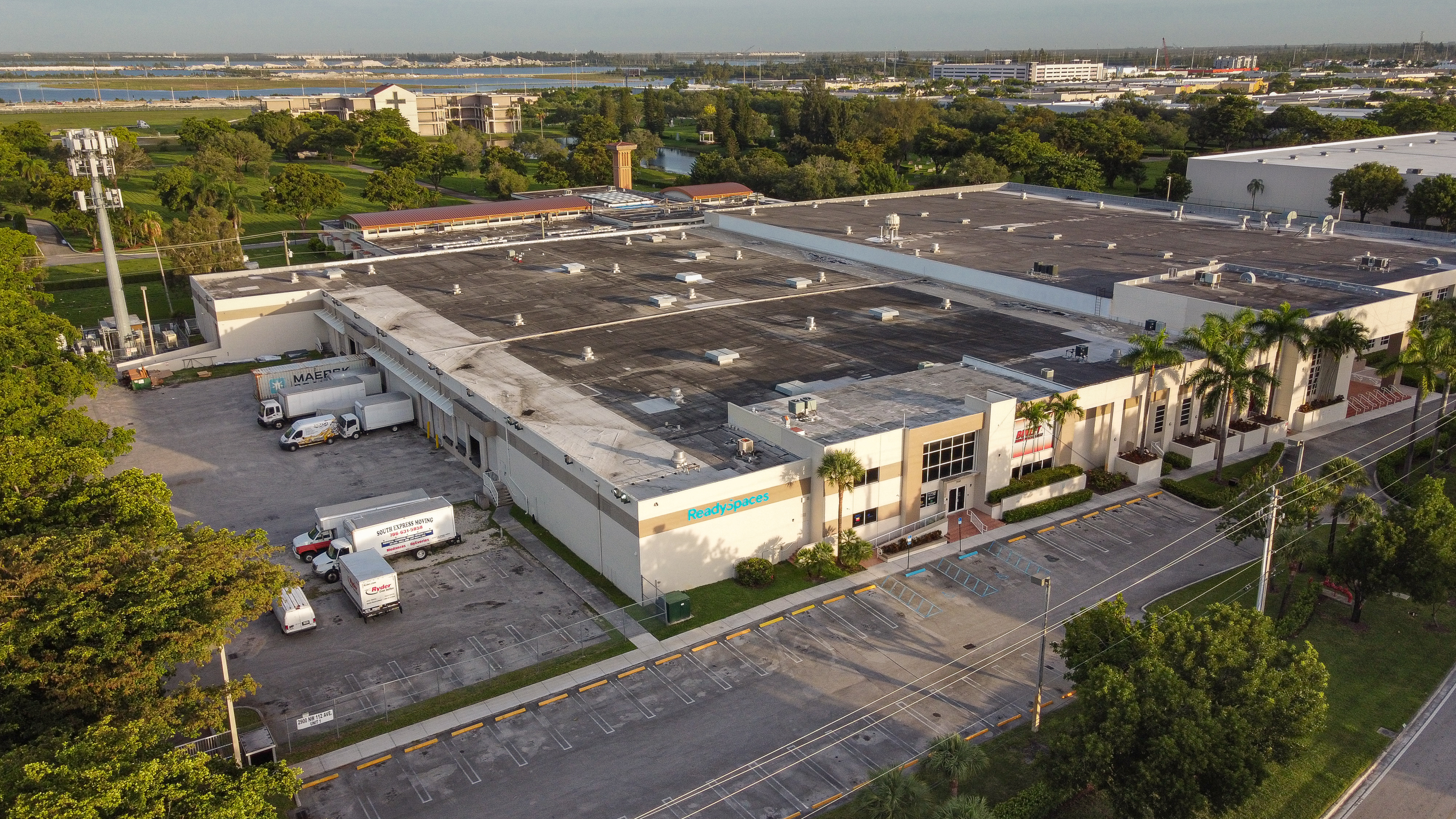
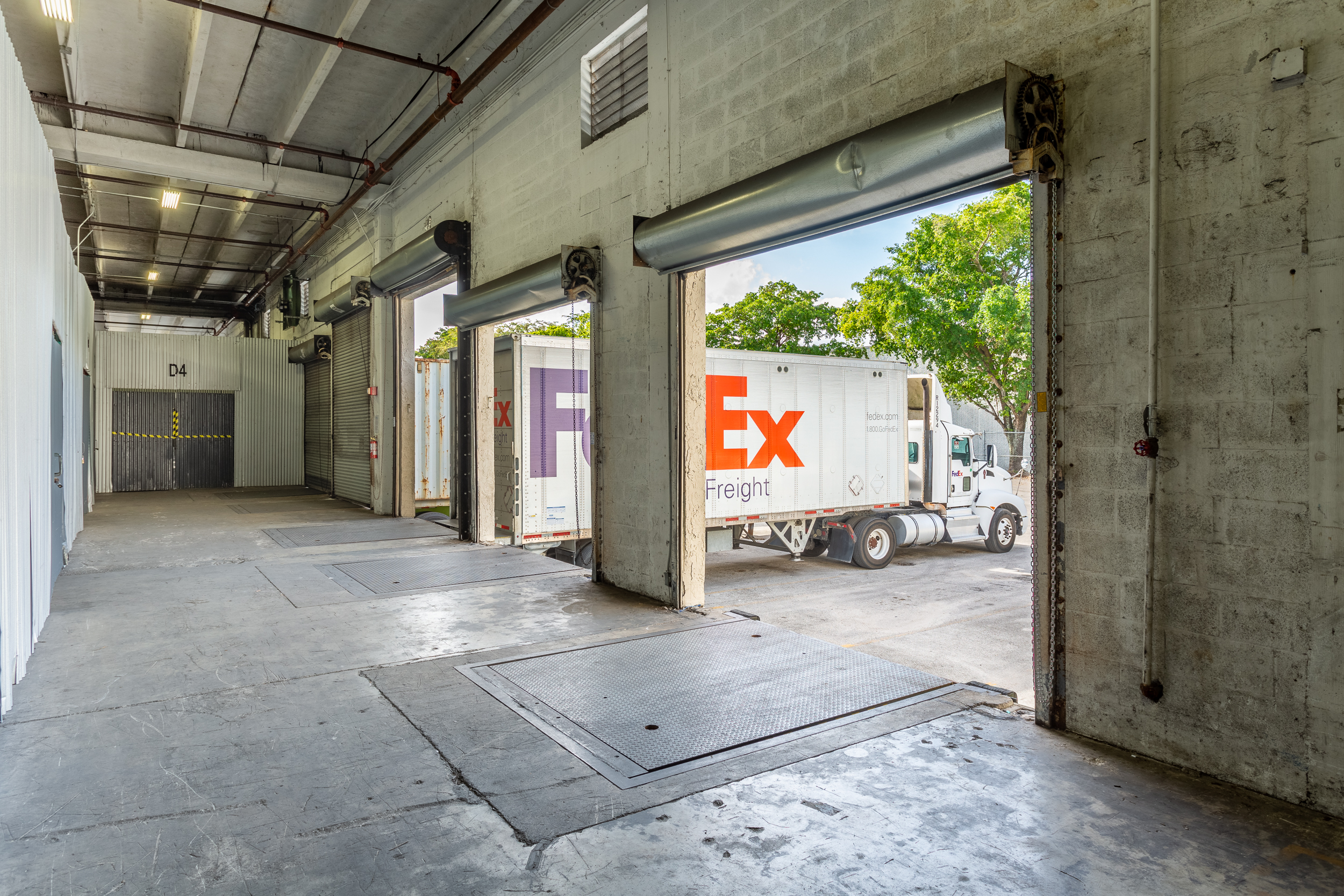
ReadySpaces operates the largest co-warehousing network in North America — 38+ locations across 19 metros. Their model is straightforward all-inclusive pricing: one monthly payment covers your unit, utilities, WiFi, security, shelving and racking, loading docks, conference rooms, on-site building managers, and daily shipping pickups from UPS, FedEx, and USPS. Units range from 200 to 5,000 sq ft on month-to-month terms, and most are move-in ready with shelving pre-installed. No personal guarantee required.
ReadySpaces serves the widest range of industries of any co-warehousing operator — e-commerce, contractors, distributors, light manufacturers, retailers, food and beverage (dry goods), and nonprofits. That breadth is a differentiator: while most competitors lean heavily toward e-commerce, ReadySpaces is equally used by plumbing contractors staging equipment and DTC brands shipping orders.
✅ Largest geographic footprint in the category (38+ locations)
✅ Broadest size range — up to 5,000 sq ft, larger than most competitors
✅ True month-to-month with no personal guarantee
❌ Pricing not published online — requires a tour for a quote
❌ No in-house 3PL or fulfillment services
Browse ReadySpaces on WareCRE →
WareSpace
Best for: Small businesses wanting climate-controlled, all-inclusive space from a fast-growing national operator.
WareSpace has expanded aggressively — reaching 25 locations in May 2026 after a $15.8M acquisition in Santa Fe Springs, CA. Their portfolio now spans the East Coast, Midwest, Texas, Mountain West, and Southern California, with Seattle (Renton) opening Q1 2027. The model is vertically integrated: WareSpace handles acquisitions, development, construction, and property management in-house, which gives them control over quality and speed-to-market.
Every WareSpace unit is climate-controlled year-round — a meaningful differentiator for businesses storing temperature-sensitive inventory. Units include industrial racking, shared equipment (pallet jacks, straddle stackers), loading docks, WiFi, kitchen, conference rooms, and an on-site General Manager. Pricing starts under $700/month in select markets.
One important distinction: WareSpace’s standard agreements are 6 or 12 months — not month-to-month from day one. This is worth knowing before you compare directly to operators offering true month-to-month terms.
✅ All locations climate-controlled with HVAC
✅ 25 locations and growing fast — $15.8M acquisition announced May 2026
✅ Transparent pricing on website; starts under $700/month
❌ 6-month minimum commitment (not true month-to-month)
❌ Maximum unit size of 2,000 sq ft limits growth path
Saltbox
Best for: E-commerce and DTC brands that want warehouse space and fulfillment operations under one roof.
Saltbox occupies a unique position in co-warehousing: it’s the only major operator that combines private warehouse units with integrated logistics services. Members get on-demand labor for pick-and-pack, free inventory inbounding, discounted shipping rates through Saltbox’s app partner (Parsel), and daily carrier pickups — services that are typically only available from a 3PL. Saltbox operates 11+ locations across 8 U.S. markets (LA, Phoenix, Seattle, Denver, Dallas, Atlanta, Washington DC, Miami) and announced a Chicago market entry for Fall 2026 alongside a Series C funding round led by Packard Capital.
Units range from 70 to 5,000+ sq ft on month-to-month terms. Every location includes content and photo studios — a draw for brands that need product photography alongside their warehouse operations. The community programming and brand polish are noticeably stronger than most operators in the space.
The tradeoff is cost and focus. Saltbox’s pricing runs higher than pure space-only operators because you’re paying for the fulfillment layer. And the model is built almost exclusively for e-commerce — contractors, distributors, and trades businesses are not the target audience.
✅ In-house logistics, fulfillment services, and discounted shipping (unique in the category)
✅ Content and photo studios at every location
✅ Series C funded (May 2026); entering Chicago market
❌ Higher pricing than space-only competitors
❌ Heavily e-commerce focused — limited appeal for non-e-commerce businesses
Rise Commerical District
Best for: Midwest businesses wanting all-inclusive warehouse space with on-site mentorship and community support.
Rise Commercial District is the co-warehousing operator you probably haven’t heard of — unless you’re in the Midwest, where they dominate. Founded by Jim Sapp in Indianapolis (the origin story: he bought a struggling lumberyard for his garage door company and realized other small businesses needed the same kind of right-sized warehouse space), Rise now operates 7+ locations across Indiana, Ohio, Minnesota, Wisconsin, and Missouri. Three new locations are opening in 2026.
What sets Rise apart is the mentorship model. Every location has an on-site district manager who functions less like a building superintendent and more like a business advisor — helping with space planning, vendor connections, and growth transitions. Rise also produces the Build Boldly podcast, sharing lessons from entrepreneurs in their network. The model is explicitly designed for businesses in the “missing middle” — too big for the garage, not ready for a 10,000 sq ft lease.
Units range from 200 to 3,000 sq ft with all-inclusive gross leases (utilities, WiFi, forklift access, dumpster, management — all in one monthly payment). Terms start as short as one month. Featured in USA Today in April 2026.
✅ Dominant small-bay and co-warehousing operator in the Midwest — no national competitor in those markets
✅ On-site mentorship model with district managers at every location
✅ True month-to-month; all-inclusive gross lease
❌ Midwest-only geographic coverage
❌ Maximum 3,000 sq ft
Browse Rise Commercial District on WareCRE →
Portal Warehousing
Best for: Growth-stage e-commerce businesses in major metro markets that expect to scale their space frequently.
Portal operates 7 locations in high-demand urban markets: Salt Lake City, Tempe (Phoenix), Orlando, Minneapolis, Manhattan, Los Angeles, and Brooklyn. Their positioning is built around scalability — agreements are structured so you can add or switch units without moving out, making it easy to grow within the same building.
Units range from 100 to 2,500 sq ft with all-inclusive pricing (utilities, WiFi, coworking, daily carrier pickups, on-site staff). Portal leans into the coworking-meets-warehousing hybrid model, with reception services, community events, and private offices alongside warehouse units.
The limitation is transparency. Portal’s online presence has gaps — some location pages still have placeholder text, and detailed amenity and pricing information can be sparse compared to operators like WareSpace or Saltbox. Potential members should plan to tour and ask detailed questions.
✅ Urban, high-demand locations (Manhattan, Brooklyn, LA)
✅ Scalability-focused — add or switch units without a new lease
✅ Coworking + warehouse hybrid with reception and community events
❌ Limited online information; fewer third-party reviews than competitors
❌ Primarily in higher-rent metro markets
Flex ETC.
Best for: E-commerce sellers, content creators, and creative businesses wanting warehouse space with built-in production amenities.
Flex ETC (also referred to as FlexHQ) operates 5 locations in Los Angeles, Denver, Plano TX, Nashville, and Salt Lake City. Backed by Storage Etc. and KOAR Institutional (40+ years of combined commercial RE experience), Flex ETC’s model is repurposing large industrial warehouses into micro-warehouse units with creative workspace amenities.
Every location includes photo studios, podcast rooms, conference rooms, community spaces, a stocked kitchen, EV charging, and daily courier pickups. Units range from 300 to 3,000 sq ft on month-to-month terms. Pricing starts at $1,100/month in Denver and $1,350/month in LA for smaller units, scaling up to $6,450 for large suites.
The creative amenity set is the differentiator — if you’re shooting product content alongside your warehouse operations, Flex ETC is purpose-built for that workflow.
✅ Photo studios, podcast rooms, and creative production spaces at every location
✅ Month-to-month; backed by institutional real estate experience
✅ Strong eco-friendly design philosophy (repurposing existing structures)
❌ Only 5 locations
❌ Pricing runs higher than space-only competitors
Polygon
Best for: Entrepreneurs in Atlanta or Dallas wanting polished, purpose-built warehouse space up to 5,000 sq ft.
Polygon (rebranded from Shift HQ in July 2025) operates two locations — a 100,000+ sq ft facility in Atlanta’s Fulton Industrial District and a 55,000 sq ft building in Dallas. Denver is in the pipeline. The brand is polished, the facilities are purpose-built, and the size range (200–5,000+ sq ft) matches the upper end of what ReadySpaces offers — a rarity among newer operators.
All-inclusive pricing starts at $799/month. Climate-controlled units with in-unit power and WiFi, shared loading docks, daily carrier pickups, content studios, conference rooms, and on-site staff during business hours. Agreements start at 3 months, then month-to-month — and members can move to any available space, any size, at any time within the building.
Polygon is early in its growth trajectory but expanding with intention. The rebrand signals long-term ambitions beyond two markets.
✅ One of the few operators offering up to 5,000+ sq ft units
✅ Purpose-built facilities; strong brand and design
✅ Competitive pricing starting at $799/month
❌ Only 2 locations currently
❌ 3-month minimum commitment
BaySpace (Basis Industrial)
Best for: Businesses in Florida, Georgia, or Texas that need flexible industrial space across a wider size range than typical co-warehousing.
BaySpace operates 8+ properties across Florida (Clearwater, Hialeah, Orlando, St. Petersburg area, Deerfield), Georgia (Duluth), and Texas. BaySpace sits closer to the small-bay industrial end of the spectrum: units span from 300 sq ft up to 50,000+ sq ft, and the model is more portfolio-operator than community-hub.
All locations offer 24/7 access, video surveillance, nightly security patrol, climate control, and shared common areas. The operator uses institutional-grade property management (CommercialCafe tenant portal) and previously operated under the Basis Industrial brand.
A strong option for businesses that might start at 1,000 sq ft but anticipate growing well beyond the 2,000–5,000 sq ft ceiling where most co-warehousing operators top out.
✅ Widest size range in this comparison (300–50,000+ SF)
✅ Multi-state portfolio across Southeast and Texas
✅ Institutional property management infrastructure
❌ Less of a community/amenity model than pure co-warehousing operators
❌ Pricing and detailed amenity information not prominently published
WorkBay
Best for: Contractors, trades, and makers signing their first commercial lease.
WorkBay operates flex warehouse parks across Utah, Arizona, Texas (DFW), and Florida, with units from 500 to 3,000 sq ft. The positioning is explicitly trades-focused — plumbers, electricians, fabricators, landscapers, and small manufacturers who have outgrown a garage and need a legitimate, zoned workspace with roll-up doors, 12-foot ceilings, and private bathrooms in each unit.
WorkBay’s pricing uses a transparent NNN model (base rent plus itemized operating costs), which differs from the all-inclusive approach most co-warehousing operators use. Both models are valid — NNN gives you line-item visibility into what you’re paying for. Lease terms range from month-to-month to 3 years, with longer terms earning lower rates. Move-in typically takes 2–14 days.
The content marketing is notably strong — WorkBay publishes detailed educational guides on flex space, micro-warehousing, and first-time commercial leasing that signal genuine expertise in serving this audience.
✅ Purpose-built for trades and contractors (roll-up doors, private bathrooms, 12′ ceilings)
✅ Multi-state presence across 4 states
✅ Transparent NNN pricing — you see exactly what you’re paying for
❌ Not all-inclusive — operating costs are itemized on top of base rent
❌ Less suitable for e-commerce or fulfillment-heavy operations
WorkHub
Best for: Houston-area businesses wanting premium, purpose-built warehouse and office space.
WorkHub dominates the Greater Houston market with 7+ locations across Magnolia, Conroe (multiple facilities), and Spring, with expansion into Centennial, Colorado. Founded by serial entrepreneurs Roberto Valenzuela and Alfredo Amparan, WorkHub has invested over $25 million in the Conroe area alone — the build quality and design are noticeably premium for the co-warehousing category.
Co-warehouse flex spaces start at $990/month (168+ sq ft), while larger office/warehouse combinations start from 1,590 sq ft. Amenities include loading docks, forklifts, pallet jacks, conference rooms, kitchenettes, and automated coffee bars. The facilities feature 22-foot ceilings, smart thermostats, and energy-efficient LED lighting.
The limitation is geographic — WorkHub is almost entirely Houston-based, which works if you’re in that market but isn’t an option elsewhere (yet).
✅ Premium build quality and design — $25M+ invested
✅ Multiple facility types (co-warehouse flex + traditional office/warehouse)
✅ Strong Houston market coverage with 7+ locations
❌ Almost entirely Houston-based (Colorado expansion announced but not yet open)
❌ Less established brand recognition outside Texas
Blue Co. Warehousing
Best for: Service-based businesses, tradespeople, and makers in the Carolinas.
Blue Co. launched in 2023 and already operates 3 locations in the Raleigh–Charlotte corridor: two campuses in Raleigh (510 and 517 Pylon Drive — the latter fully climate-controlled and office-forward) and one in North Charlotte (Landis, NC), plus a presence in Fuquay-Varina. Founded by the team behind HQ Raleigh (now Founded Communities), Blue Co. brings a startup ecosystem pedigree to the co-warehousing model.
The Triangle Tweener Fund has invested, and the advisory board includes Jesse Lipson (ShareFile founder) and Scot Wingo (Spiffy co-founder). Current locations run at approximately 85% occupancy. Plans call for 3 more locations in 2026 and 4–5 in 2027.
Blue Co. leans into service-based businesses: movers, junk removal companies, contractors, detailers, and small distributors. Amenities include fleet vehicle parking, EV charging stations, laydown areas, and certified forklift operators on-site — features that signal a trades-first rather than e-commerce-first approach.
✅ Backed by respected Triangle startup ecosystem investors and advisors
✅ Trades-and-service-business focus with fleet parking and laydown areas
✅ Rapid expansion planned (3 new locations in 2026)
❌ Carolinas only (Raleigh–Charlotte corridor)
❌ Still early — limited track record outside initial locations
TradeSpace
Best for: Canadian businesses in Alberta wanting flexible warehouse and office space with fulfillment support.
TradeSpace is positioned as “Canada’s first co-warehousing office” and operates 3–4 locations in Calgary and Edmonton. Founded in 2018, the company serves 100+ businesses across construction, manufacturing, distribution, and e-commerce. Units range from 100 to 1,000+ sq ft starting at $650 CAD/month on month-to-month terms.
TradeSpace offers managed fulfillment and cross-docking services in addition to self-operated space — making it one of the few operators outside Saltbox that provides logistics support. The community model is strong, with member collaboration generating a “micro-economy” of referrals and subcontracting between businesses in the same building.
For Canadian businesses, TradeSpace is effectively the only dedicated co-warehousing option at scale. If you need flexible warehouse space in Alberta, this is where to start.
✅ Leading co-warehousing operator in Canada
✅ Fulfillment and cross-docking services available
✅ Affordable entry point ($650 CAD/month)
❌ Alberta-only (Calgary and Edmonton)
❌ Small footprint compared to U.S. operators
Browse TradeSpace on WareCRE →
Elevator Co-Warehousing
Best for: Entrepreneurs and makers in Nebraska or Iowa wanting community-focused co-warehousing.
Elevator operates 2 locations in Omaha, NE and Des Moines, IA, offering flexible month-to-month warehouse and office spaces from 80 to 1,300 sq ft. The community and networking emphasis is central to their model — this is co-warehousing as a small-business incubator, not just a space provider.
Like Rise Commercial District, Elevator fills a gap in markets where national co-warehousing brands don’t yet have a presence.
✅ Month-to-month flexibility; community-driven model
✅ Fills a market gap in Nebraska and Iowa
❌ Only 2 locations
❌ Smaller maximum unit sizes
Co-Warehousing and Small-Bay vs. Other Options
Co-warehousing vs. small-bay industrial
Both models serve small businesses, but they’re structured differently. Co-warehousing buildings are purpose-built for shared occupancy: the operator manages the building, provides amenities, and rents individual units with all-inclusive pricing on short-term agreements. Small-bay industrial is a broader real estate category — multi-tenant properties where each bay is leased individually, often on more traditional terms (NNN pricing, longer commitments, fewer shared amenities). In practice, many operators blend both: BaySpace operates as a small-bay portfolio with co-warehousing amenities, while Rise Commercial District calls itself small-bay but functions like co-warehousing with all-inclusive leases and on-site management.
Co-warehousing vs. traditional warehouse lease
Traditional warehouse leases typically require 10,000+ sq ft, 3–5 year commitments, and personal guarantees. Triple-net (NNN) charges — property taxes, building insurance, and common area maintenance — get added on top of the base rent, often increasing your total cost by 15–30%. Co-warehousing inverts this model: smaller units (100–5,000 sq ft), short-term agreements (month-to-month in most cases), all-inclusive pricing, and no personal guarantee. The tradeoff is control — in a co-warehousing building, you’re sharing loading docks, parking, and common areas with other businesses.
Co-warehousing vs. 3PL (third-party logistics)
A 3PL handles your warehousing and fulfillment for you — they store your inventory, pick and pack orders, and ship on your behalf. Co-warehousing gives you your own space where you manage your own operations. If you want hands-on control of your inventory and fulfillment process, co-warehousing is the better fit. If you’d rather outsource entirely so you can focus on sales and marketing, a 3PL may be more appropriate. Saltbox is the one co-warehousing operator that bridges both models, offering in-house fulfillment services alongside private warehouse units.
Co-warehousing vs. self-storage
Self-storage units are designed for passive storage — you can keep things there, but you can’t work there. Most self-storage facilities prohibit regular business operations, don’t offer loading docks or shipping infrastructure, and aren’t zoned for commercial use. Co-warehousing gives you a private unit where you can receive deliveries, pack orders, operate equipment, meet clients, and run your business — with on-site support, WiFi, and professional infrastructure included.
Which Operator Is Right for Your Business?
The best provider depends on what your business actually does, not on which brand has the best marketing.
E-commerce and DTC brands should look at Saltbox (if fulfillment support matters), ReadySpaces or WareSpace (for the most location options), or Flex ETC (if content production is part of the workflow). Portal is strong for brands expecting to scale rapidly in urban markets.
Contractors and trades should prioritize WorkBay (purpose-built for trades, multi-state), Rise Commercial District (Midwest, mentorship model), or Blue Co. (Carolinas). ReadySpaces also serves a large contractor base across its 38+ locations.
Light manufacturers and makers should evaluate operators with larger unit ceilings — ReadySpaces (up to 5,000 sq ft), Polygon (up to 5,000+ sq ft), or BaySpace (up to 50,000+ sq ft for those with larger needs).
Businesses that need climate-controlled space should specifically look at WareSpace (climate-controlled at every location), Blue Co. (517 Pylon location), or Polygon (climate-controlled at all locations).
Businesses outgrowing co-warehousing — if you need 5,000+ sq ft or more traditional industrial infrastructure, BaySpace (up to 50,000+ SF across FL, GA, TX) bridges the gap between co-warehousing and conventional small-bay industrial leasing.
Canadian businesses have one dedicated option: TradeSpace in Alberta. ReadySpaces also operates locations in Canada.
Businesses in markets with few options should check for regional operators: Rise Commercial District for the Midwest, Elevator for Omaha/Des Moines, WorkHub for Houston, and Blue Co. for the Carolinas.
Frequently Asked Questions
What is co-warehousing?
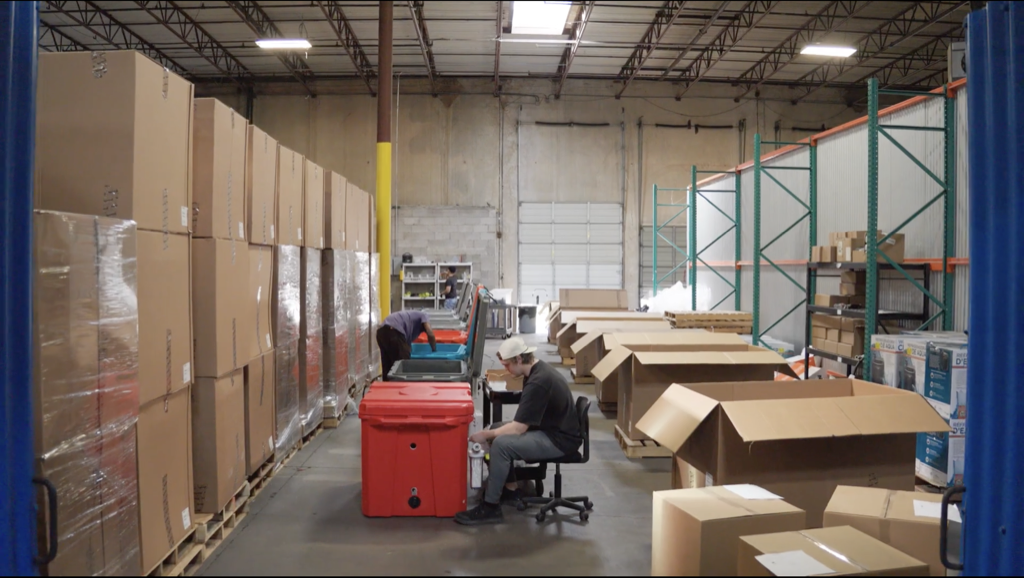
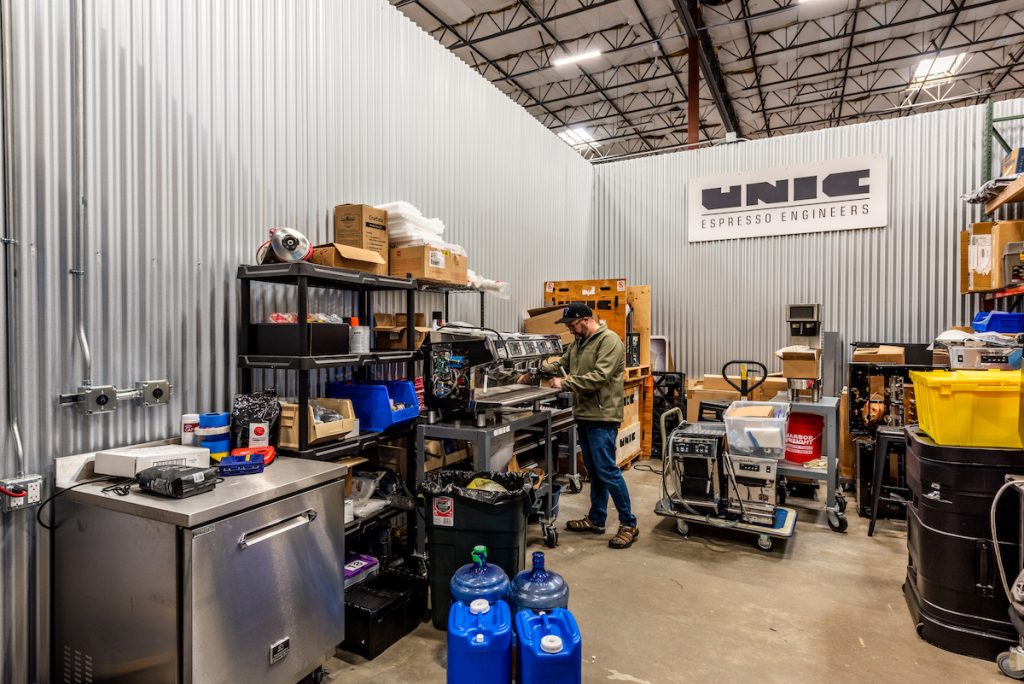
Co-warehousing is a model where multiple businesses share a single warehouse building, each occupying their own private, lockable unit. Shared infrastructure — loading docks, restrooms, conference rooms, WiFi, security, on-site staff — is included in the rent. Units typically range from 100 to 5,000 square feet with month-to-month or short-term agreements. Think of it as coworking, but for warehouses.
How much does co-warehousing cost?
Pricing varies by operator, location, and unit size. Across the industry, smaller units (200–500 sq ft) start under $700/month at operators like WareSpace and can exceed $1,300/month in higher-cost markets. Larger units (2,000–5,000 sq ft) typically range from $3,000–$6,500+/month. Most operators use all-inclusive pricing that bundles utilities, WiFi, security, and shared amenities into one payment. The best way to compare is to request quotes from multiple operators in your market.
Is co-warehousing the same as self-storage?
No. Self-storage is for storing items passively. Co-warehousing gives you a private workspace with loading dock access, shelving, WiFi, on-site support, and daily shipping pickups — where you can work, pack orders, receive deliveries, and run your business. Most self-storage facilities don’t allow regular business operations and aren’t zoned for commercial use.
How is co-warehousing different from a 3PL?
A 3PL (third-party logistics provider) handles warehousing and fulfillment on your behalf — they store, pick, pack, and ship your inventory. Co-warehousing gives you your own space where you manage operations yourself. Some operators like Saltbox offer hybrid models with in-house fulfillment services, but most co-warehousing is space-only. Choose co-warehousing if you want hands-on control; choose a 3PL if you want to fully outsource.
What is the difference between co-warehousing and flex warehouse space?
Flex warehouse space is a broad commercial real estate category that includes any adaptable industrial space combining warehouse, office, and sometimes retail use. Co-warehousing is a specific model within that category: multi-tenant buildings divided into smaller private units with shared amenities and short-term leases. All co-warehousing is flex space, but not all flex space is co-warehousing.
What is the difference between co-warehousing and small-bay industrial?
Both serve small businesses, but they’re structured differently. Co-warehousing operators manage shared buildings with all-inclusive pricing, on-site staff, and short-term agreements. Small-bay industrial is a broader real estate category where individually leased bays may use NNN pricing and longer lease terms, with fewer shared amenities. Many modern operators blend both models — the line is increasingly blurry.
Do I need to sign a long-term lease?
Most co-warehousing operators offer month-to-month agreements — including ReadySpaces, Saltbox, Portal, Rise, Flex ETC, TradeSpace, and Elevator. Some require short minimums: Polygon starts at 3 months, and WareSpace requires 6 or 12 months. WorkBay offers month-to-month through 3-year terms with discounts for longer commitments. Always confirm the specific terms before signing.
What industries use co-warehousing?
E-commerce and DTC brands, contractors and trades, distributors, light manufacturers, retailers, food and beverage companies (dry goods), event and production companies, automotive parts businesses, and nonprofits. The common thread is needing real warehouse infrastructure without the commitment and overhead of a traditional 10,000+ sq ft lease.
What is included in co-warehousing rent?
This varies by operator, but most all-inclusive co-warehousing memberships cover your private unit, utilities, WiFi, 24/7 secured access, loading dock access, shared equipment (pallet jacks, carts), common-area maintenance, and some level of on-site staff. Many operators also include shelving/racking, conference rooms, break areas, and daily shipping pickups. Some charge separately for services like forklift use, fulfillment support, or dedicated parking. Always confirm what’s included before comparing prices across operators.
How fast can I move in?
Most co-warehousing units are move-in ready — shelving installed, utilities connected, access credentials set up. Depending on the operator and availability, you can often tour, sign, and start using your space within a few days. Some operators advertise same-day move-in; WorkBay cites 2–14 days as typical. No buildout, no permitting, no waiting on renovations.
How do I find co-warehousing space near me?
WareCRE lists co-warehousing and flexible warehouse properties across 50+ metro areas in the U.S. and Canada. You can search available spaces by location, filter by property type and amenities, and contact providers directly through each listing. You can also browse all operators on the WareCRE brand directory.
Find Your Space
The market for flexible warehouse space has more operators, more locations, and more specialization than at any point in the last decade. Whether you’re shipping 50 orders a day from a co-warehousing unit, staging equipment in a small-bay flex space between job sites, or testing a new market before committing to a long-term lease, there’s an operator built for how your business actually works.
Browse co-warehousing and small-bay industrial listings on WareCRE to compare operators side-by-side, see available units, and contact building managers directly.
Ready to find your space?
Compare co-warehousing and small-bay industrial listings across 50+ metro areas.
Find Warehouse Space