Industrial Real Estate Trends 2026: Small Bay Performance, Co-Warehousing & Owner Strategies
Key Takeaways
- Small bay industrial (under 10,000 SF) continues to outperform big-box warehouse on vacancy and rent growth — the segment institutional investors are just now discovering
- Co-warehousing and flexible warehouse models are reshaping how owners fill and reposition multi-tenant industrial properties
- Tenant quality and retention are increasingly driven by property presentation, listing quality, and the move-in experience — not just price
- This page collects WareCRE’s research and resources for industrial property owners, operators, and investors navigating today’s market
Industrial real estate has been the top-performing commercial property sector for several years running, but the story beneath the headlines is more nuanced than “warehouses are hot.” The big-box distribution market that drives most of the media coverage operates under different dynamics than the small bay, flex, and multi-tenant segment where most independent owners and regional investors actually operate.
This page is written for that audience — the owners, operators, and investors working in the sub-50,000 SF industrial segment. The trends that matter to you aren’t the same ones covered in institutional research reports. Small bay vacancy behaves differently than bulk distribution. Tenant acquisition for a 20-unit multi-tenant property looks nothing like leasing a 500,000 SF build-to-suit. And the rise of co-warehousing and flexible space models is creating repositioning opportunities that didn’t exist five years ago.
Below you’ll find WareCRE’s current thinking on where the small bay industrial market is heading, along with practical resources for attracting tenants, marketing your property, and evaluating new operating models. We’ll continue adding to this page as we publish new research and analysis.
Sub-5%
Small Bay Vacancy (Many Metros)
20-40%
Rent Premium Over Standard Warehouse
Limited
New Small Bay Construction
The Small Bay Advantage
While big-box industrial markets in many metros are working through oversupply from the 2021-2023 construction boom, the small bay segment tells a different story. Very little new small bay product has been built in the last decade — developers have favored large-format distribution centers where the per-square-foot economics of ground-up construction make more sense. The result is a structural supply shortage in the under-10,000 SF segment that’s kept vacancy tight and pushed rents higher even as the broader industrial market softens in some metros.
For owners of existing small bay and multi-tenant industrial properties, this supply constraint is a significant tailwind. Demand from small businesses, e-commerce operators, contractors, and light manufacturers continues to grow, while the competitive supply pipeline remains thin. The properties that perform best are the ones that recognize this advantage and invest accordingly — in tenant experience, property presentation, and flexible lease structures that reduce vacancy between tenants.
Our small bay industrial guide provides a comprehensive look at what makes this segment unique, including how it’s priced, who the tenants are, and why institutional capital is beginning to take notice.
Deep Dive Articles
Attracting and Retaining Quality Tenants
In a tight small bay market, the challenge for most owners isn’t finding any tenant — it’s finding the right tenant and keeping them. High-turnover tenants cost more in vacancy loss, turnover prep, and leasing commissions than the rent premium you might capture by constantly re-marketing a unit. The owners who build the most stable cash flow are the ones focused on tenant quality and retention, not just occupancy.
What drives tenant quality? It starts before they ever tour the property. Your online listing is the first impression for the majority of prospective tenants today, and the properties that present well online attract a different caliber of inquiry than the ones with a single exterior photo and a phone number. Beyond the listing, the factors that keep tenants renewing are operational: responsiveness to maintenance issues, clear communication on CAM charges, and a sense that the property is professionally managed.
Deep Dive Article
Marketing Your Industrial Property
The gap between a well-marketed industrial listing and a poorly marketed one is enormous — and measurable. Properties with professional photos, complete specifications, and accurate availability information consistently generate more qualified inquiries and lease faster than comparable properties with minimal listing effort.
This isn’t just about aesthetics. A complete listing with clear photos of the interior, dock access, office finish, and surrounding area answers the questions tenants and brokers have before they pick up the phone. It filters out unqualified leads and attracts the tenants who’ve already done their homework. In a market where most small bay listings still rely on a single exterior shot and a paragraph of text, investing in listing quality is one of the highest-ROI moves an owner can make.
Important
Properties with professional photos and complete specs receive 3-5x more qualified inquiries on WareCRE. If you’re listing a property, start with our photo guide — it’s the single highest-impact improvement most owners can make.
Deep Dive Article
The Co-Warehousing Model
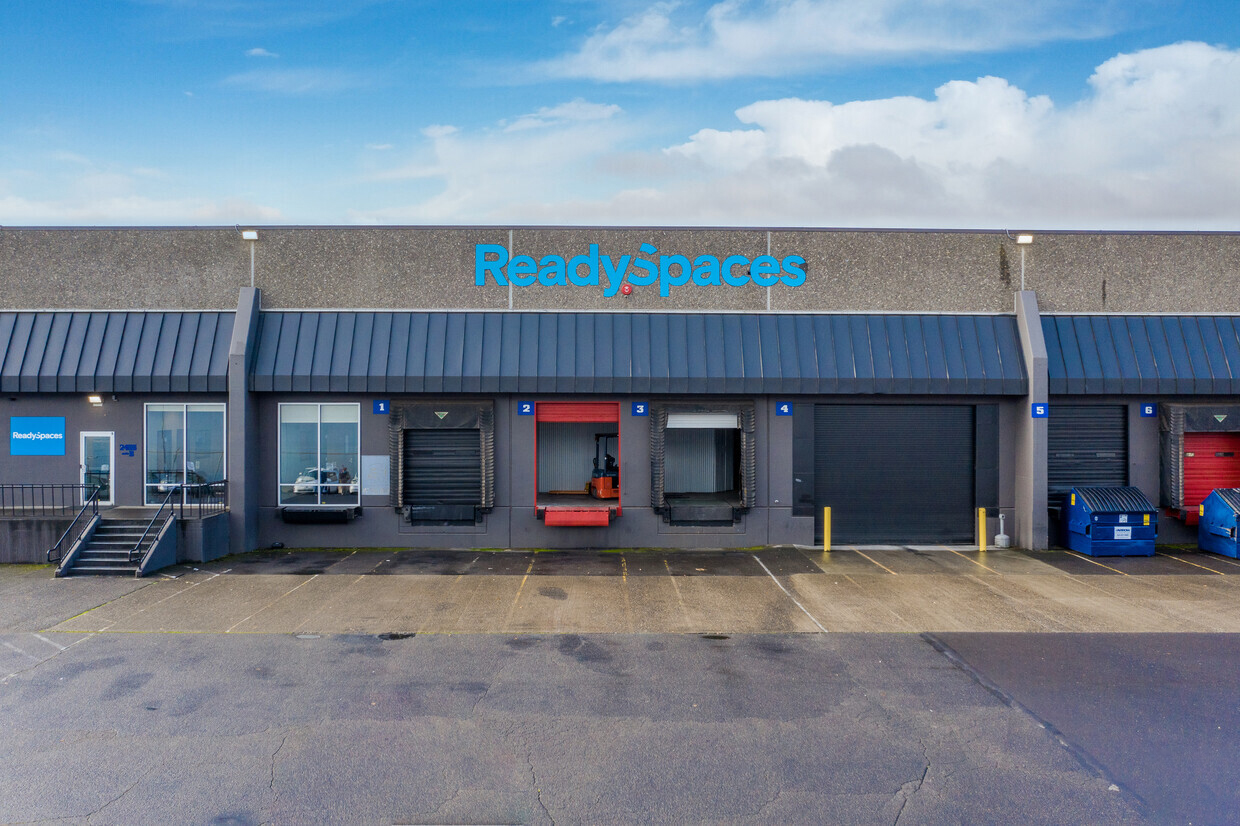
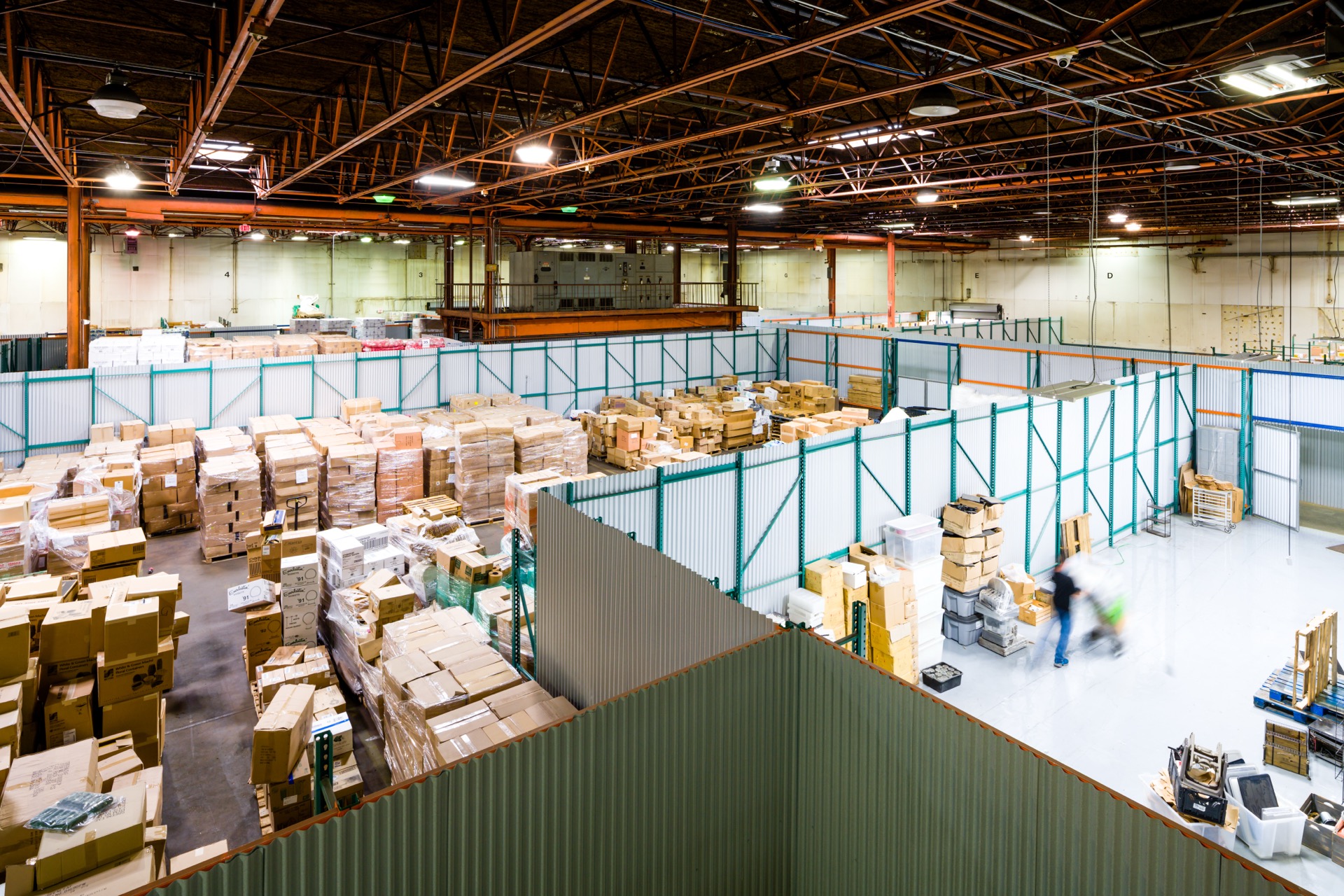
Co-warehousing — the shared, flexible warehouse model that applies coworking principles to industrial space — has emerged as one of the most significant shifts in how small bay industrial properties are operated and occupied. Instead of leasing entire buildings or large bays to single tenants on long-term leases, co-warehousing operators subdivide multi-tenant properties into smaller units (often 500-5,000 SF) and offer them on flexible, month-to-month terms.
For property owners, the model represents both an opportunity and a question. On the opportunity side, co-warehousing operators can fill space faster, reduce vacancy between tenants, and often achieve higher effective rents per square foot through the flexibility premium. For owners with older multi-tenant properties that struggle to compete with newer product, partnering with or converting to a co-warehousing model can be a viable repositioning strategy.
The question is whether the model fits your property, market, and investment strategy. Our case study on the ReadySpaces-WareCRE partnership shows how one operator approaches tenant acquisition and lead generation in the co-warehousing segment, and our co-warehousing brand comparison helps owners and tenants evaluate the different models available.
Deep Dive Articles
Pro Tip
If you own a multi-tenant industrial property with persistent vacancy in smaller units, explore co-warehousing operators before investing in traditional tenant improvements. The flexible model often fills space faster and at higher effective rents than conventional leasing for units under 5,000 SF.
Explore More
Related WareCRE Resources
- Market Intelligence Hub — Warehouse market reports for 18+ US and Canadian metros
- Industrial Real Estate Education Guide — Space types, lease structures, property specs, and logistics fundamentals
- Small Bay Industrial Guide
- Price Per Square Foot Guide: Top 20 US Markets
- The Warehousing Gap Squeezing America’s Small Businesses
List Your Industrial Property on WareCRE
Reach qualified tenants and brokers across the largest B2B industrial real estate marketplace.
List Your PropertyFrequently Asked Questions
Is small bay industrial a good investment?
Small bay industrial (under 10,000 SF per unit) has consistently outperformed big-box warehouse on vacancy and rent growth in recent years. The segment benefits from a structural supply shortage — very little new small bay product has been built in the last decade, while demand from small businesses, e-commerce operators, and contractors continues to grow. The trade-off is higher management intensity compared to single-tenant properties, since multi-tenant small bay facilities require more active leasing and property management.
What is co-warehousing?
Co-warehousing applies the coworking model to warehouse space. Operators subdivide industrial properties into smaller units — typically 500 to 5,000 square feet — and offer them on flexible, often month-to-month lease terms. Tenants get move-in ready space with shared amenities like loading docks, forklifts, and WiFi. For property owners, co-warehousing can achieve higher effective rents per square foot and faster lease-up compared to conventional industrial leasing for smaller units.
How do I attract quality tenants to my warehouse?
Tenant quality starts with listing quality. Properties with professional photos, complete specifications (ceiling height, dock access, power, office finish), and accurate availability information attract more qualified inquiries. Beyond the listing, responsive property management, clear CAM charge communication, and well-maintained common areas drive tenant retention. Pricing competitively within your submarket matters, but presentation and professionalism matter more than most owners expect.
What listing features get the most inquiries on industrial properties?
The listings that generate the most qualified inquiries share common traits: multiple interior and exterior photos (not just one exterior shot), complete property specifications including ceiling height and dock configuration, clear pricing with NNN charges broken out, accurate availability dates, and a direct contact method. Virtual tours and floor plans are increasingly expected for mid-size and larger spaces. Properties missing these elements are often skipped entirely by brokers and serious tenants.
How is the industrial real estate market performing in 2025?
The 2025 industrial market is bifurcated. Big-box distribution (100,000+ SF) is absorbing a significant wave of new supply delivered in 2023-2024, with vacancy rising in some metros and rent growth slowing. The small bay segment (under 10,000 SF) remains tight in most markets due to limited new construction and steady demand from small businesses. Overall, industrial fundamentals remain strong compared to office and retail, but performance varies significantly by property size, submarket, and metro.