How Tariffs Are Reshaping Warehouse Demand in 2026
Key Takeaways
- Tariffs are driving warehouse demand through two channels: short-term inventory front-loading (businesses pre-buying goods before rates increase) and long-term reshoring of manufacturing.
- National industrial absorption is forecast to hit 200M SF in 2026, up from 155M SF in 2025 — partly fueled by tariff-related inventory buildup.
- Reshoring is predicted to increase warehouse demand by ~35% over five years, with investment concentrating in the Southeast and Central U.S.
- Small-bay warehouse space (under 10,000 SF) is structurally undersupplied and absorbing the most pressure — the businesses most affected by tariffs need exactly the space that’s hardest to find.
U.S. effective tariff rates have hit levels not seen since the 1930s. And whether you’re a business leasing your first 1,000 SF of warehouse space or an operator filling a 200-unit multi-tenant building, the ripple effects are showing up in your market right now.
The industrial real estate sector absorbed 155 million SF nationally in 2025 — and forecasters expect that number to climb to 200 million SF in 2026. Not despite tariffs. Partly because of them. Here’s what’s actually happening, who it affects, and how to think about your warehouse lease in a market where trade policy changes faster than construction timelines.
The Front-Loading Effect: Why Warehouses Are Filling Up Before Tariffs Hit
When a business expects import costs to jump — say, from a 10% tariff to a 25% tariff on a key product category — the rational move is to buy now and store more. Economists call this inventory front-loading. Warehouse operators call it “suddenly everyone needs space.”
This is the most immediate way tariffs increase warehouse demand. It doesn’t require any factory to move. It doesn’t require any supply chain to restructure. It just requires a purchasing manager to do math: if your goods cost 15% more next quarter, you pull them in this quarter. And you need somewhere to put them.
The data backs it up. Nationally, users are leasing larger units to hold greater inventory levels and maintain excess capacity ahead of tariff deadlines. Outdoor industrial storage — yard space for containers and overflow — has become one of the fastest-growing segments in logistics real estate.
If You’re Leasing Space
If you import goods, model your tariff exposure before your lease expires. You may need 20-30% more square footage than last year just to maintain the same product availability. In port markets like Miami, Los Angeles, or New York/New Jersey, competition for mid-bay units (5,000-20,000 SF) will stay elevated through 2026.
If You’re an Operator
Tenants are making faster leasing decisions but asking for more flexibility on term length. They want the space now, but they’re not sure they’ll need it in 18 months. Short-term and month-to-month lease options — the kind co-warehousing operators specialize in — become a competitive advantage.
Reshoring and Nearshoring: The Slow Burn That Changes Everything
Front-loading is the short-term play. Reshoring — moving production back to the U.S. or closer to it — is the structural shift. And it’s real, even if the timelines are longer than the headlines suggest.
Manufacturing now accounts for 20% of new industrial leasing nationally, up from 13% before the pandemic. That’s not a blip. Companies in automotive parts, consumer electronics, pharmaceuticals, and food production are investing in domestic production capacity, driven by a combination of tariff pressure, supply chain reliability concerns, and federal incentives (CHIPS Act, IRA).
The geographic pattern is clear. Reshoring investments are concentrating in the Southeast and Central U.S. — markets like Dallas-Fort Worth, Atlanta, Nashville, Indianapolis, and Charlotte — where labor costs are lower, land is available, and state incentive programs are aggressive. Reshoring activity is predicted to increase overall warehouse demand by roughly 35% over the next five years.
Nearshoring to Mexico is the parallel trend. Import volumes are shifting away from China toward Mexico and Southeast Asia, which redirects freight flows toward border markets (Laredo, El Paso) and inland logistics corridors (Dallas-Fort Worth, Kansas City, Chicago).
20%
Of New Leasing = Manufacturing (up from 13%)
35%
Predicted Demand Increase from Reshoring (5yr)
200M
SF Forecast Net Absorption 2026
Location Strategy Shift
If your supply chain touches imports, your warehouse location strategy may need to change. A distribution point optimized for goods from the Port of Los Angeles may not work for goods arriving from Monterrey or Ho Chi Minh City. Think about where your freight actually enters the country — then work backward to your warehouse.
The Small-Bay Advantage in a Tariff Environment
Here’s where the tariff story intersects with the segment WareCRE covers most closely.
Big-box warehouse space (100,000+ SF) gets the headlines. But the businesses most affected by tariffs on a day-to-day basis — small importers, e-commerce sellers, specialty distributors, contractors sourcing materials — operate in the under-10,000 SF segment. And that segment is structurally undersupplied.
Why? Developers don’t build speculative small-bay. The per-square-foot economics don’t pencil for ground-up construction. So the entire small-bay inventory in most U.S. metros consists of buildings that were converted from other uses or built decades ago. National small-bay vacancy sits around 3-4%, compared to 7-8% for big-box.
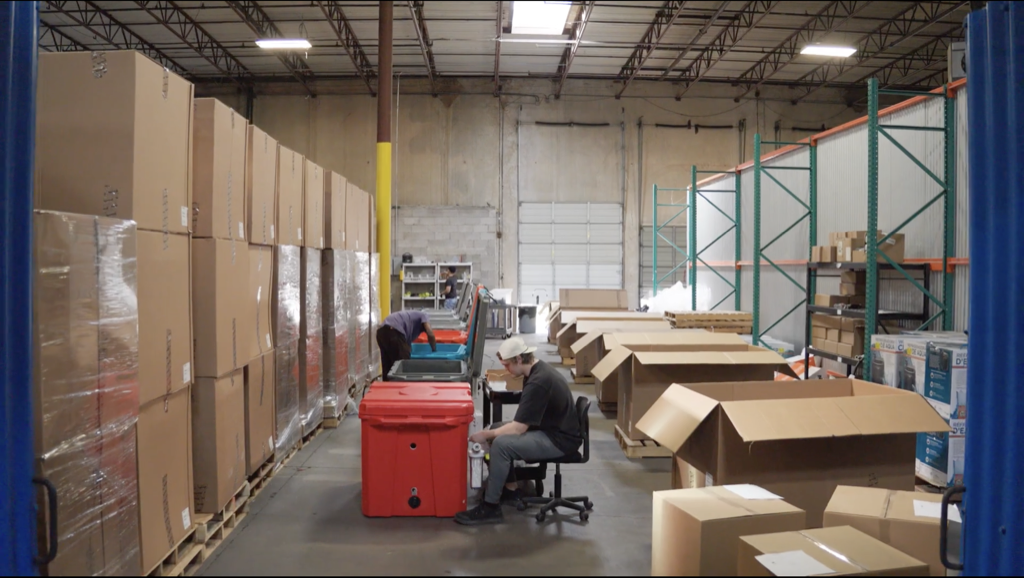
Tariffs amplify this imbalance. When a small e-commerce business needs to carry three months of inventory instead of one, they don’t lease a 50,000 SF distribution center. They look for an extra 500-2,000 SF of warehouse space — exactly the type that’s hardest to find.
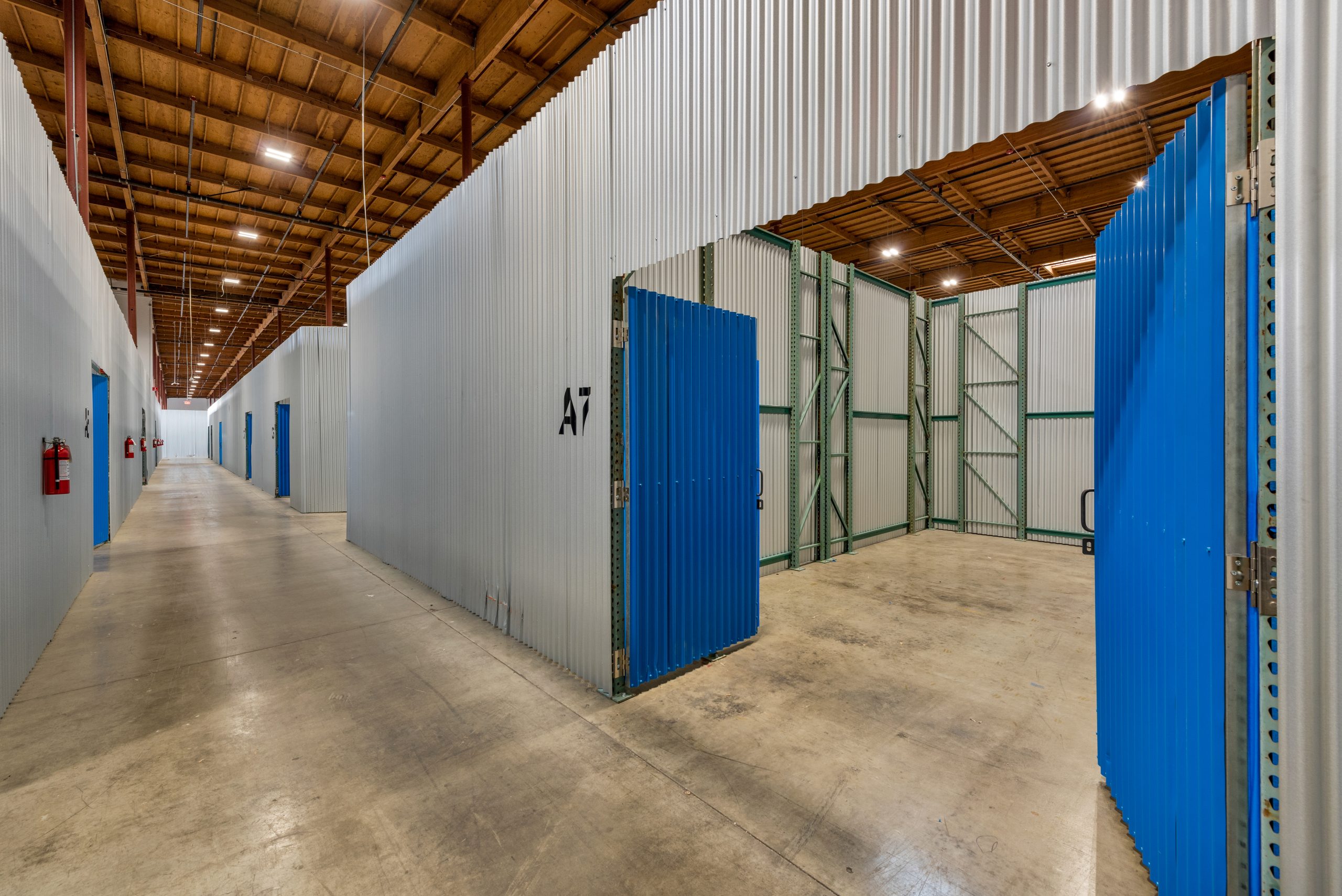
Co-warehousing and flex warehouse operators are absorbing this demand. Units in the 200-5,000 SF range with flexible terms allow businesses to scale up storage during tariff uncertainty and scale back if policy changes. That flexibility is worth a premium over traditional 3-5 year industrial leases — and tenants are paying it.
Need flexible warehouse space that scales with your inventory?
Search Warehouse ListingsWhat to Do Right Now: A Practical Checklist
If you’re a tenant looking for warehouse space
Calculate your tariff-adjusted inventory needs. How much more product do you need to store if your landed cost goes up 15-25%? That number determines whether you need a bigger unit or a second location.
Prioritize flexibility over price-per-SF. In a volatile trade environment, a slightly more expensive lease with month-to-month or short-term options can save you from being locked into space you don’t need — or scrambling for space you do.
Read the market report for your metro before signing. Vacancy rates, average rents, and construction pipelines vary dramatically by market. What’s happening in Miami is not what’s happening in Dallas. WareCRE publishes free market reports for 18+ metros — check the data for your city before you negotiate.
If you’re an operator listing space
Lean into flexibility as a differentiator. Traditional landlords offering 3-year NNN leases are competing for tenants who don’t know what their import costs look like next quarter. If you can offer shorter terms, you win the tenant.
Watch your port-adjacent markets. Properties near major ports (Miami, LA, Houston, New York/New Jersey) see the most direct tariff-driven demand. If you operate in these metros, your marketing should explicitly address tariff-driven storage needs.
Keep an eye on reshoring corridors. If you’re in the Southeast or Central U.S., your tenant pipeline may be shifting from pure e-commerce toward light manufacturing and assembly operations. Adjust your property specs and marketing accordingly.
The Bottom Line
Tariffs aren’t just a trade policy story — they’re a warehouse demand story. Front-loading fills space now. Reshoring fills space for decades. And the segment feeling the most pressure — small-bay, flexible warehouse space — is the one with the least supply.
Whether you’re searching for your first warehouse unit or filling your fortieth, the smart move is the same: know your market, understand your costs, and plan for more inventory than you think you need.
The trade environment won’t stabilize anytime soon. Your warehouse strategy should account for that.
Know your market before you sign
Free market reports for 18+ metros — vacancy, rents, construction pipeline, and small-bay data. No paywall.
Read the Market ReportsSources: PwC/ULI Emerging Trends in Real Estate 2026, NAIOP Industrial Real Estate Reset (Spring 2026), JLL U.S. Industrial Market Dynamics Q1 2026, Allegro Realty tariff analysis, WareCRE market reports.