Denver Industrial & Warehouse Market Report | Q2 2026
Key Takeaways
- Denver industrial vacancy held at 7.8% in Q2 2026, flat on the quarter and down 30 basis points from 8.1% a year earlier, according to Cushman & Wakefield.
- Net absorption slowed to 46,368 SF in Q2 after 902,570 SF in Q1 (as restated), as large move-outs offset move-ins. Year-to-date absorption is 948,938 SF.
- Overall asking rent rose to $10.09/SF/yr NNN, up 0.9% on the quarter and 1.8% on the year. Warehouse/distribution space asks $8.82/SF/yr.
- 4.2 million SF is under construction, mostly speculative, and no buildings delivered in Q2. C&W says nearly 1.6 million SF of speculative space is due by the end of 2026, which may lift vacancy in the near term.
Browse warehouse space for rent in Denver
7.8%
Overall Vacancy (Q2 2026)
$10.09
Avg. Asking Rent ($/SF/yr NNN)
46K
SF Net Absorption (Q2 2026)
4.2M
SF Under Construction
Denver’s industrial market stalled in Q2 2026 after a strong first quarter. No new buildings delivered, so vacancy held at 7.8%, but net absorption fell to 46,368 SF as several large move-outs offset new occupancies. Asking rents edged up to $10.09/SF/yr NNN. With 4.2 million SF under construction, the rest of 2026 depends on how quickly new speculative space leases.
Figures are from Cushman & Wakefield’s Q2 2026 Denver Industrial MarketBeat unless noted. Prior-quarter and year-ago comparisons use the figures as restated in C&W’s Q2 2026 U.S. Industrial MarketBeat tables. C&W first published Q1 2026 at 7.7% vacancy, $10.22/SF/yr and 982,949 SF of absorption; the national tables now show 7.8%, $10.00 and 902,570 SF. Rents are overall weighted net asking rents, triple net, in $/SF/yr. Other data providers measure Denver on different inventories; their figures are not blended here.
Market Snapshot: Q2 2026
| Metric | Q2 2026 | Q1 2026 (restated) | YoY or note |
|---|---|---|---|
| Overall vacancy | 7.8% | 7.8% | −30 bps YoY (8.1% in Q2 2025) |
| Direct vacancy | 7.4% | n/a | −40 bps YoY |
| Overall asking rent ($/SF/yr NNN) | $10.09 | $10.00 | +1.8% YoY (from $9.91) |
| Warehouse/distribution asking rent ($/SF/yr) | $8.82 | n/a | Manufacturing $10.72; flex $12.98 |
| Net absorption | 46,368 SF | 902,570 SF | 948,938 SF year to date |
| New leasing (excl. renewals) | 3.1M SF | n/a | −6.2% QoQ; +14.8% YoY |
| Deliveries | 0 SF | 354,432 SF | 354,432 SF year to date |
| Under construction | 4,215,008 SF | 4,169,715 SF | Mostly speculative |
| Sales volume | $280.5M | n/a | $539.0M in Q2 2025 |
| Inventory | 277.9M SF | n/a | Base for all rates above |
Source: Cushman & Wakefield, Denver Industrial MarketBeat Q2 2026. Q1 2026 and Q2 2025 vacancy, rent and absorption as restated in C&W’s U.S. Industrial MarketBeat Q2 2026 metro tables; Q1 under construction and deliveries from C&W’s Q1 2026 Denver MarketBeat. C&W notes its local leasing figures differ from its national tables. n/a = not published in the Q2 reports.
Rent Trends: Up 1.8% on the Year to $10.09/SF
Denver’s overall asking rent reached $10.09/SF/yr NNN in Q2 2026, up $0.09 from the restated Q1 figure and 1.8% from $9.91 a year earlier. By product type, warehouse/distribution space asks $8.82/SF/yr, manufacturing $10.72/SF/yr and flex $12.98/SF/yr.
C&W cautions against reading the increase as demand-led. It attributes recent rent gains mainly to “the influx of Class A new construction rather than demand creating upward pressure,” and reports that motivated landlords are competing on concessions and rates for quality tenants. Warehouse rents vary widely by submarket, from $6.54/SF/yr in I-76 and $6.72/SF/yr in the Airport submarket to $13.28/SF/yr in the Southwest.
For Tenants
Headline rents are rising slowly, but landlords with key vacancies are negotiating on concessions and rates. I-76 (19.2% vacancy) and the North (10.3%) have the most available space; the Southwest (2.9%) and South Central (3.9%) are the tightest. Large-format users should see more choice as nearly 1.6 million SF of speculative space delivers by year-end. Search Denver warehouse listings on WareCRE.
Construction Pipeline: 4.2M SF Underway, No Q2 Deliveries
Denver had 4,215,008 SF under construction at the end of Q2 2026, little changed from 4,169,715 SF in Q1. No buildings delivered in Q2, which leaves year-to-date completions at 354,432 SF, and only three buildings totaling 200,000 SF broke ground. C&W says Denver remains well below its five-year average for new industrial development.
The Airport submarket holds 2.26 million SF of the pipeline, more than half, followed by the North (743,332 SF) and Southeast (540,067 SF). Speculative projects dominate. Two of the three build-to-suit projects, for Chick-fil-A and Philip Morris, were slated to deliver in Q3 2026. Developers remain active on the North I-25 corridor, with four speculative projects under construction and five more scheduled to break ground before the end of 2026, even though North submarket vacancy is 10.3%.
For Operators
Q2 showed how quickly a few large move-outs can erase gains. The second half of Broadrange’s move-out at 76 Commerce Center alone took more than 330,000 SF off the books. C&W expects vacancy to decrease over the long term, but slowly, as new speculative buildings lease up, and expects net absorption to stay positive for the rest of 2026. Owners of second-tier space may benefit as Class A availabilities thin out in submarkets such as North Central, where C&W says key projects are approaching zero vacancy.
Submarket Breakdown: Airport Leads Demand, I-76 Has the Most Space
C&W divides Denver into nine industrial submarkets. The four below account for about 71% of inventory and most of the quarter’s activity; the table covers all nine.
Airport
Denver’s largest submarket at 86.9 million SF, surrounding Denver International Airport. It led Q2 demand with 443,291 SF of net absorption (742,685 SF year to date) and has signed 1.8 million SF of leases this year. Vacancy is 8.3%. Warehouse space asks $6.72/SF/yr, among the lowest in the metro, and 2.26 million SF is under construction. Phillips Pet leased 155,500 SF at Majestic Commercenter Building 12.
North Central
The second-largest submarket at 60.3 million SF. Vacancy rose 70 basis points to 6.6% in Q2 after several move-outs of more than 50,000 SF. The submarket gave back 412,896 SF in the quarter but remains positive year to date at 56,280 SF. Warehouse rents average $10.07/SF/yr. The quarter’s largest sale, the 13-building Park Industrial portfolio (466,300 SF), traded here for $71.5 million, or $154/SF.
Northwest
35.8 million SF at 7.1% vacancy. The Northwest has absorbed 361,671 SF year to date, second only to the Airport, despite a small Q2 loss. Warehouse space asks $12.21/SF/yr. Verve Commerce Center Buildings 1 and 2 (284,000 SF) sold for $64.7 million, or $228/SF, and West 108 (75,100 SF) delivered earlier this year for RRC Power & Energy.
I-76
The I-76 submarket has the highest vacancy in the metro at 19.2% after losing 389,105 SF of occupancy year to date. Leasing is active, with 825,345 SF signed this year, including Kuehne & Nagel’s 255,000 SF lease at Mile High Logistics Center. Warehouse space asks $6.54/SF/yr, the lowest in the metro, and 466,400 SF is under construction. This is where large-format tenants have the most leverage.
| Submarket | Vacancy | W/D Asking Rent ($/SF/yr) | YTD Net Absorption (SF) | Under Construction (SF) |
|---|---|---|---|---|
| Airport | 8.3% | $6.72 | 742,685 | 2,261,195 |
| North Central | 6.6% | $10.07 | 56,280 | 62,160 |
| Northwest | 7.1% | $12.21 | 361,671 | 141,854 |
| Southeast | 8.0% | $10.48 | 190,535 | 540,067 |
| South Central | 3.9% | $10.99 | 111,054 | 0 |
| Southwest | 2.9% | $13.28 | 124,459 | 0 |
| I-76 | 19.2% | $6.54 | −389,105 | 466,400 |
| North | 10.3% | $9.83 | −162,934 | 743,332 |
| Boulder | 11.3% | $12.21 | −85,707 | 0 |
| Denver total | 7.8% | $8.82 | 948,938 | 4,215,008 |
Source: Cushman & Wakefield, Denver Industrial MarketBeat Q2 2026, market statistics table.
Co-Warehousing & Flexible Warehouse Space in Denver
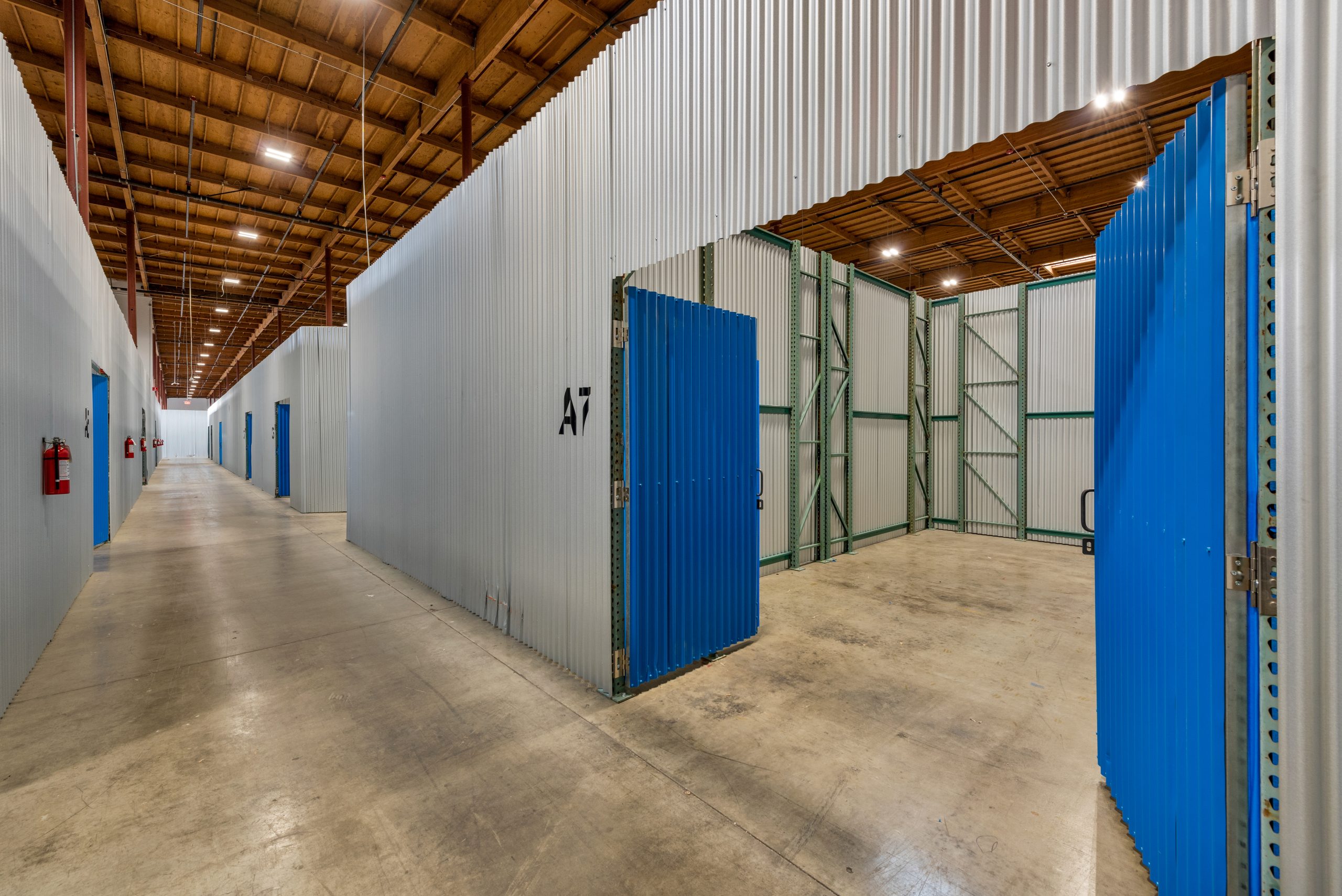
Denver’s flexible warehouse market serves businesses that need operational space without a big-box commitment. In C&W’s data, flex space asks $12.98/SF/yr, compared with $8.82/SF/yr for warehouse/distribution. By building size, C&W reports that mid-bay buildings of 100,000 to 250,000 SF saw the most leasing in Q2, with 36 new leases totaling about 930,000 SF.
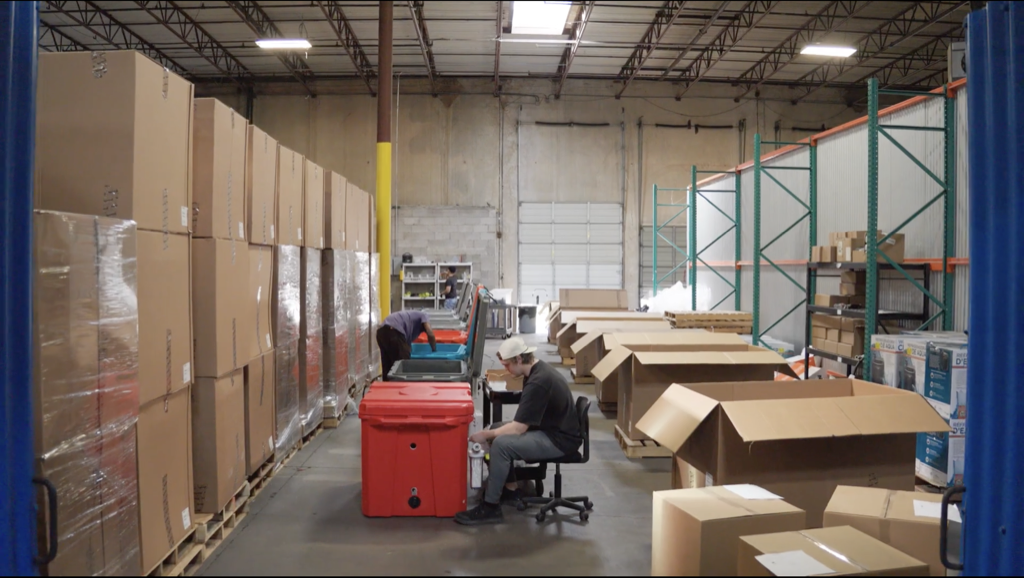
Flexible-space tenants in Denver include outdoor recreation and sporting goods companies, cannabis operators that need compliant warehouse space, e-commerce businesses serving the Mountain West, contractors storing tools and materials, and food producers supplying the city’s restaurants and hotels.
ReadySpaces operates in the Denver market. Browse available co-warehousing and small-bay listings on WareCRE’s Denver marketplace.
Looking for warehouse space in Denver?
Key Trends to Watch: Denver Industrial Market Trends 2026
1. Absorption Swings on a Few Large Moves
Net absorption fell from 902,570 SF in Q1 to 46,368 SF in Q2, a 94.9% drop, because a handful of large tenants moved out. The second half of Broadrange’s exit from 76 Commerce Center accounted for more than 330,000 SF of negative absorption. Precision Homes (200,000 SF at Lincoln Distribution Center) and Vartega (82,000 SF at Pecos Logistics Center) added to it. Pretred’s 152,000 SF move-in at Denali was the largest occupancy gain.
2. Leasing Is Stronger Than Absorption Suggests
Just over 3.1 million SF of new leases were signed in Q2, up 14.8% year over year. The North rebounded with more than 539,000 SF of pre-leasing in planned speculative buildings, including a confidential tenant’s 409,000 SF lease at Crossroads 25 Building 4. Leases signed now become absorption when tenants move in. Read more: Small-Bay vs. Big-Box: What the Vacancy Gap Means in 2026.
3. Sales Volume Is Down Nearly Half From a Year Ago
Industrial sales totaled $280.5 million in Q2, virtually flat on the quarter and down from $539.0 million a year earlier. The largest trades priced between $154/SF and $285/SF. C&W expects investment activity to improve modestly, with institutional investors staying conservative and focused on fully stabilized assets.
Outlook: What to Watch in Q4 2026
C&W’s Q3 2026 MarketBeats are due in mid-October, with the year-end release to follow.
Watch whether absorption recovers. C&W expects net absorption to stay positive for the rest of 2026, helped by the Chick-fil-A and Philip Morris build-to-suit deliveries. The test is whether Q3 moves back toward Q1’s 902,570 SF.
Watch whether new supply pushes vacancy up. Nearly 1.6 million SF of speculative space is due by the end of 2026. C&W says metro-wide vacancy may increase in the near term, while expecting it to decrease over the long term.
Watch whether rents hold above $10/SF. The overall asking rent is $10.09/SF/yr, but C&W attributes recent gains mainly to new Class A space, and landlords are competing on concessions.
Find warehouse space in Denver
Browse co-warehousing, small-bay, and flex listings across the Denver metro.
Data sources: Cushman & Wakefield Denver Industrial MarketBeat Q2 2026 (headline, submarket, product-type, leasing, construction and sales figures; rents overall weighted net asking, NNN, $/SF/yr); Cushman & Wakefield U.S. Industrial MarketBeat Q2 2026 (restated Q1 2026 and Q2 2025 figures, U.S. averages); Cushman & Wakefield Denver Industrial MarketBeat Q1 2026 (Q1 as first published, Q1 under construction and deliveries). Each report reflects the most recent vacancy, rental, and construction data available at the time of publication. We refresh our reports as new market data is released, and we’re continually expanding coverage to additional metros.
Related Resources
Frequently Asked Questions
What is the current industrial vacancy rate in Denver?
Denver industrial vacancy was 7.8% in Q2 2026, according to Cushman & Wakefield, unchanged from Q1 and down 30 basis points from a year earlier. Direct vacancy was 7.4%. Submarket vacancy ranges from 2.9% in the Southwest to 19.2% in I-76. The U.S. average in the same release was 6.9%.
How much does warehouse space cost in Denver?
The overall average asking rent was $10.09/SF/yr NNN in Q2 2026, up 1.8% year over year. Warehouse/distribution space averaged $8.82/SF/yr, manufacturing $10.72/SF/yr and flex $12.98/SF/yr. Warehouse rents range from $6.54/SF/yr in I-76 to $13.28/SF/yr in the Southwest.
Which Denver submarket is best for warehouse space?
It depends on the requirement. The Airport submarket is the largest, led Q2 absorption and holds more than half of the construction pipeline. I-76 has the most availability at 19.2% vacancy and the lowest warehouse rents. The Southwest (2.9%) and South Central (3.9%) are the tightest.
How much industrial space is under construction in Denver?
4.2 million SF was under construction at the end of Q2 2026, mostly speculative, including 2.26 million SF in the Airport submarket. No buildings delivered in Q2, and year-to-date completions total 354,432 SF. C&W says nearly 1.6 million SF of speculative space is due by the end of 2026.
What are Denver industrial sale prices?
Cushman & Wakefield recorded $280.5 million of industrial sales in Q2 2026, down from $539.0 million a year earlier. The quarter’s largest trades ranged from $154/SF for the Park Industrial portfolio to $285/SF for 17600 Smith Road. C&W’s Denver report does not publish a cap rate.