Los Angeles Industrial & Warehouse Market Report | Q2 2026
Key Takeaways
- Los Angeles industrial vacancy fell to 4.2% in Q2 2026, down 10 basis points from Q1 and 40 basis points year over year. That is the lowest level since Q2 2024 and well below the U.S. average of 6.9%.
- Net absorption was positive for a seventh straight quarter at 1.2 million SF, bringing the year-to-date total to 1.8 million SF. Leasing reached 11.0 million SF, the highest quarterly total since Q2 2021.
- Average asking rent held flat at $1.32/SF/mo NNN after 10 consecutive quarterly declines. It is $0.03 below a year ago and $0.39 below the 2023 peak.
- 4.4 million SF is under construction across 25 buildings, about 0.6% of an 800.5 million SF inventory, and concentrated in LA North and LA South.
Browse warehouse space for rent in Los Angeles
4.2%
Overall Vacancy (Q2 2026)
$1.32
Avg. Asking Rent ($/SF/mo NNN)
1.2M
SF Net Absorption (Q2 2026)
4.4M
SF Under Construction
Los Angeles County’s industrial market kept tightening in Q2 2026. Vacancy slipped to 4.2%, net absorption more than doubled from Q1 to 1.2 million SF, and leasing climbed to 11.0 million SF as tenants in LA South took large blocks. Rents stopped falling. The average asking rate held at $1.32/SF/mo NNN, the first quarter without a decline after 10 straight drops.
Figures are from Cushman & Wakefield’s Q2 2026 Los Angeles Industrial MarketBeat unless noted. The report covers Los Angeles County only; the Inland Empire and Orange County are separate C&W markets. Prior-quarter comparisons use the figures as restated in C&W’s Q2 2026 reports. Rents are triple net (NNN) asking rates, quoted in $/SF per month by Southern California convention.
Market Snapshot: Q2 2026
| Metric | Q2 2026 | Q1 2026 (restated) | YoY or note |
|---|---|---|---|
| Overall vacancy | 4.2% | 4.3% | −40 bps YoY (4.6% in Q2 2025) |
| Availability rate | 5.4% | n/a | Fourth straight quarterly decline; 43.4M SF available |
| Avg. asking rent ($/SF/mo NNN) | $1.32 | $1.32 | −$0.03 YoY; $0.39 below 2023 peak |
| Net absorption | 1,233,596 SF | 526,441 SF | 1,760,037 SF year to date |
| New leasing activity | 11.0M SF | 9.4M SF | 20.4M SF year to date, 19.1% ahead of first-half 2025 |
| Deliveries | 408,737 SF | 352,707 SF | 761,444 SF year to date (seven buildings) |
| Under construction | 4,433,489 SF | n/a | 25 buildings |
| Industrial cap rate (Matthews/CoStar) | 5.8% | n/a | Average sale price $308/SF; different data basis from C&W |
| Inventory | 800.5M SF | n/a | Base for all rates above |
Source: Cushman & Wakefield, Los Angeles Industrial MarketBeat Q2 2026. Q1 2026 and Q2 2025 values as restated in C&W’s U.S. Industrial MarketBeat Q2 2026 metro tables and the Los Angeles report. Cap rate and sale price: Matthews, Los Angeles Industrial Market Report Q2 2026, citing CoStar. n/a = not restated in the Q2 reports.
Rent Trends: Flat at $1.32 After 10 Straight Quarterly Declines
The average asking rent in Los Angeles County held at $1.32/SF/mo NNN in Q2 2026, unchanged from Q1. Warehouse/distribution space averaged $1.32 and manufacturing $1.23. After rising fast in the pandemic years and plateauing in 2023, rents fell for 10 consecutive quarters before leveling off this quarter. The average now sits $0.03 below a year ago and $0.39 below the 2023 peak.
Tenants coming off older leases still face a reset. C&W notes that the average asking rent is up $0.36 since Q1 2021, which is increasing price sensitivity, lengthening negotiations and driving greater use of concessions. Submarket rents run from $1.09 in LA Central to $2.22 in LA West, with LA South and LA North both at $1.37.
For Tenants
Leverage is narrowing but has not gone. Rents have stopped falling, vacancy is at its lowest since Q2 2024, and availability has declined for four straight quarters. C&W reports greater use of concessions as tenants renewing older leases face rent resets. LA Central offers the lowest average asking rent at $1.09/SF/mo NNN; the San Gabriel Valley is the tightest large submarket at 2.9% vacancy. Search Los Angeles warehouse listings on WareCRE.
Construction Pipeline: 4.4M SF Underway, Most of It in LA North and LA South
At the end of Q2 2026, 25 buildings totaling 4.4 million SF were under construction in Los Angeles County. C&W describes the pipeline as relatively modest and says it has contracted over the past two years. Developers delivered four buildings totaling 408,737 SF in Q2, bringing year-to-date completions to 761,444 SF across seven buildings.
Construction is concentrated in LA North (2.2 million SF) and LA South (1.3 million SF). Most of this year’s deliveries landed in the San Gabriel Valley and LA Central. LA West has nothing under construction. The pipeline equals about 0.6% of the 800.5 million SF inventory.
For Operators
Seven quarters of positive absorption and a flat rent quarter support holding rate on well-located product. The competition to watch is in LA North, where 2.2 million SF is underway and year-to-date absorption is negative at 1.3 million SF. In LA South, 2.7 million SF of year-to-date absorption against 1.3 million SF under construction points the other way.
Submarket Breakdown: LA South Leads, LA North Loses Ground
C&W tracks six Los Angeles County submarkets. The four below are the largest by inventory.
LA South
The port-adjacent submarket covering Torrance, Carson and Long Beach, 192.8 million SF, led the county in Q2. It absorbed 2.0 million SF in the quarter and 2.7 million SF year to date, and accounted for 39.5% of all LA leasing. Vacancy is 4.5% and the average asking rent is $1.37/SF/mo NNN. Advanced manufacturing users signed the largest deals, including Valar Atomics (512,490 SF in Torrance) and Divergent Technologies (415,312 SF in Long Beach).
LA Central
The county’s largest submarket at 200.5 million SF, including Vernon and Commerce. It has the lowest average asking rent in the county at $1.09/SF/mo NNN and 4.3% vacancy. Absorption was negative 659,397 SF in Q2 but positive 41,471 SF year to date. Pixior leased 283,621 SF in Commerce.
San Gabriel Valley
The tightest of the large submarkets at 2.9% vacancy, with 159.2 million SF of inventory. It absorbed 721,708 SF in Q2 and took more than half of this year’s new deliveries, including Rexford Industrial’s 219,690 SF building in Industry. Rent averages $1.44/SF/mo NNN.
LA North
The northern county, including Santa Clarita and Westlake Village, at 149.9 million SF. Vacancy is 4.7% and rent averages $1.37/SF/mo NNN. LA North is the soft spot. Absorption was negative 883,742 SF in Q2 and negative 1.3 million SF year to date, and it holds the county’s largest pipeline at 2.2 million SF. DrinkPak leased 260,290 SF in Santa Clarita.
| Submarket | Vacancy | Asking Rent ($/SF/mo NNN) | YTD Net Absorption (SF) | Under Construction (SF) |
|---|---|---|---|---|
| LA Central | 4.3% | $1.09 | 41,471 | 419,591 |
| LA South | 4.5% | $1.37 | 2,734,389 | 1,284,389 |
| San Gabriel Valley | 2.9% | $1.44 | 221,591 | 323,744 |
| LA North | 4.7% | $1.37 | -1,270,844 | 2,220,709 |
| Mid-Counties | 4.7% | $1.31 | -39,737 | 185,056 |
| LA West | 1.8% | $2.22 | 73,167 | 0 |
| Los Angeles total | 4.2% | $1.32 | 1,760,037 | 4,433,489 |
Source: Cushman & Wakefield, Los Angeles Industrial MarketBeat Q2 2026, market statistics table. Rents are overall weighted NNN asking rates, all product types.
Co-Warehousing & Flexible Warehouse Space in Los Angeles
Expensive traditional leases, long commitments and complex permitting make LA’s industrial market hard to enter, and a very large base of small businesses needs smaller-format space. Together they support demand for flexible units.
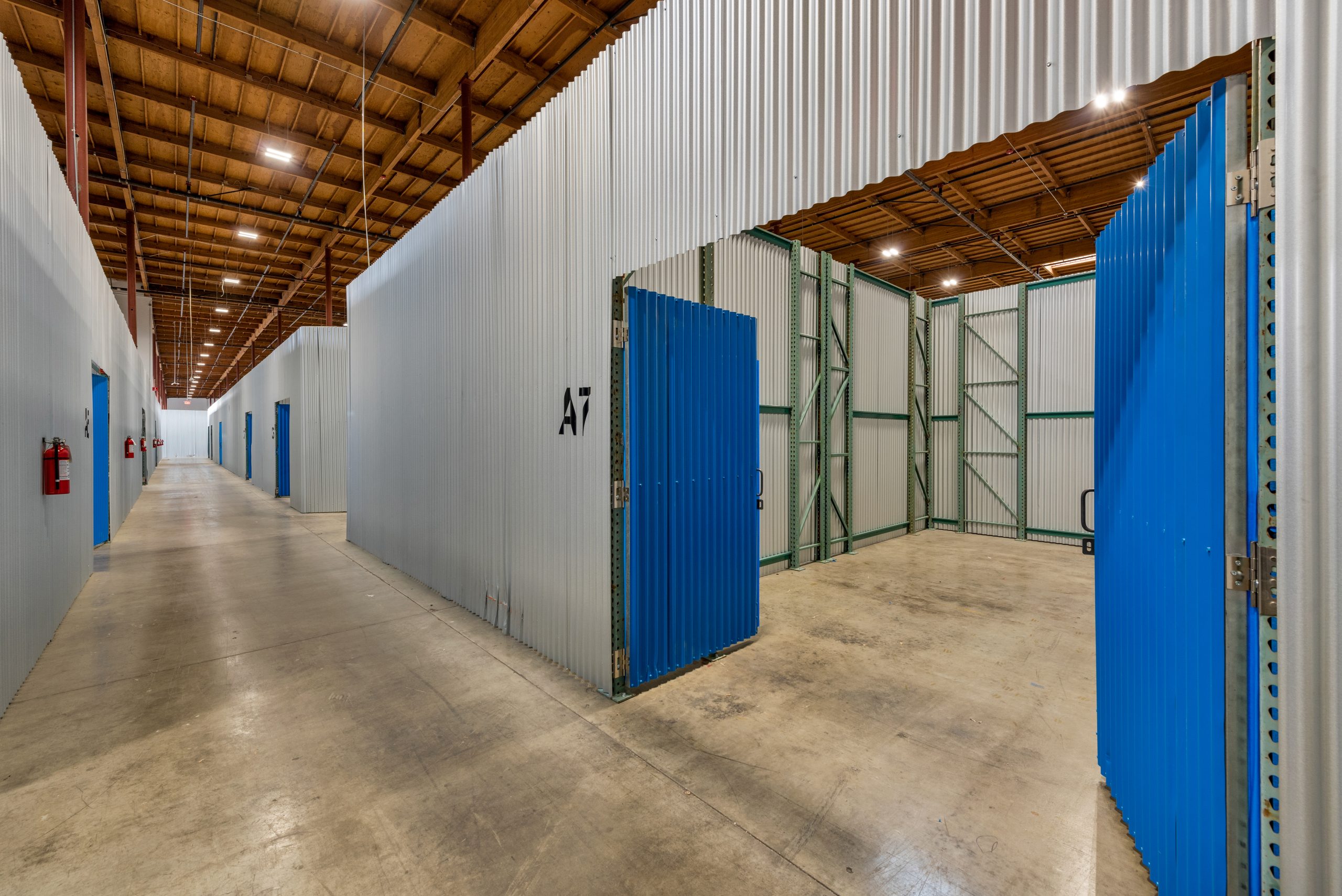
Co-warehousing operators in the LA metro offer units from a few hundred square feet to several thousand, typically with month-to-month or short-term terms. Properties cluster in areas like the Mid-Counties, LA Central and the San Fernando Valley, where building stock and zoning support multi-tenant layouts.
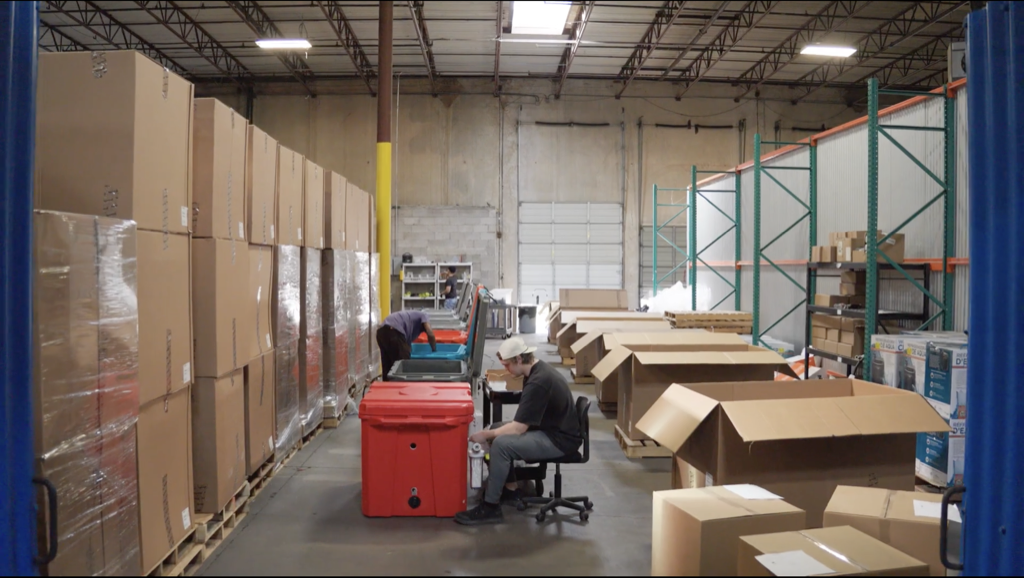
Typical flexible-space tenants in Los Angeles include e-commerce operators needing West Coast fulfillment space, entertainment and production companies that need staging and storage, food and beverage businesses serving LA’s hospitality market, and import distributors who want port-proximate space without a large traditional lease. Browse available listings on WareCRE’s Los Angeles marketplace.
Looking for warehouse space in Los Angeles?
Key Trends to Watch
1. Leasing Is at Its Highest Level Since 2021
New leasing rose for a second straight quarter to 11.0 million SF, the highest since Q2 2021. The first-half total of 20.4 million SF is 19.1% ahead of the same period in 2025. LA South did more than double the leasing of the next most active submarket, the San Gabriel Valley. Read more: Small-Bay vs. Big-Box: What the Vacancy Gap Means in 2026.
2. Aerospace and Advanced Manufacturing Are Taking the Big Blocks
C&W highlights five key Q2 leases, and three went to advanced manufacturing and aerospace users in port-adjacent LA South: Valar Atomics (512,490 SF in Torrance), Divergent Technologies (415,312 SF in Long Beach) and Ducommun Aerostructures (a 307,000 SF renewal in Carson).
3. Port Volumes Are Leveling Off After 2025’s Front-Loading
The Port of Los Angeles handled 840,165 TEUs in May, up 17.2% year over year, and the Port of Long Beach 842,030 TEUs, up 31.7%. Year-to-date growth was much smaller, at 1.4% for Los Angeles and 0.2% for Long Beach, each at 4.1 million TEUs. C&W reads this as cargo stabilizing after the tariff-driven front-loading of 2025, with trade-policy uncertainty still limiting visibility for importers. For more, see How Tariffs Are Reshaping Warehouse Demand in 2026.
Outlook: What to Watch in Q4 2026
C&W’s Q3 2026 MarketBeats are due in mid-October, with the year-end release to follow.
Watch whether vacancy keeps falling. It has been flat or down for four straight quarters. C&W describes this as gradual progress toward market balance even though availability remains high. An eighth straight quarter of positive absorption would keep the rate moving down, provided deliveries stay modest.
Watch whether Q2 marked the rent floor. C&W says the flat quarter may signal that the market is “approaching an inflection point,” while high availability continues to pressure pricing. A second flat or rising quarter would confirm the turn.
Watch how fast LA North’s pipeline leases. With 2.2 million SF under construction and negative absorption year to date, it is where new supply could lift vacancy locally even as the county tightens.
Find warehouse space in Los Angeles
Browse co-warehousing, small-bay, and flex listings across Los Angeles County.
Data sources: Cushman & Wakefield Los Angeles Industrial MarketBeat Q2 2026 (headline, submarket, leasing, construction and port figures; rents NNN, $/SF/mo); Cushman & Wakefield U.S. Industrial MarketBeat Q2 2026 (restated Q1 2026 and Q2 2025 figures and the U.S. average); Matthews Los Angeles Industrial Market Report Q2 2026, citing CoStar data (cap rate and sale price only). Each report reflects the most recent vacancy, rental, and construction data available at the time of publication. We refresh our reports as new market data is released, and we’re continually expanding coverage to additional metros.
Related Resources
Frequently Asked Questions
What is the current industrial vacancy rate in Los Angeles?
Los Angeles County industrial vacancy was 4.2% in Q2 2026, according to Cushman & Wakefield, down 10 basis points from Q1 and 40 basis points year over year. It is the lowest rate since Q2 2024 and well below the U.S. average of 6.9%. Submarket vacancy ranges from 1.8% in LA West to 4.7% in LA North and the Mid-Counties.
How much does warehouse space cost in Los Angeles?
The average industrial asking rent in Los Angeles County was $1.32/SF/mo NNN in Q2 2026, flat from Q1 and $0.03 below a year ago. Warehouse/distribution space averaged $1.32 and manufacturing $1.23. By submarket, averages run from $1.09 in LA Central to $2.22 in LA West.
Which Los Angeles submarket is best for warehouse space?
It depends on the requirement. LA South is the port-adjacent logistics and aerospace hub and led the county in absorption and leasing. LA Central has the lowest average rent at $1.09/SF/mo NNN. The San Gabriel Valley is the tightest large submarket at 2.9% vacancy. LA North has the most space under construction, which may give tenants more options as it delivers.
How much industrial space is under construction in Los Angeles?
About 4.4 million SF across 25 buildings was under construction at the end of Q2 2026, concentrated in LA North and LA South. Developers delivered 761,444 SF across seven buildings in the first half of 2026.
What are industrial cap rates in Los Angeles?
Matthews, citing CoStar data, reported an average industrial cap rate of 5.8% in Los Angeles County in Q2 2026, with an average sale price of $308/SF. Cushman & Wakefield’s Los Angeles MarketBeat does not publish a cap rate.