Minneapolis Industrial & Warehouse Market Report | Q2 2026
Key Takeaways
- Twin Cities industrial vacancy held at 4.9% in Q2 2026, flat on the quarter and up 50 basis points from 4.4% a year earlier, according to Cushman & Wakefield. It remains below the 20-year average of 5.1% and the 6.9% U.S. rate.
- Net absorption rebounded to 571,806 SF in Q2 after −314,379 SF in Q1 (as restated), putting the first half at 257,427 SF.
- Overall asking rent rose to $8.62/SF/yr net, up 0.9% on the quarter and 4.9% on the year. Warehouse/distribution properties average $7.88/SF/yr.
- The pipeline expanded to 6.4 million SF, up from 5.3 million SF in Q1, on nine new speculative starts totaling nearly 1.8 million SF.
Browse warehouse space for rent in Minneapolis
4.9%
Overall Vacancy (Q2 2026)
$8.62
Avg. Asking Rent ($/SF/yr net)
572K
SF Net Absorption (Q2 2026)
6.4M
SF Under Construction
The Twin Cities industrial market regained momentum in Q2 2026. Net absorption rebounded to 571,806 SF after a negative first quarter, vacancy held at 4.9%, and asking rents rose to $8.62/SF/yr. Nine new speculative starts also pushed the construction pipeline to 6.4 million SF.
Figures are from Cushman & Wakefield’s Q2 2026 Minneapolis Industrial MarketBeat unless noted. Prior-quarter and year-ago comparisons use the figures as restated in C&W’s Q2 2026 U.S. Industrial MarketBeat tables; C&W first published Q1 absorption at −365,974 SF and now shows −314,379 SF. Rents are weighted net asking rents in $/SF/yr. Other brokers measure the Twin Cities on different inventories. CBRE reported Q2 vacancy of 4.4% and Colliers 5.4%. Those figures are not blended here.
Market Snapshot: Q2 2026
| Metric | Q2 2026 | Q1 2026 (restated) | YoY or note |
|---|---|---|---|
| Overall vacancy | 4.9% | 4.9% | +50 bps YoY (4.4% in Q2 2025); 20-year average 5.1% |
| Overall asking rent ($/SF/yr net) | $8.62 | $8.54 | +4.9% YoY (from $8.22) |
| Warehouse/distribution asking rent ($/SF/yr) | $7.88 | n/a | Manufacturing $8.17 |
| Net absorption | 571,806 SF | −314,379 SF | 257,427 SF year to date |
| New leasing (excl. renewals) | 2,163,353 SF | n/a | 4.6M SF first half, in line with mid-2025 |
| Deliveries | 677,420 SF | 747,752 SF | 1,425,172 SF year to date |
| Under construction | 6,368,939 SF | 5,287,080 SF | +20.5% QoQ; speculative just over 2.0M SF |
| Inventory | 361.0M SF | n/a | Base for all rates above |
Source: Cushman & Wakefield, Minneapolis Industrial MarketBeat Q2 2026 and U.S. Industrial MarketBeat Q2 2026 metro tables (Q1 2026 and Q2 2025 vacancy, rent and absorption as restated; Q2 leasing and property-type rents). Q1 deliveries and under construction from C&W’s Q1 2026 Minneapolis MarketBeat; Q2 deliveries are year-to-date completions less Q1. Under construction uses the sum of C&W’s submarket rows and its national table (the local totals row prints 6,268,939 SF). n/a = not published in the Q2 reports.
Rent Trends: Up 4.9% on the Year to $8.62/SF
The Twin Cities’ overall asking rent reached $8.62/SF/yr net in Q2 2026, up from $8.54 in Q1 and 4.9% above $8.22 a year earlier. By property type, warehouse/distribution buildings average $7.88/SF/yr and manufacturing $8.17/SF/yr. C&W’s local report also prices the office portion of each availability at $12.24/SF/yr and the warehouse portion at $7.27/SF/yr.
Rents are fairly even across the metro, from $8.16/SF/yr in the Northeast to $8.99/SF/yr in the Southwest. CBRE’s Q2 figures, on a different inventory, showed asking rents easing to $9.12/SF triple net, so the direction of rents depends on which measure you use.
For Tenants
At 4.9% vacancy the Twin Cities are tighter than the U.S. average of 6.9%. C&W reports speculative space underway is limited to just over 2.0 million SF, or 0.6% of inventory, “constraining options for occupiers seeking large blocks of new-generation space.” The Northeast (3.5%) and Northwest (4.1%) are the tightest submarkets; the Southwest (6.9%) and Southeast (6.1%) have the most vacant space. Start large-block searches early. Search Minneapolis warehouse listings on WareCRE.
Construction Pipeline: 6.4M SF Underway After New Speculative Starts
C&W counted 6.4 million SF under construction at the end of Q2 2026, up from 5.3 million SF in Q1. C&W says the increase was “driven by nine new speculative starts totaling nearly 1.8 msf, mostly concentrated in the Northwest submarket.” By submarket, the Southeast holds the largest share at 4.0 million SF, followed by the Northwest at 1.6 million SF. Developers delivered about 677,000 SF in Q2, bringing year-to-date completions to 1.4 million SF.
Speculative development is still modest at just over 2.0 million SF, 0.6% of inventory, and C&W says high development costs and limited site availability are holding back broader construction. Q2 completions included Amazon’s 225,550 SF facility in Woodbury and Micro Control Company’s 157,724 SF facility in Arden Hills.
For Operators
C&W describes the market as “increasingly bifurcated, with modern assets continuing to outperform older inventory.” Manufacturing users led demand, accounting for 51.1% of leases over 10,000 SF. Investor appetite stayed strong, with most marketed properties receiving multiple bids and cap rates for newer core assets in the low-to-mid 5% range. Owners of older space in outlying suburbs should expect slower leasing. C&W notes that labor availability is limiting demand in more distant suburban locations.
Submarket Breakdown
C&W divides the Twin Cities into four industrial submarkets.
Northeast
The largest and tightest submarket at 121.1 million SF and 3.5% vacancy, covering properties in Minneapolis, St. Paul and northeast suburbs such as Arden Hills and White Bear Township. It absorbed 338,215 SF in Q2 (347,384 SF year to date) and delivered 531,642 SF this year. Overall asking rents average $8.16/SF/yr, the lowest of the four, and 570,117 SF is under construction. 1800 Broadway St. N.E. in Minneapolis (115,772 SF) sold for $22.0 million, or $190/SF.
Northwest
90.0 million SF at 4.1% vacancy, where most of the new speculative starts are concentrated. The Northwest has 1,645,034 SF under construction and gave back 108,855 SF in Q2. Leasing was strong. Medline took 194,981 SF at Brockton Business Park Phase I in Corcoran, the quarter’s largest lease, and Solidify Manufacturing took 76,791 SF at Northstar Distribution Center in Rogers. Rents average $8.84/SF/yr.
Southeast
73.3 million SF at 6.1% vacancy. The Southeast led Q2 demand with 527,969 SF of net absorption and has the metro’s largest pipeline at 4,005,788 SF. Chadwell Supply leased 112,519 SF at Commerce Logistics Center in Mendota Heights, and Interstate South Logistics Park I in Lakeville (157,820 SF) sold for $19.0 million, or $121/SF. Rents average $8.41/SF/yr.
Southwest
76.6 million SF with the highest vacancy (6.9%) and highest rents ($8.99/SF/yr) of the four. It lost 185,523 SF in Q2 and has 148,000 SF under construction. Ryder Logistics leased 79,248 SF at Dean Lakes Corporate Center in Shakopee, and the Capital Partners portfolio in Edina and Eden Prairie (236,949 SF) sold for $29.8 million, or $126/SF.
| Submarket | Vacancy | Overall Asking Rent ($/SF/yr net) | YTD Net Absorption (SF) | Under Construction (SF) |
|---|---|---|---|---|
| Northeast | 3.5% | $8.16 | 347,384 | 570,117 |
| Northwest | 4.1% | $8.84 | −21,412 | 1,645,034 |
| Southeast | 6.1% | $8.41 | 65,992 | 4,005,788 |
| Southwest | 6.9% | $8.99 | −134,537 | 148,000 |
| Minneapolis total | 4.9% | $8.62 | 257,427 | 6,368,939 |
Source: Cushman & Wakefield, Minneapolis Industrial MarketBeat Q2 2026, market statistics table. Total under construction is the sum of the submarket rows, matching C&W’s national table.
Co-Warehousing & Flexible Warehouse Space in Minneapolis
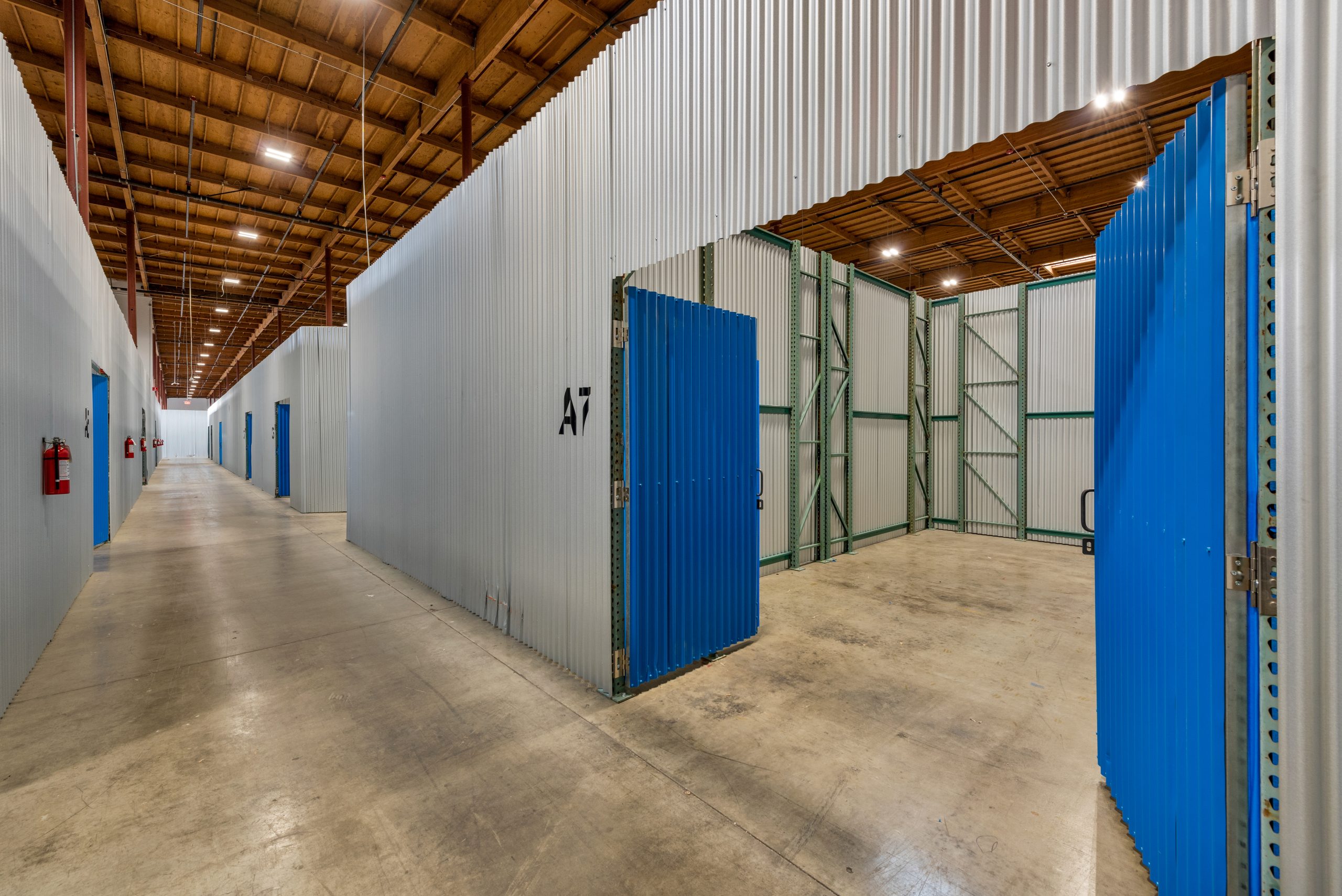
With overall vacancy at 4.9% and the Northeast at 3.5%, close-in small-bay and flex space in the Twin Cities stays competitive. Co-warehousing gives businesses operational space without a big-box commitment.
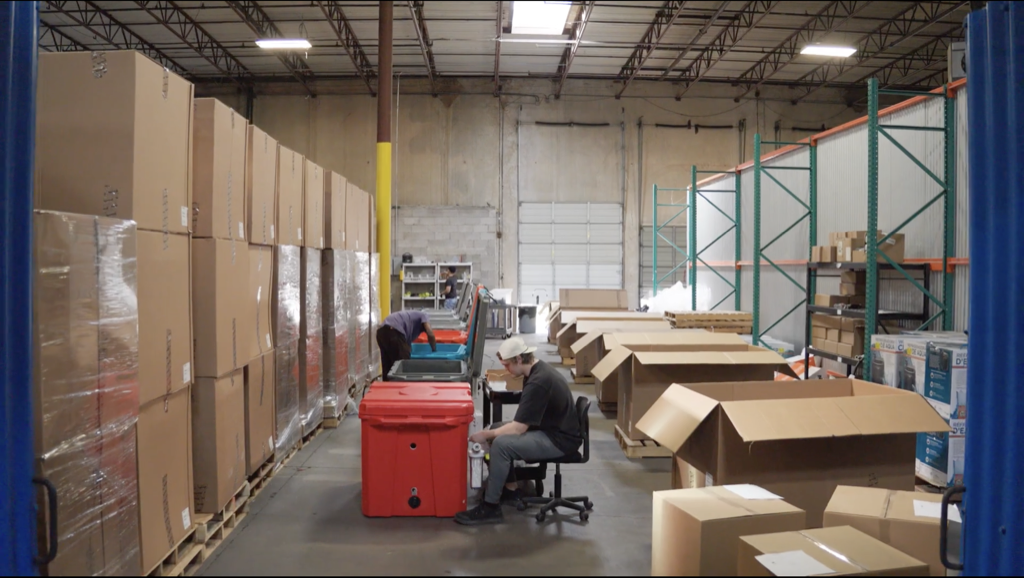
Flexible-space tenants in the Twin Cities tend to be contractors, food and beverage producers, and medical device and light manufacturers. E-commerce and last-mile operators serving the metro and regional distributors covering the upper Midwest also use it.
Browse available co-warehousing and small-bay warehouse listings on WareCRE’s Minneapolis marketplace.
Looking for warehouse space in Minneapolis?
Key Trends to Watch: Minneapolis Industrial Market Trends 2026
1. Demand Rebounded, Led by the Southeast and Northeast
Net absorption swung from −314,379 SF in Q1 to 571,806 SF in Q2, the strongest quarter in C&W’s five-quarter series. The Southeast (527,969 SF) and Northeast (338,215 SF) drove the gain, while the Northwest and Southwest posted small losses.
2. Manufacturing Is Leading Leasing
New leasing reached 4.6 million SF in the first half, in line with mid-2025 but below historical averages. Manufacturers accounted for nearly 2.0 million SF, or 51.1%, of leases over 10,000 SF, and occupiers are seeking modern space with higher clear heights and specialized power. Read more: Small-Bay vs. Big-Box: What the Vacancy Gap Means in 2026.
3. Speculative Construction Is Returning
Nine speculative starts of nearly 1.8 million SF lifted the pipeline 20.5% in one quarter. Speculative space is still only 0.6% of inventory, but the new starts mark a shift from the limited building of recent quarters.
Outlook: What to Watch in Q4 2026
C&W’s Q3 2026 MarketBeats are due in mid-October, with the year-end release to follow.
Watch whether absorption stays positive. A second positive quarter after Q2’s 571,806 SF would confirm the rebound from a negative Q1.
With 6.4 million SF underway, watch pre-leasing on the new speculative starts and whether vacancy moves above the 5.1% 20-year average.
Rent direction depends on the series. C&W shows rents up 4.9% year over year, while CBRE, on a different inventory, shows a 4.3% annual decline to $9.12/SF. The next two releases will show whether C&W’s series keeps rising.
Find warehouse space in Minneapolis
Browse co-warehousing, small-bay, and distribution listings across the Twin Cities.
Data sources: Cushman & Wakefield Minneapolis Industrial MarketBeat Q2 2026 (headline, submarket, construction, leasing, sales and cap-rate commentary; rents weighted net asking, $/SF/yr); Cushman & Wakefield U.S. Industrial MarketBeat Q2 2026 (restated Q1 2026 and Q2 2025 figures, property-type rents, Q2 leasing, U.S. averages); Cushman & Wakefield Minneapolis Industrial MarketBeat Q1 2026 (Q1 as first published, Q1 deliveries and under construction); CBRE Minneapolis Market Figures Q2 2026 and Colliers Minneapolis-St. Paul Industrial Report Q2 2026, as reported by REJournals (vacancy and rent cross-checks only). Each report reflects the most recent vacancy, rental, and construction data available at the time of publication. We refresh our reports as new market data is released, and we’re continually expanding coverage to additional metros.
Related Resources
Frequently Asked Questions
What is the current industrial vacancy rate in Minneapolis?
Twin Cities industrial vacancy was 4.9% in Q2 2026, according to Cushman & Wakefield, unchanged from Q1, up 50 basis points from a year earlier and below the 20-year average of 5.1%. The U.S. average in the same release was 6.9%. CBRE (4.4%) and Colliers (5.4%) measure different inventories.
How much does warehouse space cost in Minneapolis?
The overall average asking rent was $8.62/SF/yr net in Q2 2026, up 4.9% year over year. Warehouse/distribution properties averaged $7.88/SF/yr and manufacturing $8.17/SF/yr. By submarket, overall rents range from $8.16/SF/yr in the Northeast to $8.99/SF/yr in the Southwest.
Which Twin Cities submarket is best for warehouse space?
The Northeast is the largest and tightest at 3.5% vacancy. The Northwest (4.1%) is where most new speculative starts are going. The Southeast led Q2 absorption and has the largest pipeline at 4.0 million SF. The Southwest has the most vacant space at 6.9% and the highest rents.
How much industrial space is under construction in Minneapolis?
6.4 million SF was under construction at the end of Q2 2026, up from 5.3 million SF in Q1, driven by nine speculative starts totaling nearly 1.8 million SF. Speculative space underway is just over 2.0 million SF, or 0.6% of inventory. Year-to-date completions total 1.4 million SF.
What are industrial cap rates in Minneapolis?
Cushman & Wakefield reported cap rates for newer, core industrial assets in the low-to-mid 5% range in Q2 2026, with most marketed properties receiving multiple bids. The quarter’s largest trades priced between $92/SF and $190/SF.