Seattle Industrial & Warehouse Market Report | Q2 2026
Key Takeaways
- Puget Sound industrial vacancy was 9.4% in Q2 2026, down 30 basis points from 9.7% in Q1 but still up 120 basis points from 8.2% a year earlier. The quarter-over-quarter improvement is real; the year-over-year picture is still loosening.
- Demand swung positive. Net absorption was +776,233 SF in Q2 after −337,835 SF in Q1, the first positive quarter in the current cycle. Leasing volume, however, fell about 21% to 1.5 million SF, so the swing came from fewer move-outs rather than a surge of new requirements.
- Asking rents were roughly flat. The blended Puget Sound rate was $1.06/SF NNN per month (about $12.72/SF per year), quoted monthly by local convention, with only low single-digit growth year over year.
- The pipeline keeps shrinking: 1.8 million SF under construction, down from 2.3 million SF in Q1, with just 535,000 SF delivered in the quarter. Leasing is renewal-heavy and concentrated at or under 20,000 SF. Browse Seattle warehouse listings on WareCRE.
9.4%
Overall Vacancy (Q2 2026)
$1.06
Blended Asking Rent (NNN/SF/Mo)
+776K
SF Net Absorption (Q2)
1.8M
SF Under Construction
Seattle and the broader Puget Sound region make up one of the West Coast’s most important industrial markets, a Pacific gateway anchored by the Northwest Seaport Alliance (the ports of Seattle and Tacoma) and constrained by water, mountains, and tight land supply. Q2 2026 is the first quarter of this cycle where the fundamentals stopped deteriorating. Vacancy ticked down to 9.4% from 9.7%, net absorption turned positive at 776,233 SF, and the construction pipeline contracted again to 1.8 million SF across a 269.6 million SF inventory base.
The stabilization is genuine but narrow. Vacancy is still 120 basis points wider than a year ago, leasing volume fell about 21% quarter over quarter, and the largest transactions of the quarter were renewals rather than expansions. For businesses looking for warehouse space in Seattle, that combination still reads as a tenant-favorable market, with the important caveat that small-bay space is where the activity is and where the competition is. Here is the full Q2 2026 picture, including where the leverage actually sits by submarket.
Market Snapshot: Q2 2026
| Metric | Q2 2026 | Context |
|---|---|---|
| Overall vacancy | 9.4% | ↓30 bps from 9.7% in Q1; ↑120 bps YoY from 8.2% |
| Blended asking rent | $1.06/SF NNN/mo | About $12.72/SF/yr; roughly flat QoQ, low single-digit YoY (Kidder Mathews) |
| Net absorption (Q2) | +776,233 SF | Swing to positive from −337,835 SF in Q1 |
| Leasing activity (Q2) | 1.5M SF | ↓about 21% from 1.9M SF in Q1; renewal-led |
| Deliveries (Q2) | 535,000 SF | Q1 delivered 887,000 SF across 2 projects |
| Under construction | 1.8M SF | Down from 2.3M SF in Q1; supply pressure easing |
| Total inventory | 269.6M SF | Cushman & Wakefield basis; Kidder Mathews tracks 410.9M SF over a wider geography |
Vacancy levels differ by source because the tracked geography and inventory base differ. Cushman & Wakefield reports 9.4% and falling, Kidder Mathews 9.5%, and CBRE 11.7% and rising. The direction of travel is not settled across the three; the level is, within about a point on the two narrower bases.
Rent Trends: Roughly Flat, Quoted Monthly
The blended Puget Sound asking rate was $1.06/SF NNN per month in Q2 2026, or about $12.72/SF per year. Pacific Northwest industrial space is quoted monthly on an NNN basis, which is the local convention, so a monthly figure is the one brokers and occupiers will hear in a negotiation. Rents were roughly flat quarter over quarter and up only in the low single digits year over year. This page uses the Kidder Mathews rent series for consistency across quarters.
Flat face rates do not mean static economics. With 9.4% vacancy and a shrinking pool of active large users, landlords are competing through concessions (free rent, improvement allowances, and flexibility on term) rather than through published rate cuts. That pressure is concentrated in big-box product, where large-user demand is well below historical norms. Small-bay space, where most of the quarter’s transaction count sat, has held rate better.
For Tenants
Leverage is still with the tenant, particularly for requirements above 100,000 SF, where the pool of active users is thin and landlords are carrying vacancy against a shrinking new-supply threat. Push on free rent, improvement allowances, and term flexibility rather than on face rate, which is not moving. If your requirement is at or under 20,000 SF, expect a faster, more competitive process: that is where the deal count is. Search Seattle warehouse listings on WareCRE.
Construction Pipeline: Down to 1.8 Million SF
Puget Sound had 1.8 million SF under construction at the end of Q2 2026, down from 2.3 million SF in Q1. Deliveries slowed to 535,000 SF in the quarter, against 887,000 SF across two projects in Q1. Measured against a 269.6 million SF inventory base, the active pipeline is under 0.7% of standing stock, a level that removes new supply as a meaningful driver of vacancy over the next several quarters.
That is the mechanism behind the quarter’s vacancy improvement. Absorption of 776,233 SF did not have to fight through a wave of speculative completions, so a modest amount of positive demand was enough to move the rate down 30 basis points. Combined with Puget Sound’s structural land constraints, a pipeline this thin means the current softness is a demand story, not a supply story, and it will resolve on the demand side.
For Operators
Protect occupancy over rate. Absorption turned positive and the pipeline fell to 1.8 million SF, but leasing volume dropped about 21% and the quarter’s headline deals were renewals, so the tenant pool for large blocks remains shallow. The UNFI transaction closed after a 19-month marketing period, which is a fair benchmark for downtime on big-box vacancy today. Small-bay and close-in product is where velocity and pricing power still exist.
Submarket Breakdown
Kent
The largest submarket in the region at 48.9 million SF and the core of Kent Valley big-box distribution. Vacancy was 10.2% in Q2 2026, above the market average, which is consistent with where large-block availability is concentrated. This remains the deepest pool of large-format options in Puget Sound and the place where a big requirement will find the most competing alternatives.
South Seattle
The close-in infill core, nearest the Port of Seattle and the urban consumer base. Vacancy was 9.2%, and it is the priciest of the four Cushman & Wakefield submarkets tracked here. Kidder Mathews reports the overlapping Seattle Close-In submarket at 9.9% vacancy with an asking rate of $1.37/SF NNN per month, along with 269 available spaces under 10,000 SF and 73 in the 10,000 to 25,000 SF band, so small-bay optionality here is real despite the premium.
Sumner
Pierce County bulk product and the cheapest of the four, with vacancy at 12.4%, the highest in the group. This is where newer large-format space and the widest concessions sit. Serta-Simmons renewed 272,834 SF at IAC Port 167 in the adjacent Puyallup corridor, the largest transaction of the quarter and a good illustration of the renewal-led character of current demand.
Auburn
The tightest major submarket at 4.0% vacancy, well inside the market average and functionally a landlord market within an otherwise soft region. American Tire Distributors took 126,036 SF here in Q2. Tenants targeting Auburn should expect limited alternatives and correspondingly limited negotiating room.
| Submarket | Vacancy (Q2 2026) | Asking Rent (Q1 2026, NNN/SF/Mo) | Q2 2026 Profile |
|---|---|---|---|
| Kent | 10.2% | $0.93 | Largest submarket (48.9M SF); core Valley big-box |
| South Seattle | 9.2% | $1.31 | Close-in infill; priciest of the four |
| Sumner | 12.4% | $0.69 | Pierce County bulk; cheapest of the four |
| Auburn | 4.0% | $0.96 | Tightest major submarket |
Vacancy above is Cushman & Wakefield Q2 2026. Cushman & Wakefield did not publish Q2 submarket asking rents, so the rent column is the Q1 2026 rate and is labeled accordingly. For a rent column measured in Q2, see the Kidder Mathews view below.
| Kidder Mathews Submarket | Vacancy (Q2 2026) | Asking Rent (Q2 2026, NNN/SF/Mo) |
|---|---|---|
| Eastside | 6.0% | $1.88 |
| Seattle Close-In | 9.9% | $1.37 |
| Southend | 10.4% | $1.01–$1.05 |
| Pierce | 12.7% | $0.83 |
| Thurston | 5.8% | $0.76 |
The two tables use different submarket definitions and different inventory bases (Kidder Mathews includes Thurston, Skagit and Whatcom counties and all of Pierce), so they are complementary views of the region rather than competing counts of the same space.
Co-Warehousing & Flexible Warehouse Space in Seattle
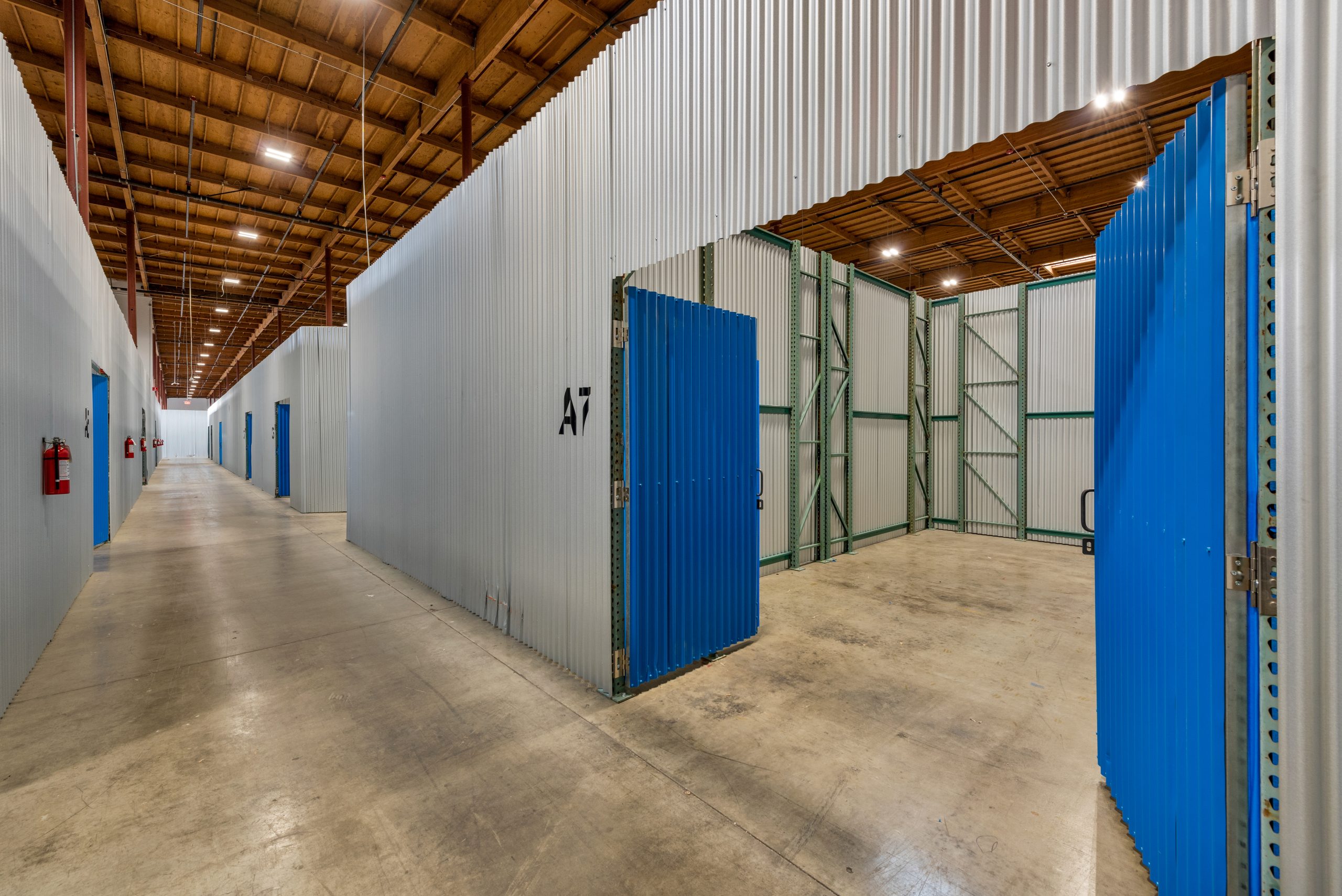
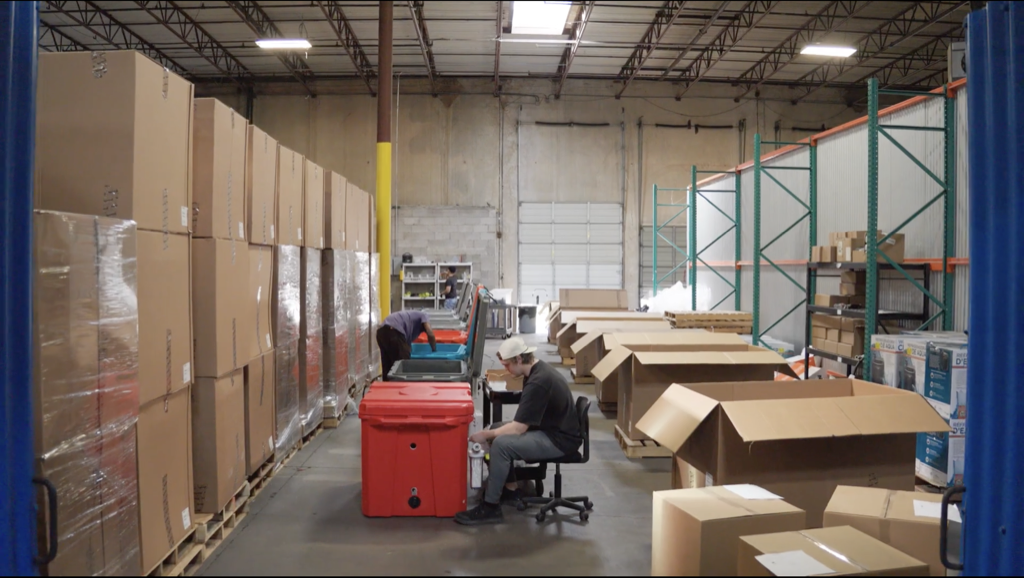
Small-bay is carrying this market. Kidder Mathews reports median lease sizes of 2,537 to 6,450 SF across Puget Sound, with the bulk of Q2 activity at or under 20,000 SF. Cushman & Wakefield made the same observation coming out of Q1: space under 20,000 SF stayed competitive while mid-sized requirements saw minimal demand. For an occupier under 20,000 SF, this is a normal functioning market, not a distressed one.
Supply at that size is deepest close in. Seattle Close-In alone showed 269 available spaces under 10,000 SF plus 73 in the 10,000 to 25,000 SF band, which gives smaller users genuine choice inside the urban core, at close-in pricing near $1.37/SF NNN per month.
Who’s leasing flexible space in Seattle: last-mile and e-commerce operators needing close-in proximity to the urban consumer, contractors and building trades serving the metro’s construction activity, food and beverage and specialty makers, importers and 3PLs working the Northwest Seaport Alliance gateway, and growing businesses that need scalable warehouse access without a long-term big-box lease.
Browse available co-warehousing and small-bay warehouse listings on WareCRE’s Seattle marketplace.
Looking for warehouse space in Seattle?
Key Trends to Watch
1. Renewals, Not Expansions, Are Driving the Numbers
The three largest transactions of Q2 tell the story: Serta-Simmons renewed 272,834 SF at IAC Port 167 in Puyallup, American Tire Distributors took 126,036 SF in Auburn, and UNFI committed to 135,975 SF after a 19-month marketing period. Positive absorption of 776,233 SF alongside a 21% drop in leasing volume is what a renewal-heavy quarter looks like: fewer move-outs, not more growth. Large-user demand remains well below historical norms.
2. The Small-Bay and Big-Box Split Is Widening
Median lease sizes of 2,537 to 6,450 SF and an activity concentration at or under 20,000 SF sit alongside a 19-month marketing period on a 135,975 SF requirement. Those are two different markets operating in the same region. Auburn at 4.0% vacancy and Sumner at 12.4% are the geographic expression of the same divergence. For the national version of this dynamic: Small-Bay vs. Big-Box: What the Vacancy Gap Means in 2026.
3. A 1.8 Million SF Pipeline Sets Up the Next Tightening
New supply has stopped being the problem. At 1.8 million SF under construction against 269.6 million SF of inventory, and with deliveries down to 535,000 SF in the quarter, there is very little product coming behind the current wave. Add Puget Sound’s chronic land scarcity and gateway exposure to Pacific trade flows, and the supply side is positioned to tighten quickly once large-user demand returns. For broader context: Industrial Real Estate Trends & Outlook 2026, and on trade policy: How Tariffs Are Reshaping Warehouse Demand in 2026.
Outlook: What to Watch in Q3–Q4 2026
Puget Sound found a floor in Q2. Whether it holds depends on large-user demand, which has not yet recovered.
Expect vacancy to move sideways to modestly lower through the back half of 2026. With only 1.8 million SF under construction, new supply will not push the rate up; the constraint is that positive absorption is coming from reduced move-outs rather than fresh requirements. Note that CBRE reads the trend in the other direction, so a flat second half is the more defensible base case than a continued decline.
Rents should stay roughly flat. At $1.06/SF NNN per month blended, with only low single-digit year-over-year growth and 9.4% vacancy, there is no basis for face-rate increases outside the tightest submarkets. Competition will continue to run through concessions.
The thing to watch is deal size. If median lease sizes and the count of transactions above 100,000 SF start rising together, that is the signal that occupiers are expanding again rather than holding. Until then, tenants with large requirements hold the leverage, and the 19-month marketing period on the UNFI space is a fair guide to how long that leverage lasts.
Find warehouse space in Seattle
Browse co-warehousing, small-bay, and distribution listings across the Puget Sound region.
Data sources: Cushman & Wakefield Seattle MarketBeat Q2 2026 (vacancy, absorption, deliveries, construction, inventory, submarket vacancy), Kidder Mathews Seattle 2Q26 (asking rents and lease-size data), CBRE Puget Sound Q2 2026, WareCRE marketplace data. Asking rents on this page follow the Kidder Mathews series; vacancy, absorption and supply figures follow Cushman & Wakefield. Source inventory bases differ (Cushman & Wakefield 269.6M SF, Kidder Mathews 410.9M SF), so figures are not directly interchangeable.
Related Resources
Frequently Asked Questions
What is the current industrial vacancy rate in Seattle?
Puget Sound industrial vacancy was 9.4% in Q2 2026 on the Cushman and Wakefield basis, down 30 basis points from 9.7% in Q1 but up 120 basis points from 8.2% a year earlier. Kidder Mathews reports 9.5% and CBRE reports 11.7% and rising, so the level is broadly consistent on the two narrower inventory bases while the direction is not settled across sources.
How much does warehouse space cost in Seattle?
Puget Sound industrial space is quoted monthly on an NNN basis. The blended asking rate was $1.06/SF per month in Q2 2026, about $12.72/SF per year, per Kidder Mathews, roughly flat quarter over quarter and up only in the low single digits year over year. By Kidder Mathews submarket, Pierce was $0.83, Thurston $0.76, Southend $1.01 to $1.05, Seattle Close-In $1.37 and the Eastside $1.88 per SF per month.
Is Seattle a good market for warehouse tenants right now?
For large requirements, yes. Vacancy is still 120 basis points above year-ago levels, leasing volume fell about 21% from Q1, and large-user demand is well below historical norms, which supports negotiation on free rent, improvement allowances and term. Space at or under 20,000 SF is the exception: that is where most Q2 activity was concentrated, so smaller users should expect a faster and more competitive process.
Which Seattle submarket is best for warehouse space?
It depends on size and budget. Kent is the largest submarket at 48.9 million SF with the deepest big-box inventory and 10.2% vacancy. Sumner is the cheapest of the four and the loosest at 12.4% vacancy. Auburn is the tightest at 4.0%. South Seattle is the close-in infill option at 9.2% vacancy and the priciest of the four, with the most small-bay availability under 10,000 SF.