Toronto Industrial & Warehouse Market Report | Q2 2026
Key Takeaways
- GTA industrial vacancy fell 20 basis points to 4.9% in Q2 2026 as net absorption reached 2.4 million SF, the eighth straight positive quarter.
- The average net asking rent fell 2.0% to C$16.03/SF/yr, which Cushman & Wakefield says is the lowest level in just over four years. GTA West fell 2.8% to C$16.40.
- New leasing totaled 9.0 million SF, C&W’s second-highest quarterly figure since Q2 2018. ID Logistics signed for 1,092,629 SF in Milton.
- 9.0 million SF is under construction, and 2026 completions are on track for just under 8.0 million SF, below the 13.4 million SF annual average of the past three years. Q2 deliveries were only 9.2% pre-leased.
Browse warehouse space for rent in Toronto
4.9%
Overall Vacancy (Q2 2026)
C$16.03
Avg. Net Asking Rent (C$/SF/yr)
2.4M
SF Net Absorption (Q2 2026)
9.0M
SF Under Construction
Demand and pricing moved in opposite directions in the Greater Toronto Area in Q2 2026. Tenants absorbed 2.4 million SF, enough to bring vacancy down to 4.9%, while landlords cut asking rents by 2.0% to compete for them. Most of the demand landed in GTA West, which absorbed 2,319,451 SF.
Figures are from Cushman & Wakefield’s Q2 2026 Toronto (GTA) Industrial MarketBeat unless noted. Prior-quarter comparisons use the changes stated in that report. Rents are average net asking rents in Canadian dollars per square foot per year (C$/SF/yr); additional rent (taxes, maintenance and insurance) is quoted separately. The GTA totals exclude Hamilton, which C&W reports alongside them.
Market Snapshot: Q2 2026
| Metric | Q2 2026 | Q1 2026 (restated) | YoY or note |
|---|---|---|---|
| Overall vacancy | 4.9% | 5.1% | −20 bps QoQ |
| Average net asking rent (C$/SF/yr) | C$16.03 | C$16.36 | −2.0% QoQ; lowest in just over four years |
| Additional rent (C$/SF/yr) | C$4.28 | n/a | Gross rent C$20.31 |
| Net absorption | 2,382,064 SF | 908,819 SF | 3,290,883 SF year to date; +2.3 million SF vs. Q2 2025 |
| New leasing | 9.0M SF | n/a | Second-highest quarter since Q2 2018 |
| Deliveries | 2,248,001 SF year to date | n/a | Q2 deliveries 9.2% pre-leased |
| Under construction | 9,037,929 SF | n/a | 37 buildings; about 1.1% of inventory |
| Average asking sale price (C$/SF) | C$398.34 | n/a | Owner-user and investment pricing indicator |
| Inventory | 852.3M SF | n/a | Excludes Hamilton |
Source: Cushman & Wakefield, Toronto (GTA) Industrial MarketBeat Q2 2026; additional and gross rent from C&W’s Canada Industrial MarketBeat Q2 2026 table. Q1 vacancy and rent follow from the QoQ changes C&W states and match its Q1 report. Q1 absorption is year-to-date less Q2 (WareCRE calculation).
Rent Trends: Net Rents Fall 2.0% to C$16.03/SF, the Lowest in Four Years
The GTA’s average net asking rent fell 2.0% in Q2 to C$16.03/SF/yr, the lowest level in just over four years, according to C&W. With additional rent of C$4.28, the average gross cost is C$20.31/SF/yr. GTA West, the largest submarket, fell 2.8% to C$16.40, a little over a three-year low.
GTA North asks the most at C$17.34/SF/yr, and C&W notes that much of its vacant space is in buildings less than five years old. GTA Central asks C$14.75 and GTA East C$13.59. C&W expects further declines to moderate. As a cross-check, CBRE reported that GTA asking rents fell for an 11th consecutive quarter, with the rate of decline moderating.
For Tenants
Asking rents are at a four-year low, and only 9.2% of Q2 deliveries were pre-leased. That gives tenants room to negotiate on newer space in GTA West and GTA North. GTA Central is tighter at 4.0% vacancy. Search Toronto warehouse listings on WareCRE.
Construction Pipeline: 9.0M SF Underway, 2026 Completions Below Average
C&W counts 9,037,929 SF under construction across 37 buildings, including 16 industrial condominium developments totaling 1.4 million SF. GTA West holds 5,430,376 SF of it, followed by GTA Central at 1,780,370 SF, GTA North at 1,250,852 SF and GTA East at 576,331 SF.
The GTA has completed 2,248,001 SF this year. C&W expects about 5.4 million SF across 27 buildings to deliver by year-end. That would bring 2026 completions to just under 8.0 million SF, well below the 13.4 million SF annual average of the past three years.
For Operators
Absorption is strong, but Q2 deliveries were only 9.2% leased at completion, and rents are still falling. Expect lease-up to take time on speculative buildings, especially in GTA West, where most of the pipeline sits. With 2026 completions below the three-year average, supply pressure could ease once current projects are absorbed.
Submarket Breakdown
C&W divides the GTA into four submarkets. GTA West carries most of the region’s inventory, demand and new construction.
GTA West (including Mississauga, Brampton and Milton)
GTA West is the largest submarket at 399.3 million SF, with 5.3% vacancy. It absorbed 2,319,451 SF in Q2 and 3,232,318 SF year to date, including ID Logistics’ 1,092,629 SF lease in Milton and Staples’ 331,583 SF in Brampton. The net asking rent fell 2.8% to C$16.40/SF/yr. 5,430,376 SF is under construction.
GTA Central (City of Toronto)
GTA Central has 225.2 million SF and is the tightest submarket at 4.0% vacancy. It is also the weakest for demand, giving back 434,824 SF in Q2 and 870,614 SF year to date. The net asking rent is C$14.75/SF/yr, and 1,780,370 SF is under construction.
GTA North (York Region, including Vaughan)
GTA North has 170.1 million SF at 4.5% vacancy, with the GTA’s highest net asking rent at C$17.34/SF/yr. It absorbed 278,742 SF in Q2 but is −34,828 SF year to date, after 1,056,127 SF of completions this year. D-Home Logistics leased 327,295 SF in Vaughan.
GTA East (Durham Region)
GTA East is the smallest submarket at 57.6 million SF, with the highest vacancy at 6.2% and the lowest net asking rent at C$13.59/SF/yr. It has absorbed 964,007 SF this year, and 576,331 SF is under construction.
| Submarket | Inventory | Vacancy | Net Rent (C$/SF/yr) | YTD Net Absorption | Under Construction | Asking Sale Price (C$/SF) |
|---|---|---|---|---|---|---|
| GTA West | 399.3M SF | 5.3% | C$16.40 | 3,232,318 SF | 5,430,376 SF | C$387.24 |
| GTA Central | 225.2M SF | 4.0% | C$14.75 | −870,614 SF | 1,780,370 SF | C$360.55 |
| GTA North | 170.1M SF | 4.5% | C$17.34 | −34,828 SF | 1,250,852 SF | C$506.16 |
| GTA East | 57.6M SF | 6.2% | C$13.59 | 964,007 SF | 576,331 SF | C$329.24 |
| GTA total | 852.3M SF | 4.9% | C$16.03 | 3,290,883 SF | 9,037,929 SF | C$398.34 |
Source: Cushman & Wakefield, Toronto (GTA) Industrial MarketBeat Q2 2026.
Co-Warehousing & Flexible Warehouse Space in Toronto
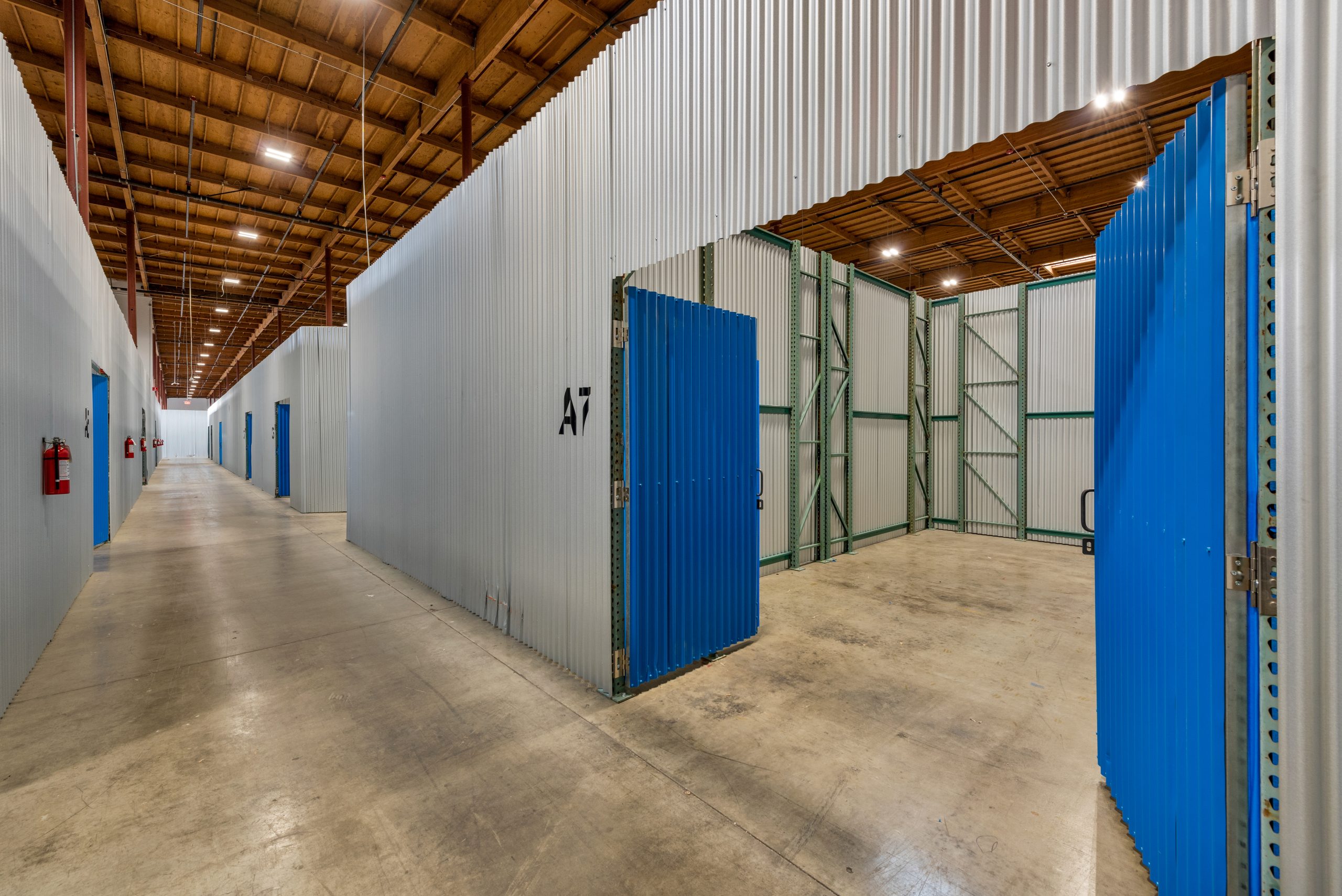
Toronto’s co-warehousing market draws on the GTA’s population growth and the steady formation of small businesses that need storage and fulfilment space without a long-term industrial lease.
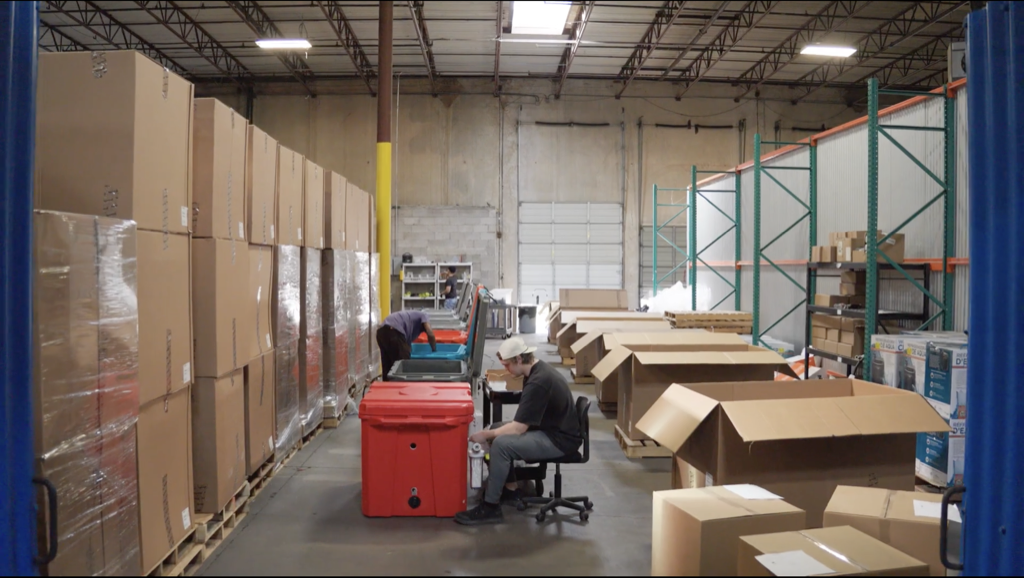
E-commerce entrepreneurs and DTC brands serving Canada’s largest consumer market account for much of Toronto’s flexible-space demand. Food and beverage businesses, construction and trades firms, importers using Toronto as a Canadian entry point, and event companies round out the tenant mix.
Browse available co-warehousing and small-bay warehouse listings on WareCRE’s Toronto marketplace.
Looking for warehouse space in Toronto?
Key Trends to Watch
1. Absorption Has Been Positive for Eight Straight Quarters
Net absorption of 2.4 million SF in Q2 was 2.3 million SF better than a year earlier and extended the GTA’s run of positive quarters to eight. New leasing reached 9.0 million SF. The gains were concentrated in GTA West; GTA Central is still giving back space.
2. Rents Are Still Adjusting Down
Occupancy is improving, but pricing has not followed yet. The 2.0% quarterly drop took the average to C$16.03/SF/yr, its lowest in just over four years, and CBRE counts 11 straight quarters of asking-rent declines. C&W expects further declines to moderate. For the national picture on small and large spaces, see Small-Bay vs. Big-Box: What the Vacancy Gap Means for Tenants and Operators.
3. CUSMA Uncertainty Now Recurs Every Year
At the July 1, 2026 joint review, the United States declined to extend CUSMA (USMCA) for another 16-year term. The agreement remains fully in force, but the three countries must now hold a joint review every year through 2036. C&W notes that trade-related uncertainty and continued business caution are tempering investment and expansion plans. For more on trade and warehouse demand, see How Tariffs Are Reshaping Warehouse Demand in 2026.
Outlook: What to Watch in Q4 2026
C&W’s Q3 2026 MarketBeats are due in mid-October, with the year-end release to follow. Three indicators will set the direction for the rest of the year.
Watch whether rents stabilize. C&W expects the decline to moderate after Q2’s 2.0% drop. A flat Q3 reading at around C$16.03/SF/yr would confirm it.
Watch whether absorption stays positive. A ninth positive quarter would keep vacancy moving down from 4.9%. GTA Central, where occupancy is still falling, is the weak spot.
Watch whether new buildings lease. About 5.4 million SF is due by year-end. Pre-leasing on those deliveries, after Q2’s 9.2%, will show how much pressure new supply puts on vacancy into 2027.
Find warehouse space in Toronto
Browse co-warehousing, small-bay, and distribution listings across the Greater Toronto Area.
Data sources: Cushman & Wakefield Toronto (GTA) Industrial MarketBeat Q2 2026 (headline and submarket figures; rents net asking, C$/SF/yr) and Q1 2026; Cushman & Wakefield Canada Industrial MarketBeat Q2 2026 (additional and gross rent); CBRE Toronto Industrial Figures Q2 2026 (rent cross-check); White & Case, July 2, 2026 (CUSMA/USMCA joint review). Each report reflects the most recent vacancy, rental, and construction data available at the time of publication. We refresh our reports as new market data is released, and we’re continually expanding coverage to additional metros.
Related Resources
Frequently Asked Questions
What is the current industrial vacancy rate in Toronto?
GTA industrial vacancy was 4.9% in Q2 2026, according to Cushman & Wakefield, down 20 basis points from 5.1% in Q1. By submarket, GTA Central was tightest at 4.0% and GTA East highest at 6.2%.
How much does warehouse space cost in Toronto?
The GTA average net asking rent was C$16.03/SF/yr in Q2 2026, down 2.0% on the quarter. Additional rent averaged C$4.28, for a gross cost of about C$20.31/SF/yr. Net rents ranged from C$13.59 in GTA East to C$17.34 in GTA North.
Which GTA submarket is best for warehouse space?
It depends on the requirement. GTA West is the largest and most active market, with 3,232,318 SF absorbed this year and the most new construction. GTA East has the lowest rent at C$13.59/SF/yr. GTA Central is the tightest at 4.0% vacancy, and GTA North has the highest rent at C$17.34/SF/yr but many newer buildings with vacancy.
How much industrial space is under construction in Toronto?
9,037,929 SF was under construction across 37 buildings at the end of Q2 2026, including 1.4 million SF of industrial condominiums. C&W expects 2026 completions of just under 8.0 million SF, below the 13.4 million SF annual average of the past three years.