San Diego Industrial & Warehouse Market Report | Q1 2026
Key Takeaways
- San Diego is a tenant’s market. Industrial vacancy rose to roughly 9.6% in Q1 2026, near historic highs and up about 130–140 basis points year-over-year, as recent large deliveries, concentrated in Otay Mesa, outpaced demand.
- Rents are still declining: the countywide average slipped to about $1.46–$1.57/SF NNN per month (roughly $17.50–$18.80/SF annually), down 3.7% year-over-year and continuing a multi-year slide.
- There are early signs of a floor. Net absorption turned positive (+250,000 SF) after negative results a year ago, helped by Amazon’s 1.08 million SF build-to-suit completion in Otay Mesa, and the construction pipeline has stayed below 1.0 million SF for three straight quarters.
- With minimal new supply coming, today’s tenant leverage may not last. Browse San Diego warehouse listings on WareCRE.
9.6%
Overall Vacancy
~$1.50
Avg. Asking Rent (NNN/SF/Mo)
+250K
SF Net Absorption (Q1)
<1M
SF Under Construction
San Diego is a distinctive industrial market, smaller and more specialized than the big logistics hubs, shaped by life science and R&D, a major cross-border manufacturing relationship with Tijuana, defense and tech, and a supply-constrained coastal geography. Entering Q1 2026, the market is working through a soft patch. Vacancy has climbed to near historic highs around 9.6%, rents are still easing, and the balance of power sits clearly with tenants, even as early signs of stabilization appear.
For businesses looking for warehouse space in San Diego, this is the most negotiable the market has been in years, particularly for big-box space in Otay Mesa. The catch is supply: with almost nothing new being built, the current tenant-favorable window may close as the market absorbs its recent deliveries. Here’s the full Q1 2026 picture.
Market Snapshot: Q1 2026
| Metric | Q1 2026 | Context |
|---|---|---|
| Overall vacancy | ~9.6% | Near historic highs; ↑130–140 bps YoY |
| Avg. asking rent | $1.46–$1.57/SF NNN/mo | ~$17.50–$18.80/SF/yr; −3.7% YoY |
| Net absorption | +250K SF | Positive again, vs −546K SF a year ago |
| Deliveries (YTD) | ~1.6M SF | Incl. Amazon 1.08M SF BTS in Otay Mesa |
| Under construction | <1.0M SF | Below 1M SF for three straight quarters |
| Market balance | Tenant-favorable | Early stabilization signs emerging |
Rent Trends: Still Easing, but Stabilizing
San Diego industrial rents are quoted monthly NNN, and the countywide average slipped to about $1.46–$1.57/SF per month in Q1 2026 (roughly $17.50–$18.80/SF annually), down 3.7% year-over-year and continuing a multi-year decline from the peak. Elevated vacancy and recent deliveries have kept landlords competing on rate and concessions, especially for big-box space.
That said, the rate of decline is moderating, and absorption has turned positive. With essentially no new supply in the pipeline, the conditions are in place for rents to find a floor over the coming quarters. The softest pricing is in Otay Mesa big-box; close-in infill, R&D/flex, and small-bay product across central and North County submarkets has held up better.
For Tenants
This is your window. Vacancy near historic highs and three years of easing rents mean real leverage on rate, free rent, and TI, strongest for big-box space in Otay Mesa. But with almost nothing new being built and absorption turning positive, this is unlikely to be a permanent buyer’s market. If San Diego fits your operation, now is the time to lock in terms. Search San Diego warehouse listings on WareCRE.
Construction Pipeline: Effectively Switched Off
San Diego’s construction pipeline has stayed below 1.0 million SF for three consecutive quarters, effectively switched off relative to demand. About 1.6 million SF delivered through Q1 2026, dominated by Amazon’s 1.08 million SF build-to-suit in Otay Mesa, but that’s far below recent norms and the last of a thin wave.
San Diego rarely overbuilds. Coastal land scarcity, high construction costs, and entitlement difficulty keep speculative development restrained. Today’s elevated vacancy is largely the digestion of a small number of recent large projects, not a structural oversupply. Once absorbed, the lack of new supply should tighten the market relatively quickly.
For Operators
Near term, elevated vacancy and easing rents argue for protecting occupancy, particularly for big-box product competing with recent Otay Mesa deliveries. The longer view is constructive: a near-empty pipeline plus San Diego’s structural land scarcity should tighten the market as the recent supply leases up. Infill, R&D/flex, and small-bay assets have held value best.
Submarket Breakdown
Otay Mesa / South Bay
The cross-border big-box and manufacturing hub on the Tijuana border, the heart of San Diego’s maquiladora and nearshoring activity and home to most of the metro’s modern bulk inventory and recent deliveries (including Amazon’s 1.08M SF facility). Highest availability and the best tenant leverage in the county. Rents: ~$1.10–$1.45/SF NNN/mo.
Central San Diego / Kearny Mesa & Miramar
The infill core serving the urban population, with a mix of warehouse, R&D/flex, and last-mile product. Land-constrained and tighter than Otay Mesa, with steady demand. Rents: ~$1.50–$2.10/SF NNN/mo.
North County (Carlsbad, Vista, San Marcos)
The life science, light manufacturing, and flex submarket along the I-78 corridor, serving the region’s deep biotech and med-tech base. Specialized demand keeps quality space competitive. Rents: ~$1.40–$2.00/SF NNN/mo.
Central County / I-15 Corridor
Distribution and light-industrial product along I-15, serving regional and last-mile needs with more available large-format space than the coastal submarkets. Rents: ~$1.25–$1.70/SF NNN/mo.
| Submarket | Profile | Rent Range (NNN/SF/Mo) | Q1 2026 Notes |
|---|---|---|---|
| Otay Mesa / South Bay | Cross-border big-box | $1.10–$1.45 | Most supply & leverage, nearshoring hub |
| Central / Kearny Mesa & Miramar | Infill / R&D flex | $1.50–$2.10 | Tighter, last-mile, land-constrained |
| North County | Life science / flex | $1.40–$2.00 | Biotech/med-tech demand, specialized |
| Central County / I-15 | Distribution | $1.25–$1.70 | More large-format availability |
Co-Warehousing & Flexible Warehouse Space in San Diego
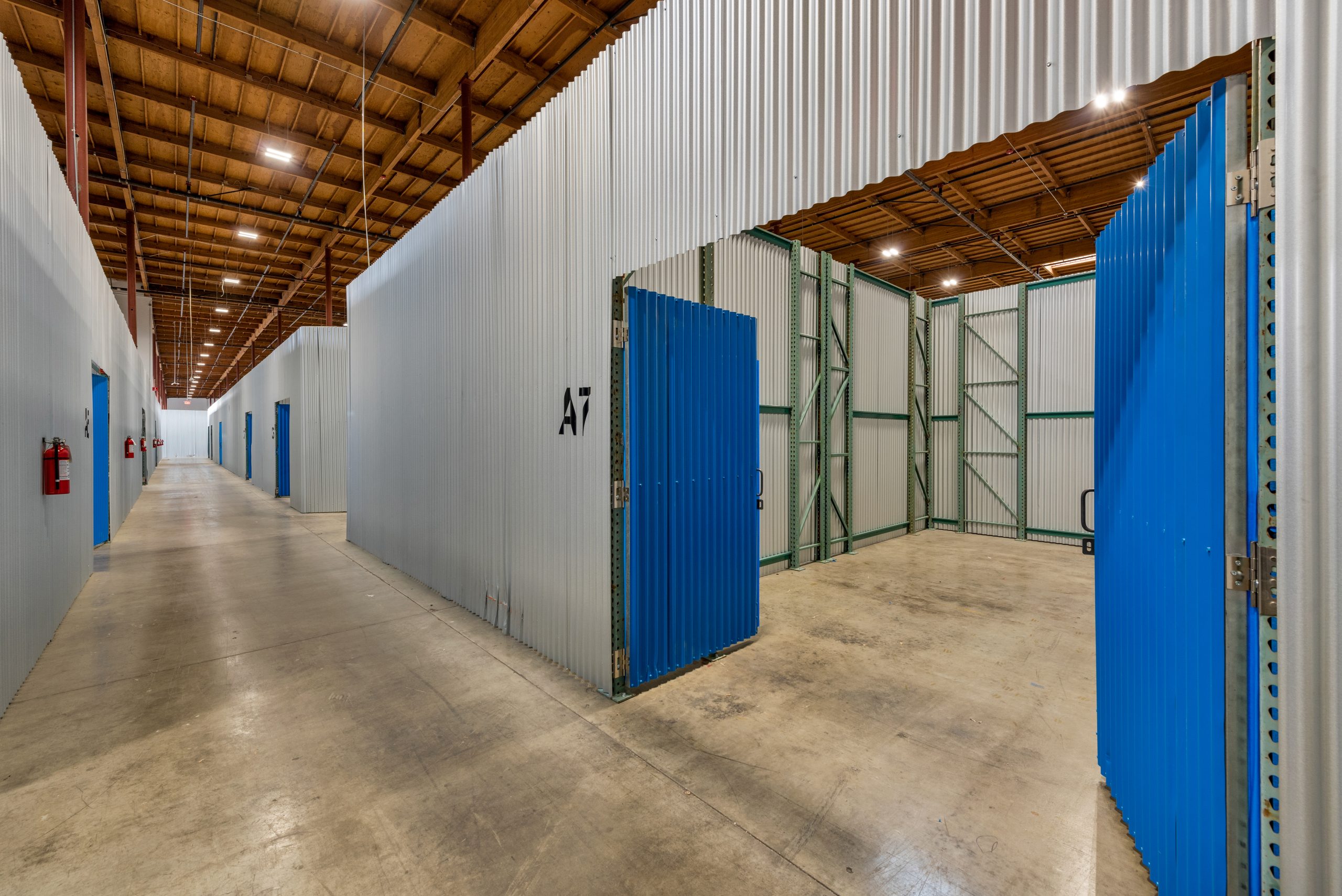
San Diego’s flexible warehouse market is shaped by expensive, land-constrained coastal geography and a demand base heavy on life science, defense, and small business. Even with overall vacancy elevated, small-bay, R&D, and flex space near the urban core stays competitive. These users serve the local economy rather than chasing big-box logistics economics.
Who’s leasing flexible space in San Diego: life science and med-tech companies needing R&D and lab-adjacent space, cross-border manufacturers and 3PLs working the Otay Mesa gateway, last-mile and e-commerce operators serving the metro, contractors and building trades, and defense and tech suppliers.
Browse available co-warehousing and small-bay warehouse listings on WareCRE’s San Diego marketplace.
Looking for warehouse space in San Diego?
Key Trends to Watch
1. A Tenant’s Market Finding Its Floor
Vacancy near historic highs and three years of easing rents have firmly favored tenants. But positive absorption and an empty pipeline suggest the cycle is bottoming. The window for peak leverage, especially in Otay Mesa big-box, may be narrower than it looks. Read more: Small-Bay vs. Big-Box: What the Vacancy Gap Means in 2026.
2. Cross-Border Nearshoring at Otay Mesa
The Otay Mesa border crossing and its Tijuana manufacturing relationship make San Diego a unique nearshoring play. As companies reshape supply chains around tariffs and Mexico sourcing, cross-border industrial demand is a structural tailwind for the South Bay. See: How Tariffs Are Reshaping Warehouse Demand in 2026.
3. A Specialized, Supply-Constrained Market
San Diego’s life science, defense, and R&D base, combined with coastal land scarcity and high construction costs, make it structurally different from logistics-driven metros. That scarcity is why even a soft patch hasn’t produced a building spree, and why the market tends to tighten quickly once demand returns. For broader context: Industrial Real Estate Trends & Outlook 2026.
Outlook: What to Watch in Q2–Q3 2026
San Diego enters mid-2026 as a tenant-favorable market showing early signs of a bottom.
Expect vacancy to plateau and begin easing as recent Otay Mesa deliveries lease up and the near-empty pipeline limits new supply. The metro has little room for vacancy to climb much further.
Rents should find a floor, with the rate of decline moderating and concessions narrowing first in the infill and R&D/flex submarkets. Otay Mesa big-box will be the last to firm.
The biggest opportunity is for tenants who lock in space and concessions now, before stabilization erodes today’s leverage, particularly those who can use Otay Mesa big-box availability.
Find warehouse space in San Diego
Browse co-warehousing, small-bay, and distribution listings across San Diego County.
Data sources: Colliers San Diego Region Industrial Q1 2026, Savills San Diego Industrial Q1 2026, Kidder Mathews San Diego Industrial Q1 2026, Cushman & Wakefield San Diego MarketBeat Q1 2026, Voit Real Estate Services Q1 2026, San Diego Business Journal (2026), WareCRE marketplace data (May 2026).
Related Resources
Frequently Asked Questions
What is the current industrial vacancy rate in San Diego?
San Diego industrial vacancy was roughly 9.6% in Q1 2026, near historic highs and up about 130–140 basis points year-over-year, driven by recent large deliveries, particularly in Otay Mesa. Net absorption turned positive, an early sign of stabilization.
How much does warehouse space cost in San Diego?
Rents are quoted monthly NNN and average roughly $1.46–$1.57/SF per month (about $17.50–$18.80/SF annually) as of Q1 2026, down 3.7% year-over-year. Otay Mesa big-box is the most affordable; central infill and North County R&D/flex command a premium.
Is San Diego a good market for warehouse tenants right now?
Yes. It’s one of the most tenant-favorable periods in years, with vacancy near historic highs and rents still easing, giving strong leverage especially on Otay Mesa big-box. But absorption has turned positive and almost nothing new is being built, so the window may narrow.
Which San Diego submarket is best for warehouse space?
Otay Mesa offers the most big-box availability, the best leverage, and cross-border access. Central/Kearny Mesa & Miramar is best for infill and last-mile but tighter. North County serves life science and flex, and the I-15 corridor offers more large-format distribution space.