Industrial Market Reports 2026: Free Vacancy & Rent Data for 28 US & Canadian Metros
Key Takeaways
- WareCRE publishes free warehouse market reports for 28 US and Canadian metros, each built on Q2 2026 data with its sources cited. There is no paywall or login.
- National industrial vacancy edged below 7% in Q2 2026, to 6.9% from 7.0% in Q1. Vacancy in buildings over 500,000 SF has fallen 300 bps from its late-2024 peak to 8.1%, while shallow-bay vacancy edged up to 4.8%, still the tightest size segment (why the size split matters for tenants).
- Asking rents range from $6.31/SF NNN in Indianapolis to $27.50/SF in New York City. The metro comparison table below puts every market side by side.
- Every report covers vacancy, rents, the construction pipeline, submarkets and co-warehousing demand, including the small-bay and flex space that metro-wide averages can miss.
28
Metro Markets Covered
6.9%
National Industrial Vacancy
$10.32
National Avg. Rent ($/SF/yr NNN)
Q2 2026
Latest Data
WareCRE’s warehouse market report library gives free vacancy rates, asking rents, construction pipeline data and submarket analysis for 28 industrial markets in the US and Canada. Every report and the comparison table below use Q2 2026 data from Cushman & Wakefield unless the report notes another source.
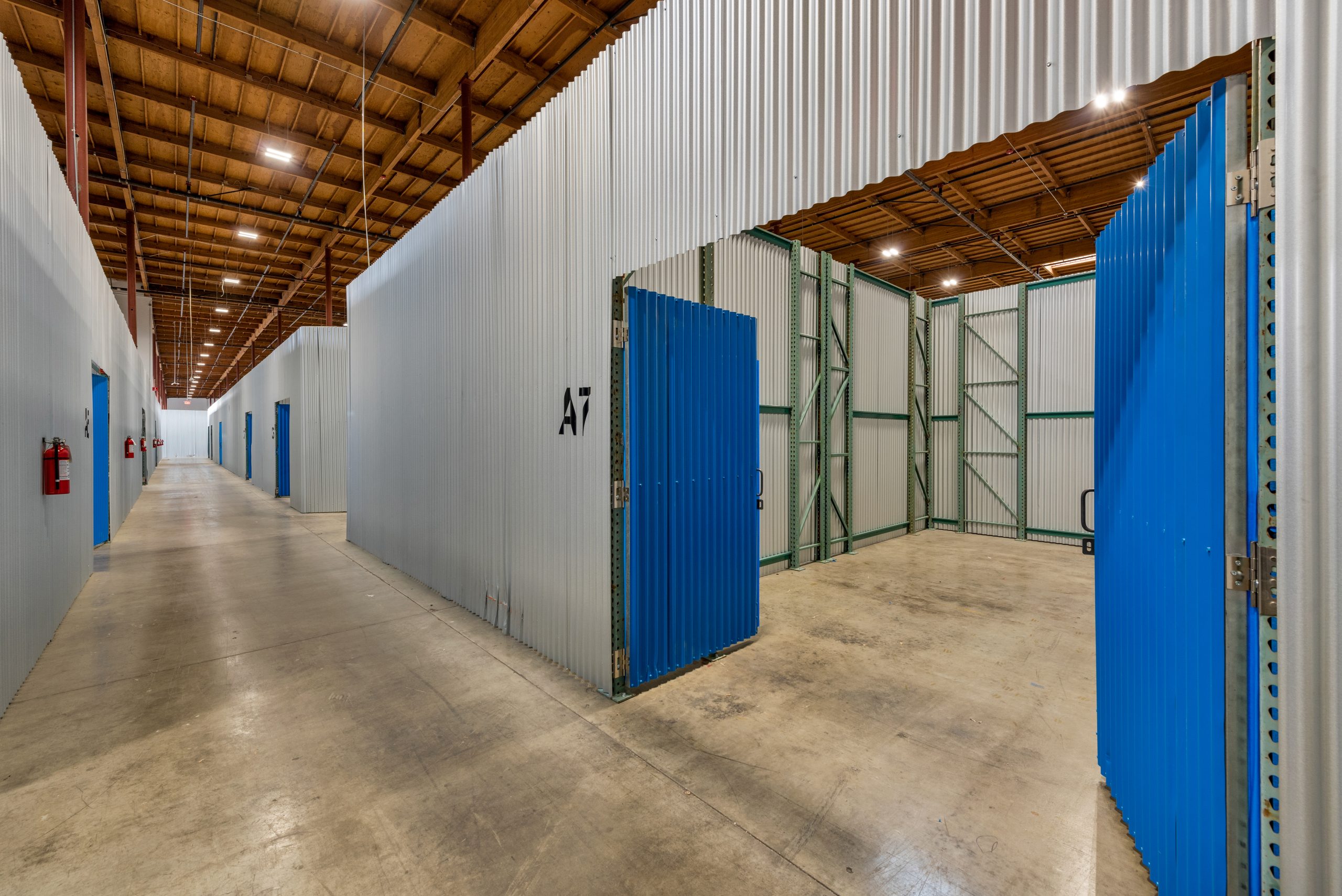
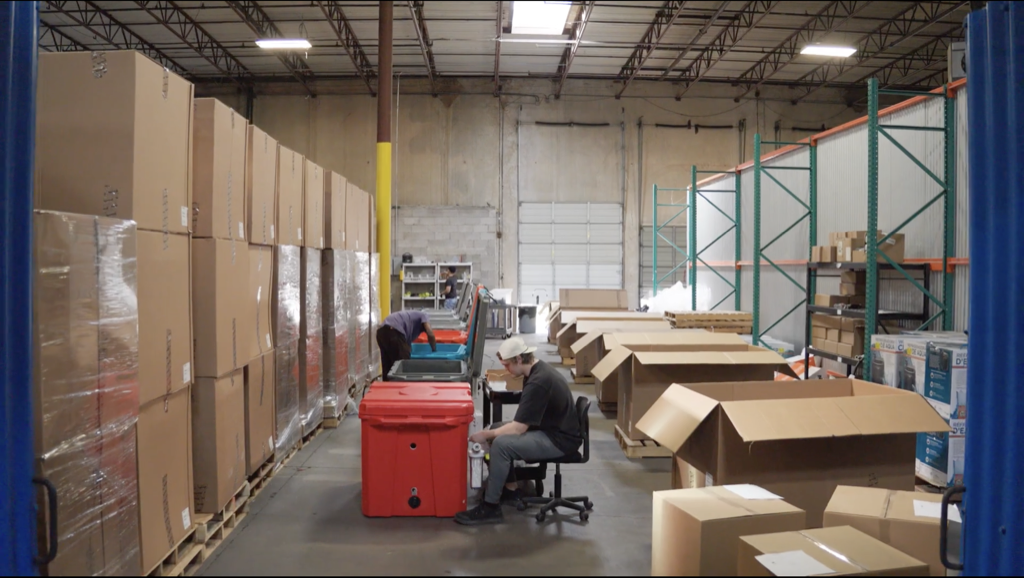
Each report also covers co-warehousing and small-bay flex space, typically under 50,000 SF, where most small businesses, e-commerce operators and trades lease. Vacancy, pricing and availability in that segment can differ sharply from metro-wide averages.
Brokers, investors, tenants and operators can start with a metro report below, then use the comparison table to benchmark it against alternative markets.
2026 Warehouse Market Reports by Metro
Each report covers current vacancy, asking rent trends, the construction pipeline, submarkets, co-warehousing demand and an outlook for the quarters ahead.
Southeast: 6 Markets
Population growth, port access, and low operating costs continue to pull distribution and manufacturing investment into the Southeast. Miami is the region’s tightest and most expensive metro, at 6.3% vacancy and $15.73/SF. Raleigh has the highest vacancy, 9.4%, and Atlanta the lowest rent, $7.48/SF.
- Atlanta: 8.5% vacancy, $7.48/SF NNN. Leasing is up sharply, new supply is running well below its recent pace, and onshoring demand is a tailwind.
- Charlotte: 7.4% vacancy, $8.67/SF NNN. Vacancy has fallen for five straight quarters as the I-85 corridor absorbs its last supply wave.
- Raleigh: 9.4% vacancy, $11.00/SF NNN. Research Triangle life sciences and advanced manufacturing hub, where new supply is pushing vacancy up.
- Tampa: 7.4% vacancy, $10.86/SF NNN. Vacancy 50 bps above the national rate on an above-average rent.
- Orlando: 8.4% vacancy, $9.52/SF NNN. Leasing has slowed sharply and big-box demand has stalled.
- Miami: 6.3% vacancy, $15.73/SF NNN. International trade gateway where rents have eased on the year as recent supply leases up.
Texas: 3 Markets
Corporate relocations, population growth and central geography keep the Texas pipeline active. Dallas-Fort Worth leads every US market on year-to-date leasing at 40.3M SF.
- Dallas-Fort Worth: 8.1% vacancy, $9.19/SF NNN. The national leasing leader at 40.3M SF YTD, ahead of the Inland Empire (28.5M SF) and Chicago (21.8M SF).
- Houston: 6.3% vacancy, $7.87/SF NNN. A major port market posting healthy YTD absorption on resilient import activity.
- Austin: 22.3% vacancy, $11.78/SF NNN on Cushman & Wakefield’s warehouse and flex basis, which excludes manufacturing. CBRE, on a different inventory base, puts vacancy at 19.4%. Either way, tenants hold more leverage here than in any other metro we track.
Mountain West: 3 Markets
Lower costs and favorable business climates drove rapid expansion, and several Mountain West metros are still digesting speculative supply from the 2022–2024 cycle. Phoenix carries the highest vacancy in the region at 10.8%, while Denver and Salt Lake City both sit at 7.8%.
- Denver: 7.8% vacancy, $10.09/SF NNN. Rent tracks close to the national average of $10.32.
- Phoenix: 10.8% vacancy, $13.41/SF NNN. Vacancy is falling fast on bulk-logistics absorption, but the pipeline has re-expanded.
- Salt Lake City: 7.8% vacancy, $10.30/SF NNN. Inland port development and a lower-cost alternative to West Coast distribution.
West Coast: 6 Markets
Several of the highest rents in the table are here. Orange County, at $18.24/SF, trails only New York City, and San Diego asks $17.28/SF. Vacancy ranges from 4.2% in Los Angeles, the region’s tightest market, to 9.4% in Seattle.
- Los Angeles: 4.2% vacancy, $15.83/SF NNN. One of the largest US industrial markets and a port market with healthy YTD absorption.
- Orange County: 5.2% vacancy, $18.24/SF NNN. Infill market still below the national vacancy rate, though move-outs have outpaced move-ins for two quarters.
- San Diego: 7.2% vacancy, $17.28/SF NNN. Defense, biotech, and cross-border logistics.
- SF Bay Area: 7.8% vacancy, $14.52/SF NNN (Oakland/East Bay submarket). Tech-economy demand against scarce supply.
- Portland: 6.5% vacancy, $10.89/SF NNN. Pacific Northwest distribution and semiconductor corridor.
- Seattle: 9.4% vacancy, $12.48/SF NNN. E-commerce logistics and aerospace manufacturing; see the rent footnote below.
Midwest: 5 Markets
Cushman & Wakefield counts several Midwest markets among the inland hubs outperforming on onshoring and nearshoring. Central locations, low rents and transportation infrastructure help. Chicago ranks third nationally on year-to-date leasing at 21.8M SF, and Omaha’s 3.1% vacancy is the lowest of any metro we track.
- Chicago: 4.8% vacancy, $7.55/SF NNN. The nation’s freight crossroads and third-largest leasing market YTD.
- Indianapolis: 6.0% vacancy, $6.31/SF NNN. Crossroads of America; the lowest rent of any metro we track.
- Minneapolis: 4.9% vacancy, $8.62/SF NNN. Upper Midwest logistics and manufacturing base.
- Des Moines: 7.6% vacancy, $7.24/SF NNN. I-80/I-35 crossroads at well below the national average rent.
- Omaha: 3.1% vacancy, $8.76/SF (NAI NP Dodge; lease basis not stated). The tightest industrial market of the 28 we cover.
Northeast & Mid-Atlantic: 3 Markets
Dense population and scarce land keep rents high. The Northeast was the only US region where vacancy rose in Q2 2026, by 10 basis points, and New York City’s $27.50/SF is the highest rent in the table.
- New York City: 7.0% vacancy, $27.50/SF NNN (Outer Boroughs). The highest asking rent we track, though vacancy has risen for four straight quarters.
- Philadelphia: 10.3% vacancy, $12.81/SF NNN. Vacancy is still in double digits but falling, with occupancy up for a third straight quarter.
- Washington DC (DMV): 5.0% vacancy, $17.44/SF NNN (Northern Virginia submarket). Data center demand competes for industrial land, and absorption there is negative this year.
Canada: 2 Markets
Tighter land constraints and the July 2026 CUSMA joint review add variables specific to Canada. At that review the US declined to confirm a 16-year extension, and the agreement moved to annual reviews. Figures below are from Cushman & Wakefield Canada’s Q2 2026 Industrial MarketBeat, in Canadian dollars on a net basis. Calgary vacancy fell 50 basis points on the quarter to 4.7%, and Toronto’s is 4.9%.
- Toronto (GTA): 4.9% vacancy, C$16.03/SF net. Canada’s largest industrial market and the national bellwether.
- Calgary: 4.7% vacancy, C$10.68/SF net. Energy services firms lead flexible-space demand as vacancy falls.
How to Use These Reports
Start with the metro closest to your target location, then compare vacancy and rent in 2–3 alternative markets using the table below. Check each report’s construction pipeline as well. A market that looks expensive may be competitive in context, and a cheap one may have a supply problem that price alone won’t show.
Warehouse Vacancy Rates & Rental Rates: 28-Metro Comparison
The table below gives vacancy and average asking rent for every metro WareCRE covers, grouped by region. Each metro links to its full report with submarket data, the construction pipeline and an outlook. We refresh the table as new market data is released.
| Metro | Vacancy | Avg. Asking Rent ($/SF/yr, NNN) | Q2 2026 Signal |
|---|---|---|---|
| Southeast | |||
| Atlanta | 8.5% | $7.48 | Region’s lowest rent; vacancy 160 bps above national |
| Charlotte | 7.4% | $8.67 | Vacancy above national; rent under $9 |
| Raleigh | 9.4% | $11.00 | Loosest Southeast market; rent holds at $11.00 |
| Tampa | 7.4% | $10.86 | Vacancy 50 bps above national; rent near $11 |
| Orlando | 8.4% | $9.52 | Above-average vacancy; rent under $10 |
| Miami | 6.3% | $15.73 | Tightest in the Southeast at the highest rent |
| Texas | |||
| Dallas-Fort Worth | 8.1% | $9.19 | Leads all US markets on YTD leasing: 40.3M SF |
| Houston | 6.3% | $7.87 | Port market with healthy YTD absorption |
| Austin | 22.3% | $11.78 | Highest vacancy we track; C&W warehouse and flex basis |
| Mountain West | |||
| Denver | 7.8% | $10.09 | Rent just below the national average |
| Phoenix | 10.8% | $13.41 | Highest vacancy in the Mountain West; rent still above $13 |
| Salt Lake City | 7.8% | $10.30 | Matches Denver on vacancy; rent at national average |
| West Coast | |||
| Los Angeles | 4.2% | $15.83 | Second-tightest metro we track; port-driven |
| Orange County | 5.2% | $18.24 | Highest rent in the table after New York |
| San Diego | 7.2% | $17.28 | Rent above $17 despite 7.2% vacancy |
| SF Bay Area (Oakland/East Bay) | 7.8% | $14.52 | Submarket proxy; East Bay rents still falling |
| Portland | 6.5% | $10.89 | Vacancy below national; rent just under $11 |
| Seattle | 9.4% | $12.48 | Loosest West Coast market; rent per footnote |
| Midwest | |||
| Chicago | 4.8% | $7.55 | Third on YTD leasing: 21.8M SF, sub-5% vacancy |
| Indianapolis | 6.0% | $6.31 | Lowest rent of any metro we track |
| Minneapolis | 4.9% | $8.62 | Sub-5% vacancy with rent under $9 |
| Des Moines | 7.6% | $7.24 | Well below national rent; I-80/I-35 crossroads |
| Omaha | 3.1% | $8.76 | Tightest market we track; NAI NP Dodge basis |
| Northeast & Mid-Atlantic | |||
| New York City (Outer Boroughs) | 7.0% | $27.50 | Highest rent in the table by a wide margin |
| Philadelphia | 10.3% | $12.81 | Double-digit vacancy; real tenant choice |
| Washington DC (DMV, Northern Virginia) | 5.0% | $17.44 | Tightest in the region; submarket proxy |
| Canada | |||
| Toronto (GTA) | 4.9% | C$16.03 | C&W Canada basis; C$ net rent |
| Calgary | 4.7% | C$10.68 | Vacancy down 50 bps QoQ; C$ net rent |
Notes on this table. Toronto and Calgary use Cushman & Wakefield Canada’s Q2 2026 figures: overall vacancy and overall weighted average net asking rent in C$/SF/yr. Austin’s 22.3% is Cushman & Wakefield’s warehouse and flex basis (about 102.8M SF, excluding manufacturing). That series has been above 20% since Q3 2025 and eased slightly in Q2, so the level is not a one-quarter outlier. Omaha uses NAI NP Dodge’s Q2 2026 figures because Cushman & Wakefield did not refresh its Omaha row for Q2; NAI does not state the rent period or whether its rent is net or gross. Tampa and SF Bay Area (East Bay) use Cushman & Wakefield’s local Q2 MarketBeats, which differ from its national table. The national Tampa row covers Hillsborough County only, and the East Bay rent is Cushman & Wakefield’s monthly $1.21/SF multiplied by 12. Three rows use a submarket as the proxy because Cushman & Wakefield publishes no consolidated row for the metro: SF Bay Area is Oakland/East Bay, New York City is the Outer Boroughs, and Washington DC (DMV) is Northern Virginia. Seattle’s rent here is the Cushman & Wakefield figure, which keeps the table comparable. Our Seattle report follows the Kidder Mathews rent series, $1.06/SF per month this quarter. The two measures are within about 2% ($12.48/SF/yr is about $1.04/SF per month).
Source: Cushman & Wakefield U.S. Industrial MarketBeat Q2 2026 (overall vacancy and overall weighted average asking rent, $/SF/yr NNN) and Cushman & Wakefield Canada Industrial MarketBeat Q2 2026 (C$/SF/yr net). Cushman & Wakefield marks its Q2 figures preliminary and subject to revision. Our price-per-square-foot guide gives rent ranges by market from 2024 data.
Need warehouse space in one of these markets?
3 Forces Reshaping Warehouse Demand in 2026
The Size Gap Is Narrowing, but Small-Bay Is Still Far Tighter
National industrial vacancy edged below 7% to 6.9%, but the size split matters more than the headline. Cushman & Wakefield reports that vacancy in buildings larger than 500,000 SF has declined 300 basis points from its late-2024 peak to 8.1%, while shallow-bay vacancy edged modestly higher to 4.8%, still the lowest of any size segment. Big box is the segment that is improving, and the gap between the two has narrowed to roughly 330 basis points. Small-bay remains materially tighter, so a tenant looking for smaller space has less choice than the national vacancy number implies and should be ready to move quickly. For more on what the gap means for tenants and operators, see Small-Bay vs. Big-Box: What the Vacancy Gap Means in 2026.
Port Markets Are Still Absorbing Space Under Tariffs
Trade policy is still shifting where companies put warehousing and manufacturing, but Q2 demand held up. Cushman & Wakefield notes that major port markets, including Houston, New Jersey, Los Angeles and Savannah, reported healthy year-to-date absorption gains, reflecting resilient import activity as businesses adapt to the new tariff environment. Inland hubs are benefiting from a separate driver, onshoring and nearshoring. For the macro view, see How Tariffs Are Reshaping Warehouse Demand in 2026.
Inland Hubs Lead on Leasing and Stay Tight
Cushman & Wakefield credits onshoring and nearshoring for outperformance across inland hubs, including Dallas-Fort Worth, Phoenix, Atlanta and several Midwest markets. Leasing bears that out. Dallas-Fort Worth leads the country with 40.3M SF of year-to-date leasing, ahead of the Inland Empire at 28.5M SF and Chicago at 21.8M SF. Tight inland markets like Omaha (3.1% vacancy), Chicago (4.8%) and Minneapolis (4.9%) show how little slack is left in centrally located product. For broader trends, see Industrial Real Estate Trends & Outlook 2026.
National Industrial Market Outlook: What to Watch in Q4 2026
Q2 2026 points to a market moving into balance. Vacancy edged below 7% to 6.9%, a 10 basis point improvement on Q1, and net absorption of 62.1M SF ran level with 62M SF of completions. Average asking rent reached $10.32/SF NNN, up 1.6% on the quarter and 2.9% year over year. The pipeline is the number to watch. The 305.1M SF under construction is up 18% year over year but roughly 57% below the Q3 2022 peak of 716M SF, so competing new supply is far thinner than in 2022. The Northeast was the only region where vacancy rose, by 10 basis points. Cushman & Wakefield marks these Q2 figures preliminary and subject to revision.
Cushman & Wakefield’s own read is constructive. Jason Price, Head of Logistics & Industrial Research Americas, says “we expect vacancy to continue trending lower through the balance of the year, led by modern logistics product and large-format distribution facilities.” Jason Tolliver, President of Logistics & Industrial Americas, says the sector “is entering a new phase characterized by healthier fundamentals and more balanced growth.” For occupiers and investors, large-format space is where availability is most likely to keep tightening through year-end, while small-bay, at 4.8% vacancy, remains the tighter segment to transact in. For owner strategy and small-bay trends, read our Industrial Real Estate Trends & Outlook 2026.
Industrial Real Estate Research & Guides
Related Resources
- Industrial Real Estate Trends & Outlook 2026: Small-bay performance, co-warehousing and owner strategy
- Small-Bay vs. Big-Box Industrial: The Vacancy Gap, on why the headline vacancy number can mislead
- How Tariffs Are Reshaping Warehouse Demand in 2026: Trade policy impact on industrial real estate
- The Complete Guide to Industrial Real Estate: Space types, lease structures, building specs, and terminology
- Warehouse Price Per Square Foot Guide: Top 20 Markets, with 2024 rent ranges for cross-market benchmarking
- The Warehousing Gap Squeezing America’s Small Businesses
- Finding the Right Co-Warehousing Brand for Your Business
Find Warehouse Space in Any of These Markets
Browse available warehouse, flex, and co-warehousing listings across 28 US and Canadian metros.
Frequently Asked Questions
What is the average warehouse rental rate in the US in 2026?
The national average industrial asking rent was $10.32/SF/yr NNN in Q2 2026, up 1.6% from Q1 and 2.9% year over year. Rates vary widely by metro. Indianapolis ($6.31/SF), Des Moines ($7.24/SF) and Atlanta ($7.48/SF) sit well below the national average, while New York City ($27.50/SF), Orange County ($18.24/SF) and Northern Virginia ($17.44/SF) command the largest premiums. Cushman & Wakefield marks its Q2 2026 figures preliminary and subject to revision.
Which US warehouse markets have the lowest vacancy rates?
As of Q2 2026, the tightest US metros in our table are Omaha at 3.1%, Los Angeles at 4.2%, Chicago at 4.8%, Minneapolis at 4.9%, and Washington DC (Northern Virginia) at 5.0%. Nationally, shallow-bay product is tighter than big box, with 4.8% vacancy against 8.1% in buildings larger than 500,000 SF. See individual reports for segment-level and submarket detail.
What is the national industrial vacancy rate in 2026?
US industrial vacancy edged below 7% to 6.9% in Q2 2026, down 10 basis points from 7.0% in Q1, according to Cushman & Wakefield. Net absorption of 62.1M SF ran close to 62M SF of completions, and 305.1M SF is under construction, up 18% year over year but roughly 57% below the Q3 2022 peak of 716M SF. The Northeast was the only region where vacancy rose, by 10 basis points. These Q2 figures are preliminary and subject to revision.
How do I compare industrial real estate markets?
Focus on five metrics: vacancy rate (supply tightness), asking rent (cost), net absorption trend (demand direction), construction pipeline (future competition), and economic drivers (why businesses locate there). WareCRE’s comparison table above gives a quick cross-market snapshot, and each metro report adds submarket detail. Comparing your target market with 2–3 alternatives shows whether a specific deal is competitive.
How often are WareCRE market reports updated?
Each report reflects the most recent vacancy, rental, and construction data available at the time of publication. We refresh our reports as new market data is released, and we’re continually expanding coverage to additional metros.